Welcome to the world of pallet manufacturing! Starting and growing a business requires careful, strategic planning. A well-crafted business plan is essential for any successful business endeavor. This guide will provide you with all the information and resources necessary to create a comprehensive, effective business plan for your pallet manufacturing business.
The business plan is the foundation of your pallet manufacturing business. It outlines your goals, financial projections, and strategies for success. It is also a great tool for communicating your ideas and plans to potential investors or lenders.
This guide will cover the key elements of a pallet manufacturing business plan, including the executive summary, market analysis, operational plan, financial projections, and risk management. It will also provide you with helpful tips and resources to ensure your business plan is as effective as possible.
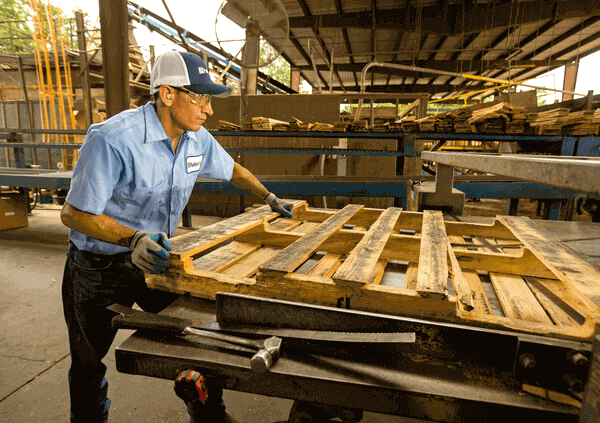
Pallet Manufacturer Business Plan
A business plan is an essential tool for any company, and a pallet manufacturer is no exception. It provides a roadmap for success, allowing you to track progress and make adjustments as needed. To create an effective business plan, you should start by considering the following elements:
A business plan is an essential tool for any pallet manufacturer. It provides a strategic roadmap for success, allowing you to track progress, make adjustments as needed, and identify opportunities for growth. To create an effective plan, consider the following six elements:
- Define the company mission and objectives. What is the purpose of the business and what do you want to achieve?
- Perform a market analysis. Research the industry and competition, and identify potential customers and partners.
- Develop a financial plan. Estimate start-up costs, forecast revenue, and create a budget.
- Outline your production process. Consider the materials, equipment, and labor required to produce pallets.
- Establish a marketing strategy. Determine how you will promote the business and attract new customers.
- Develop a management plan. Decide how the business will be structured and staffed and outline responsibilities.
Want a Pallet Manufacturer Business Plan Template?
Business Model
The business model for our pallet manufacturer is simple and straightforward. We will manufacture high-quality industrial pallets and sell them to customers at a competitive price. We will also offer a variety of custom pallet solutions to meet the needs of our customers.
We plan to use a vertical-integration model, which will enable us to control the entire production process, from sourcing the appropriate raw materials to the final delivery of the finished product. This will ensure that our pallets are of the highest quality and are delivered on time to our customers.
We plan to use both direct and indirect channels to market our products. We will develop relationships with both large and small distributors, as well as directly market our products to our customers.
We will also leverage our website, social media, and other digital channels to market our products and services. Additionally, we plan to participate in industry trade shows and conventions to increase our visibility in the marketplace.
Finally, we plan to provide exceptional customer service to maximize customer loyalty and repeat orders. We will also offer a variety of customized solutions to meet the needs of our customers.
Business Summary
The business summary section of a pallet manufacturer business plan should provide an overview of the company and its goals. It should also include information about the pallet manufacturing process, the products being produced, the target customer base, and the competitive advantages of the business.
The pallet manufacturer business is a specialized manufacturing business that produces wooden pallets and other related products. The raw materials used in production are typically sourced from local lumber yards and saw mills. The company's products are used to transport and store goods in a variety of industries, including retail, manufacturing, and shipping.
The target customers of the pallet manufacturer are businesses and organizations that require pallets and related products for their operations. The company's competitive advantage lies in its ability to produce high-quality pallets at competitive prices. Additionally, the company is able to provide custom-made pallets to meet customer requirements.
The pallet manufacturer business plan should also include information about the company's marketing strategy. This should include details about the promotional activities and advertising campaigns used to reach target customers. Additionally, the plan should include a financial analysis of the business and a description of the management structure. Finally, the plan should include a detailed description of the strategies the company will use to expand its customer base and increase sales.
Marketing Plan
The Marketing Plan section of a Pallet Manufacturer business plan is essential to the success of the business. A well-planned marketing strategy will help you to reach new customers and retain existing ones.
First, you should identify your target customer base. Who are the customers that you want to reach with your products? Knowing who your target customer is will help you develop effective marketing strategies to reach them.
Once you have identified your target customer base, you should create a detailed marketing plan that outlines how you will reach them. This plan should include the type of marketing activities you will use, such as print and digital advertising, direct mail campaigns, email marketing, and other tactics. Each of these activities should be tailored to the target customer.
You should also identify the key performance indicators (KPIs) that will be used to evaluate the success of your marketing efforts. These KPIs could include website traffic, conversion rates, lead generation, customer retention, and other metrics.
Finally, you should set a budget for your marketing activities. Make sure that the budget is realistic and that it covers all of the necessary activities. This will ensure that you are able to reach your target customers and achieve the desired results.
By following these steps, you can create a successful marketing plan for your Pallet Manufacturer business. With a well-thought-out plan, you can reach new customers and retain existing ones, and build a successful business.
Financial Projections
The Financial Projections section of a business plan is an important part of any successful business plan. This section should include an estimation of the expected costs, revenues, and profits of your Pallet Manufacturer business over the next few years.
To begin, you should calculate the start-up costs for your business. This should include the cost of purchasing any necessary equipment and inventory, as well as any other expenses associated with the launch of your business.
Next, you should estimate how much it will cost to produce each pallet. This should include the cost of materials, labor, and other associated costs. Once you have an accurate estimate of the cost of producing each pallet, you can estimate the total cost of production for a given number of pallets.
After calculating the cost of production, you should estimate the expected sales of your pallets. This should be based on market research and a thorough understanding of the industry. It is important to be realistic when estimating your expected sales.
Finally, you should estimate your expected profits. Your expected profits should be based on the estimated cost of production, the estimated sales of your pallets, and any other associated costs (such as marketing and overhead costs).
Once you have estimated your expected costs, revenues, and profits, you should present this information in a clear and concise format. This will give potential investors and financiers an understanding of your business’s financial potential.
By following the steps outlined above, you should be able to create a successful Financial Projections section for your Pallet Manufacturer business plan.