15 Minutes Read
Creating A Winning Business Model
We see many entrepreneurs come to us with brilliant ideas an inventions, but the business model is lacking in some…


Last Updated: 12/17/2023
Are you an aspiring entrepreneur ready to start your own custom printed t-shirt business? Crafting a comprehensive business plan is crucial to succeeding in this competitive industry. A solid plan helps you outline your business goals, assess your competition, create a realistic budget, and serve as a guide for potential investors. Without an effective plan, you risk wasting valuable time and resources on a business that has little chance of success.
A custom printed t-shirt business plan is essential for several reasons:
• It helps you organize your ideas and set concrete goals.
• It allows you to evaluate your competition and develop strategies to stand out.
• It serves as a blueprint for potential investors to understand your business and its growth potential.
• It provides a roadmap to keep you on track as your business grows.
When writing your plan, consider factors like your target market, pricing, marketing tactics, and design/manufacturing processes. Crafting a comprehensive plan with these elements will set you up for success.
Need a Custom Printed T-Shirts Business Plan?
Create a custom business plan with financial projections and market research in minutes with ProAI’s business plan generator.
Here are the key sections to include in your custom t-shirt printing business plan:
The executive summary provides a quick overview of your entire business plan. Though concise, it should give readers a sense of your business concept, goals, and potential for investment returns. Elements to include:
• Your business mission and proposed concept
• Your design and manufacturing process
• Your distribution method
• A market analysis of the industry and your target customers
• A financial plan with funding needs and potential ROI
• A risk assessment of potential challenges
The executive summary is critical for attracting investors. It should convey why your business will be successful and why they should invest in your venture.
This section provides background on your company, your business structure, and your team’s experience. Describe what makes your business unique, like the types of shirts you’ll print or your printing processes. Also include:
• Your business mission and short/long-term goals
• A market analysis of the custom printed t-shirt industry and your target customers
• An explanation of why you believe your business will succeed
This overview will show readers you have a clear vision and understanding of the industry.
Your market analysis has three parts:
3.1 Industry Analysis — Discuss trends in the custom printed t-shirt industry and opportunities for growth. Explain your target market and why customers will choose you.
3.2 Competition Analysis — Research your competitors’ pricing, customer service, and marketing. Explain how your business will differentiate itself.
3.3 Marketing Analysis — Detail your strategies for customer acquisition, including digital and traditional marketing tactics. Describe how you’ll measure success.
Discuss the types of shirts you’ll print, the materials and printing processes you’ll use, and how you determined your pricing. You may want to include sample designs to help readers envision your business. Finding the right resources to create designs or doing it yourself can help minimize costs. With solid designs and manufacturing in place, you’ll be positioned for success.
Explain how you’ll promote your business to reach your target market. Consider using social media, email marketing, SEO, PPC ads, print ads, radio, and TV. Discuss how you’ll measure the results of your marketing efforts.
Describe how you’ll distribute your products to customers. Will you ship products yourself or use a third-party shipper? Will you sell directly to customers or through retail outlets? Explain your pricing strategy, including how you determined your prices to be competitive and meet profit goals. Discuss any discounts or promotions you’ll offer. Outlining your distribution and pricing strategies will prepare you to meet demand and maximize profits.
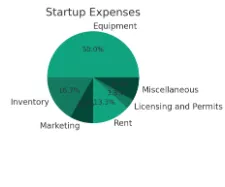
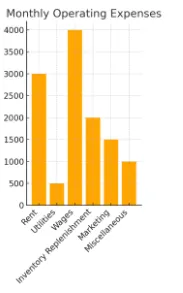
Provide details on your startup and operating costs, sales forecasts, cash flow statements, and break-even analysis. Explain your funding needs, how you’ll use the funds, and your repayment plan. Include a budget with estimates for materials, manufacturing, overhead, marketing, and any loans. Share your short- and long-term financial plans to show how you’ll become profitable.
Discuss potential risks like changes in demand, unreliable suppliers, production challenges, poor management, or lack of funds. Explain how you’ll mitigate these risks to address concerns and build investor confidence.
Outline the tasks required to achieve your goals, including timelines, costs, and the parties responsible. Include contingency plans for potential issues. For example, if launching a website, list actions like designing the site, establishing hosting, and creating content. Include timelines, budgets, and a backup plan in case of delays. An action plan ensures you’ll achieve your goals on time and budget.
Need a Custom Printed T-Shirts Business Plan?
Create a custom business plan with financial projections and market research in minutes with ProAI’s business plan generator.
Q: How long should a custom printed t-shirt business plan be?
A: A good business plan for a custom t-shirt printing business should be 15 to 30 pages long. The plan needs to be comprehensive enough to outline all key aspects of your business, but concise enough to keep readers engaged.
Q: Do I need funding to start a custom printed t-shirt business?
A: Starting a custom t-shirt printing business does require funding, but the amount can vary significantly depending on the business model. At a minimum, you’ll need funds for t-shirt blanks, custom prints or heat transfers, a heat press, and other equipment. The total cost can range from $5,000 to $50,000 or more for a full production facility. Many new business owners get started with a lower-cost model and reinvest profits to scale up over time.
Q: How much can I charge for custom printed t-shirts?
A: Custom t-shirt pricing depends on several factors, including:
• The type of shirt used — Higher quality shirts typically lead to higher retail prices.
• The number of prints — Single prints are usually cheaper than bulk or ongoing orders.
• The complexity of the design — Elaborate, multi-colored designs take more time and resources and are priced higher.
• Your production costs — Factor in costs for supplies, labor, and overhead to determine a competitive yet profitable price.
• Your target customer — Higher income customers may pay more for custom prints. Price according to what your target market can afford.
• Industry averages — Research what competitors charge for similar custom designs to price competitively.
T-shirt prices typically range from $10 to $40 per shirt for small custom orders. You’ll need to determine what price is right for your business based on these factors.