15 Minutes Read
Creating A Winning Business Model
We see many entrepreneurs come to us with brilliant ideas an inventions, but the business model is lacking in some…

Last Updated: 12/17/2023
Are you looking to start a construction irrigation business? If so, you’ve come to the right place. A well-crafted business plan is essential for any successful business, and a construction irrigation company is no exception. A construction irrigation business plan serves as a blueprint that guides you through establishing and operating your business. It helps you create a strategy, identify risks, develop a financial plan, and more. In this article, we’ll provide you with the information you need to write a comprehensive construction irrigation business plan for 2023. We’ll cover topics like market research, financial planning, and necessary steps to ensure legal compliance. Read on to learn more about writing a winning construction irrigation business plan.
A comprehensive construction irrigation business plan is key to launching a successful new company. Without a well-crafted plan, you may find yourself unprepared to meet financial and operational demands. Your business plan provides an overview of your market, target customers, and how you’ll reach them. It also outlines how you’ll manage resources, budget, risks, and achieve goals. Additionally, a construction irrigation business plan is required if seeking funding from investors or lenders. Without a clear plan showing expected ROI and growth, you won’t secure the capital to start your business.
Need a Construction Irrigation Business Plan?
Create a custom business plan with financial projections and market research in minutes with ProAI’s business plan generator.
A strong construction irrigation business plan is key to success. Understand the components that must be included. You can rearrange sections based on audience priority. Here are the main components:
A construction irrigation business plan starts with an executive summary. It introduces your plan and summarizes the idea. The goal is to draw in readers, often investors. Elements include:
– Mission statement
– Concept
– Execution plan
– Cost overview
– Expected ROI
– Industry overview
– Competitor analysis
– Market research and trends
An executive summary is critical for investor funding. Rather than reading the entire plan, they can review the summary.
Introduce your company, including name, location, contact information, owner details, and experience. Describe the business’s legal standing, short and long-term goals. Include a brief market study showing you understand regional irrigation trends and why you’ll succeed. Explain services, specialties, staff qualifications, and new technologies like water-saving systems or drainage solutions. Summarize financial resources and how you’ll use them.
3.1 Industry Analysis: The irrigation industry evolves rapidly, with new tech and applications each year. Provide an overview of the landscape, key trends, regulations, and opportunities.
3.2 Competition Analysis: Research competitors to understand the market. Describe their offerings, customer loyalty, and how you’ll stand out.
3.3 Marketing Analysis: Explain how your marketing campaigns will differ from competitors’ and reach your target audience.
Construction irrigation is vital for any project. Reliable systems properly water plants and soil. Research irrigation systems and costs based on climate. Outline services like maintenance and repair, plus any upgrades. Create a budget with material and labor costs. Include a marketing plan to promote services and gain new clients. Consider how to measure success to refine your plan and meet goals.
Skilled, knowledgeable staff are key to a successful construction irrigation company. Even if small, outline how you’ll source qualified personnel to ensure high quality and service.
Include roles, responsibilities, and job descriptions. Help investors understand each employee’s value and necessity. Discuss the hiring process for each role and cost estimates.
Note any training or certification needed, like safety or industry-specific credentials. Explain how you’ll properly train and update staff.
Consider the environment and irrigation needs when designing a system. This determines size and complexity.
Understand components like pumps, valves, pipes, sprinklers, and controllers. Know costs for parts and installation, plus long-term maintenance. Include all estimates in your business plan so investors see the total system cost.
Location is crucial. The right one sets you up for success and attracts customers.
Consider area demographics. Are other construction companies nearby? Is infrastructure like roads and transit accessible? How will customers reach you?
Analyze costs like taxes, regulations, rent, and utilities. Make sure you understand the total cost of setting up and operating in your chosen location.
Consider land value. Are there benefits to owning, like long-term cost savings? Understanding land value is key to a successful construction irrigation business plan.
Understand the current market and trends. Research competitors and customer demand for irrigation services.
Consider technology’s impact. The industry changes fast, so know new tools like automated systems and software. See how they may affect your business model. Opportunities exist for those who adapt.
Watch for new regulations or laws affecting the industry. Anticipate challenges and prepare your business plan.
After finalizing your plan and setting goals, focus on marketing. Even the best plan won’t succeed without an effective strategy tailored to your target audience.
Research the best media, online and off, to reach targets. Determine the most compelling message. Consider social media to build customer relationships. Set goals, track results, and refine your approach based on what works.
Seek advice from industry experts or business consultants. They provide insight into best practices, trends, opportunities, and realistic financials.
Industry experts offer relevant guidance on developing and executing your plan. They understand the current irrigation market and growth areas.
Business consultants analyze your financials to ensure a realistic, achievable plan. They find cost-effective solutions and address problems.
External help results in a plan reflecting market realities and positioning you for success.
Thoroughly understand your current finances and potential for growth and profit.
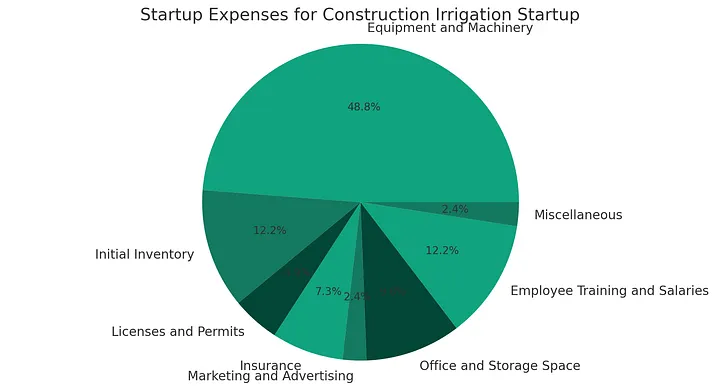
Calculate total capital needs including startup costs, loans, and working capital. Identify risks like market changes, new competitors, or surprise costs.
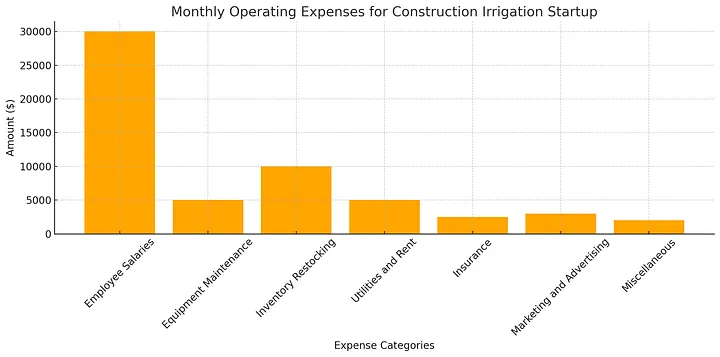
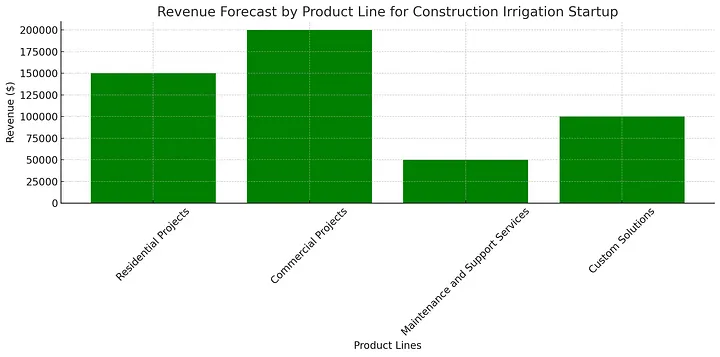
Develop a cash flow statement to project expected income, expenses, and profits. Create a budget with all operating costs such as labor, materials, and overhead.
Carefully analyzing your construction irrigation business’s financials will position you for success.
Need a Construction Irrigation Business Plan?
Create a custom business plan with financial projections and market research in minutes with ProAI’s business plan generator.