
15 Minutes Read
Creating A Winning Business Model
We see many entrepreneurs come to us with brilliant ideas an inventions, but the business model is lacking in some…

Last Updated: 12/17/2023
Are you passionate about working with children and looking to start an online business that caters to their needs? A children’s website can be an exciting and rewarding venture. However, to get started, you’ll need to create a comprehensive business plan. A strong business plan helps identify your business goals and objectives, resources required, and strategies to achieve them. Read on for tips and advice on how to write an effective children’s website business plan for 2023.
A detailed business plan is crucial for any new business, especially in the children’s website industry. It provides a roadmap to guide your business’s growth and helps gain an investor’s perspective. Your business plan establishes your business’s direction, provides financial forecasts, identifies risks, and measures progress. Taking time to develop a thoughtful plan significantly increases your chance of success. Without it, you won’t know if you’re achieving your goals or have the means to do so.
Need a Children’s Website Business Plan?
Create a custom business plan with financial projections and market research in minutes with ProAI’s business plan generator.
A successful children’s website business plan should be well-researched and include:
– Your business’s objectives and mission statement
– Target audience and market analysis
– Products/services offered
– Website design and technology used
– Marketing and growth strategies
– Financial projections and funding requirements
Here are the essential sections to include in your business plan:
The executive summary should briefly introduce your business plan and website concept. Include your mission statement, business plan overview, estimated costs, and projected return on investment. It should entice potential investors to read further.
Describe your business’s legal structure, ownership, mission, values, and short/long-term goals. Discuss your website’s competitive advantage and the team’s qualifications. Briefly analyze your industry and market, trends, and customer needs.
– Analyze the overall children’s website market size and your target segment. Discuss key trends impacting the market.
– Identify your target audience’s demographics like age, location, and interests.
– Analyze direct competitors’ strengths, weaknesses, and how you differentiate from them.
– Conduct a SWOT analysis of your business’s internal and external factors. Discuss addressing weaknesses and threats.
Decide what you’ll offer, e.g., educational content, online courses, physical products, or services. Detail each product/service, costs, delivery methods, and how you’ll manufacture/source them if applicable.
Understand your audience’s demographics and needs to create appealing content and marketing. This also helps determine pricing, product development, and more.
Conduct surveys and focus groups with parents to understand their opinions and needs. Research competitors and technologies to identify features to emulate or avoid. Ensure you meet W3C accessibility guidelines and use the latest frameworks.
Work with a developer or website builder to create an intuitive, user-friendly site for your target audience. Consider accessibility, security, and optimizing for SEO. Your website is the first impression of your business.
Select a secure, reliable web host and ensure your site is mobile-friendly and meets web standards. Consider using software, plugins, and applications to enhance the user experience, customer support, payment processing, etc.
Develop a marketing plan focused on analytics, reaching your target audience via social media, email, ads, etc. Budget for marketing costs and how you’ll allocate funds. Track and measure the success of your campaigns.
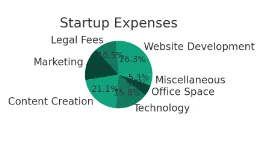
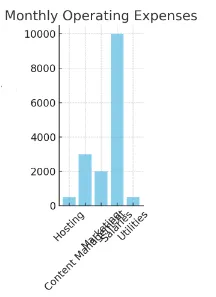
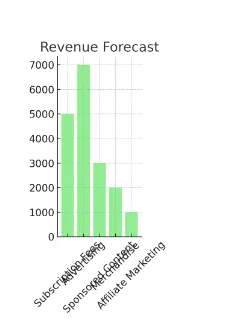
Provide estimated startup costs, revenue, expenses, profits, break-even analysis, and cash flow forecasts for your first few years of operation. Be realistic in your projections to set proper funding requirements and help potential investors evaluate the viability and risks of your business.
Research your industry and market trends to anticipate changes in customer needs. Plan how you’ll expand your product/service offerings, audience reach, and monetization strategies. Budget for the associated costs and how you’ll measure success. Adjust as needed to continuously improve.
Need a Children’s Website Business Plan?
Create a custom business plan with financial projections and market research in minutes with ProAI’s business plan generator.
Here are some common questions people may have about creating a children’s website business plan:
How long should a business plan be?
Typically 15–30 pages. The level of detail depends on your business and funding requirements. An executive summary, financial projections, growth plan, and FAQs are typically 2–3 pages max.
Do I need professional help to create a business plan?
It depends on your skills and experience. You can research examples and use free templates to write your own, or hire a consultant to review and strengthen it. For more complex plans or if you lack experience, consider hiring a professional business plan writer.
How often should I update my business plan?
Review and update your plan at least once a year, or if your business or market conditions change significantly. Make minor tweaks monthly or quarterly based on lessons learned and metrics. Update financial projections with actual expenditure and income figures as you operate.
Should I include a SWOT analysis in my business plan?
Yes, a SWOT analysis is helpful for identifying and addressing internal strengths and weaknesses as well as external opportunities and threats. It provides useful insight into your ability to compete and risks you may encounter. Investors expect to see a high-level SWOT analysis in a professional business plan.
What software or tools can I use to create my business plan?
Business plan templates in Microsoft Word or Google Docs are easy to use if you want to write your own plan. For a more guided experience, you can try tools like LivePlan, Enloop, or BizPlan. These provide templates, outlines, and financial projection tools to streamline the planning process. Some are free to use or offer paid upgrades with additional features.