15 Minutes Read
Creating A Winning Business Model
We see many entrepreneurs come to us with brilliant ideas an inventions, but the business model is lacking in some…

Last Updated: 12/17/2023
Opening a children’s recreation center is an exciting venture, but careful planning and preparation are required for success. A well-crafted business plan is essential, especially for a children’s recreation center, where both risks and rewards are high. A business plan helps assess viability, set realistic goals, and develop strategies to achieve them. This guide provides help on writing a 2023 business plan for a children’s recreation center, including examples and tips to get started.
Many new entrepreneurs fail to create a comprehensive business plan as it’s difficult and time-consuming. But without a proper plan, you’re guessing without direction. Investors are unlikely to fund a business without a well-crafted plan. Lack of planning, regulations, and forecasts set a business up for failure. Your plan shows how to profit, your place in the market, and how you’ll stand out. A little effort upfront is worth the reward of success later.
Need a Children’s Recreation Center Business Plan?
Create a custom business plan with financial projections and market research in minutes with ProAI’s business plan generator.
A good plan varies by center, considering services, target market, location, etc. If you’re new to the children’s recreation business, creating a plan can be daunting. To help get started, here are key elements to include:
– Executive Summary
– Company Description
– Market Analysis
– Services
– Employees
– Facility Design
– Location
– Market Overview
– Marketing
– External Help
– Financial Analysis
An executive summary is an overview of the proposed concept, mission, services, activities, potential costs, and expected return on investment. Explain the recreation center concept, activities, services, target age group, facility size/location, and opening timeline. Include estimated costs and expected return on investment. Summarize the entire plan and why it’s viable. Keep it concise, engaging, and efficient in conveying an overall picture.
Introduce the company, including name, location, contacts, owner details, and experience. Describe the legal standing, short and long-term goals. Show you understand regional children’s recreation trends and why you’ll succeed. Explain the concept, services, and activities. Outline competitive advantages over similar centers.
Divide into industry, competition, and marketing analysis.
Discuss the current industry state, trends, competitors, and why you’ll succeed.
Research competitors. Compare services, prices, hours, activities, customer service, etc. Explain how you differ.
Explain your marketing strategy, campaigns, target audience, building customer loyalty, and reaching goals.
After identifying your target market and location, focus on services offered. Will you have an arcade, climbing wall, pool, gym or mini-golf? Include all services, activities, and partnerships. Appeal to your target market and differ from competitors. Consider pricing and adjustments.
Employees are your most valuable asset. Ensure they are qualified, experienced, and passionate about a safe, fun environment for kids. Create detailed job descriptions for positions, hours, and pay. Discuss training to prepare staff for all ages.
Outline policies and procedures for discipline, health, safety, and an enjoyable atmosphere.
Facility design is critical. Consider size, activities, and safety. Size depends on the number of children and activities. Ensure meeting local regulations and using safe, non-toxic materials. Include a marketing plan to attract customers. Consider hiring a professional designer.
Location is especially important. Find an accessible spot for your target market, with space, population demographics, and limited competition. Consider public transit, highways, parking, and surrounding businesses appropriate for your audience. Ensure affordable rent or purchase costs and ability to cover associated expenses. Do research and planning for the best decision.
Research high-demand recreational activities and trends in your area for new ventures. Look at competitors, their offerings, and how to improve and differentiate. Consider your target market, age range, and motivation to use services. Understanding the market informs your business model and pricing decisions.
Your plan must have a marketing strategy to reach potential customers and build a positive brand. Research your local market, target customer demographics, and gaps or opportunities. Choose a budget and marketing channels most likely to reach them, e.g., social media, email, content, search engine optimization. Create goals, target audience, content, and timeline for each channel. Research competitors and differentiation. Track campaign ROI for effectiveness.
Consider external help to establish foundational elements. Consult a financial advisor or accountant for budgeting and financial projections. Hire a lawyer to review legal documents like contracts and leases. A designer helps with logos and branding. A marketing firm develops a marketing plan. An architect or engineer helps design the facility layout. Consider hiring a consultant to review and advise on your plan.
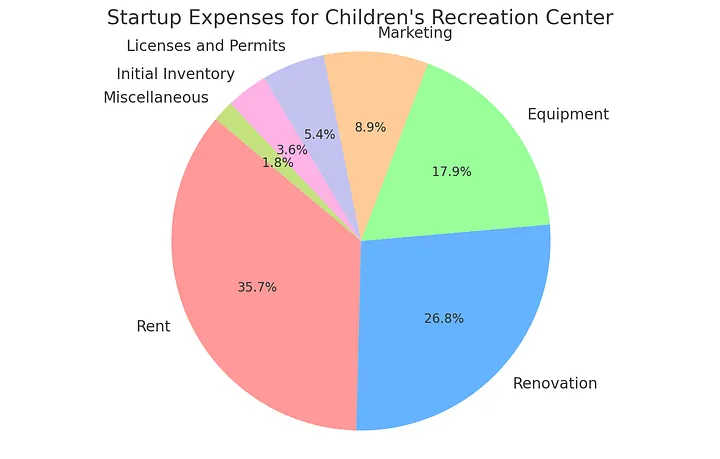
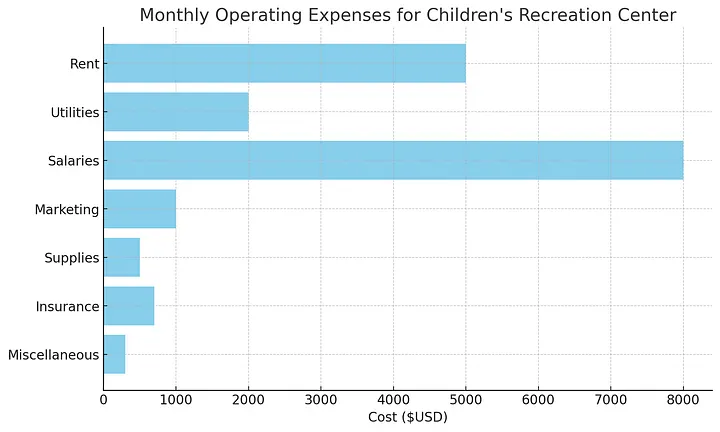
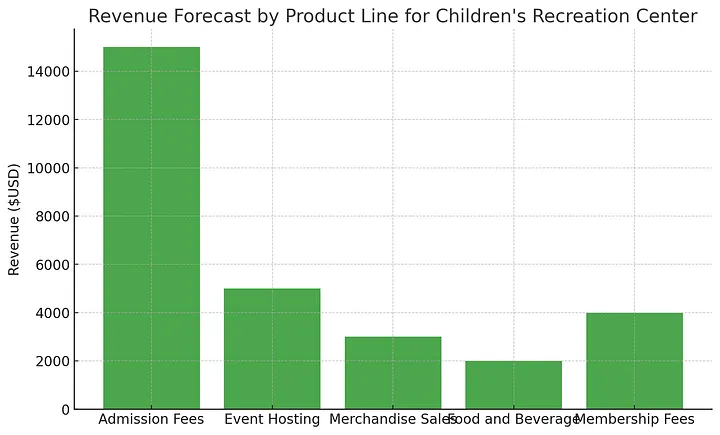
After outlining services, move to financial analysis, critical for viability. Include income statements, balance sheets, cash flow statements, and break-even analysis showing profitability. Project revenue and expenses for 3–5 years. Provide a detailed capital and operating budget for investors to understand funding needs.
Need a Children’s Recreation Center Business Plan?
Create a custom business plan with financial projections and market research in minutes with ProAI’s business plan generator.