
15 Minutes Read
Creating A Winning Business Model
We see many entrepreneurs come to us with brilliant ideas an inventions, but the business model is lacking in some…


Have you ever dreamed of starting your own financial planning business? If so, you’ll need to develop a comprehensive business plan to guide you through the process. A financial planning business plan outlines your company’s goals and strategies, funding requirements, and how you’ll manage daily operations. It provides a roadmap to success and helps ensure your plan is realistic and achievable.
In this article, we’ll explore the essential elements of a financial planning business plan. We’ll provide tips and resources for writing an effective plan and include an example plan summary. With careful planning and preparation, you can launch a successful financial planning firm.
A financial planning business plan is crucial for several reasons:
● It helps you define your mission, vision, and operational strategies. Without proper planning, it’s easy to lose focus and waste time and money.
● It’s required to obtain funding from investors and lenders. No one will finance your business without seeing a well-developed plan.
● It prepares you for challenges and helps avoid costly mistakes. Proper planning makes you think through regulatory issues, competition, marketing, and financial projections.
● It keeps you accountable. A good plan includes measurable goals and timelines to keep you on track.
● It provides a tool for evaluating your progress. You can compare your actual results to the plan and make adjustments as needed.
Need a Financial Planning Business Plan?
Create a custom business plan with financial projections and market research in minutes with ProAI’s business plan generator.
Here are the key elements to include in your financial planning business plan:
Briefly summarize your mission, services, team, and financial projections. This section should capture the reader’s interest and highlight the key aspects of your plan.
Explain your company’s background, ownership structure, qualifications, services offered, and competitive advantage. Discuss industry trends and your potential for success.
Analyze your target market, industry, and competition. Discuss your clients’ needs, buying behaviors, and how your services meet their needs. Identify your competitors’ strengths and weaknesses.
Clearly define your services and fees. Explain how your services help clients achieve their financial goals and the value you provide. Include details on your pricing, billing, and payment terms.
Evaluate your direct and indirect competitors in depth. Discuss their services, marketing strategies, locations, and competitive advantages. Explain how you’ll differentiate from them.
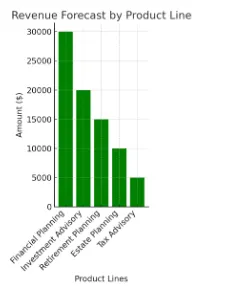
Provide income statements, balance sheets, cash flow statements, and key metrics and ratios for the next 3–5 years. Include detailed assumptions and break-even analysis.
Explain how you’ll reach your target market through strategies like social media, content marketing, advertising, networking, and referrals. Include specific campaigns, costs, and metrics.
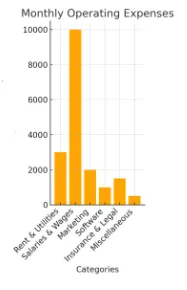
Describe your business location, hours, software/tools used, and daily operational procedures. Include organizational charts, job descriptions, and plans for growth, customer service, and risk management. Discuss projected costs/expenses.
Demonstrate your knowledge of the financial planning industry’s rules and regulations. Explain the required licenses, certifications, zoning, insurance, tax obligations, and health/safety requirements that apply to your business. Discuss how you’ll maintain compliance.
Detail your team’s experience, qualifications, responsibilities, and compensation. Explain your decision-making processes, how you’ll measure performance, and strategies for collaboration and accountability.
Need a Financial Planning Business Plan?
Create a custom business plan with financial projections and market research in minutes with ProAI’s business plan generator.
Q: What experience does your team have in financial planning?
A: Our team has over 20 years of combined experience helping clients achieve their financial goals…
Q: What is your target market?
A: Our target clients are upper-middle income professionals and retirees aged 50–70 within a 25-mile radius of our office…
Q: What investment strategies do you employ?
A: We take a holistic approach to financial planning and investment management based on each client’s unique needs and risk tolerance…
Q: How are you compensated for your services? Do you charge by the hour or a fixed fee?
A: We charge a fixed annual fee for financial planning and investment management services based on each client’s complexity and account value.