FAQ
How long should a bicycle courier business plan be?
A good rule of thumb is 15 to 25 pages for an in-depth plan covering all key areas. The length depends on factors like business complexity, investor needs, etc. An executive summary of 1 to 2 pages highlights the key points for a quick overview.
What resources do I need to develop my business plan?
Resources to help develop your bicycle courier business plan include:
-Business planning software like LivePlan, Enloop or PlanGuru
-Books on developing a winning business plan
-Online tutorials and articles with advice and examples
-A business plan consultant to help craft a customized plan
-Advice from mentors who have experience starting similar businesses
What should my bicycle courier business plan cover?
A comprehensive bicycle courier business plan should include:
•Executive summary: Business overview and highlight key points
•Business description: Details about your business, mission, goals, etc.
•Industry and market analysis: Research local industry trends, target market, and competition
•Organization and management: Your business model, partnerships, staffing plan, risks, etc.
•Marketing plan: How you will reach and attract customers, build a customer base
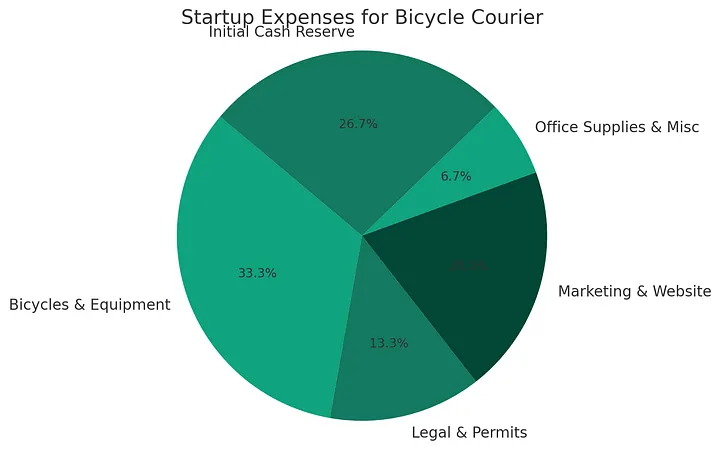
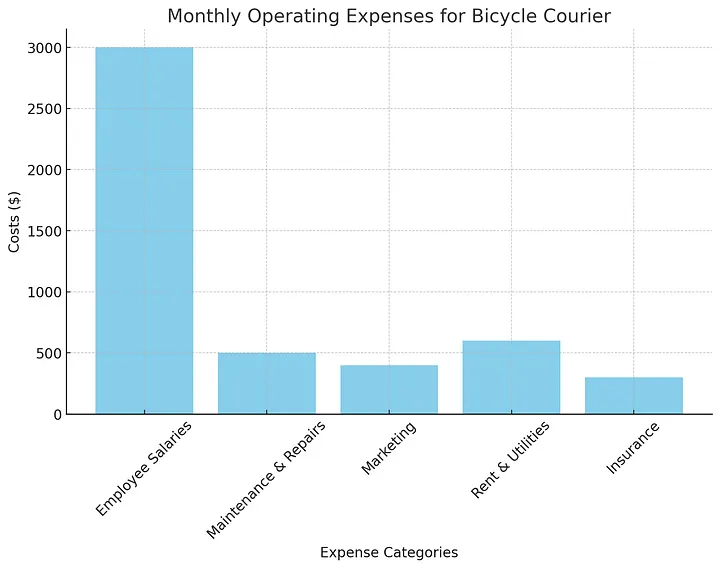
•Financial projections: Start-up costs, cash flow, income statements, balance sheets, key metrics, risks
•Operational details: Business location, equipment, technology systems, operational procedures, partnerships
•Risks and opportunities: SWOT analysis, contingency plans for potential challenges
•Legal considerations: Business structure, permits, licenses, insurance, terms of service, delivery contracts
•Supporting documents: charts, graphs, photos, customer testimonials, owner biographies, etc. (optional but useful)
How do I know if my bicycle courier business plan is successful?
Some signs your bicycle courier business plan is successful include:
•It helps you gain funding from investors or secure a loan from a bank.
•It serves as an effective roadmap for launching and running your business.
•Your financial projections align closely with actual costs and revenue.
•You meet key milestones and goals outlined in the plan.
•Your customer base and market position align with your plan.
•You anticipate challenges and risks, then adapt your plan accordingly.
•Your plan helps build confidence in your business idea and execution strategy.
•You refer back to your plan regularly to guide key decisions.
- Key partners and stakeholders see your plan as a thorough, cohesive overview of your business.