15 Minutes Read
Creating A Winning Business Model
We see many entrepreneurs come to us with brilliant ideas an inventions, but the business model is lacking in some…


An organic restaurant business plan is essential for success in this competitive industry. It provides a roadmap for how you will operate and helps you anticipate challenges. A comprehensive plan also helps secure funding by demonstrating your vision to investors. With a well-written plan, you can launch your restaurant successfully and ensure long-term profitability.
Need a Organic Restaurant Business Plan?
Create a custom business plan with financial projections and market research in minutes with ProAI’s business plan generator.
To write an effective organic restaurant business plan, consider factors like your target market, location, and style of restaurant. Include all necessary components, such as an organic menu, marketing plan, and financial analysis.
The executive summary introduces your business plan. It should include:
– Mission statement focusing on organic and sustainability
– Restaurant concept
– How you will achieve organic standards
– Potential costs (organic ingredients, certifications, etc.)
– Expected return on investment
Introduce your company, including:
– Restaurant name, location, owner details, and experience
– Organic ingredient sourcing process
– Short and long-term goals
– Brief market study showing you understand trends
– Mission statement and philosophy
Discuss the state of the organic restaurant industry and emerging trends you will take advantage of.
Research competitors to understand successful strategies. Note prices, hours, menus, and design. Explain how you will differ.
Explain how you will market your restaurant differently and reach your target demographic. Outline strategies and how they will help achieve goals.
Include seasonal, locally-sourced items appealing to various dietary needs. Feature “healthier” options and vegan/vegetarian choices. An organic menu shows you care about the environment and community.
Detail job descriptions, qualifications, salaries, benefits, training, development, retention, and promotion plans. Highlight the values you seek in employees.
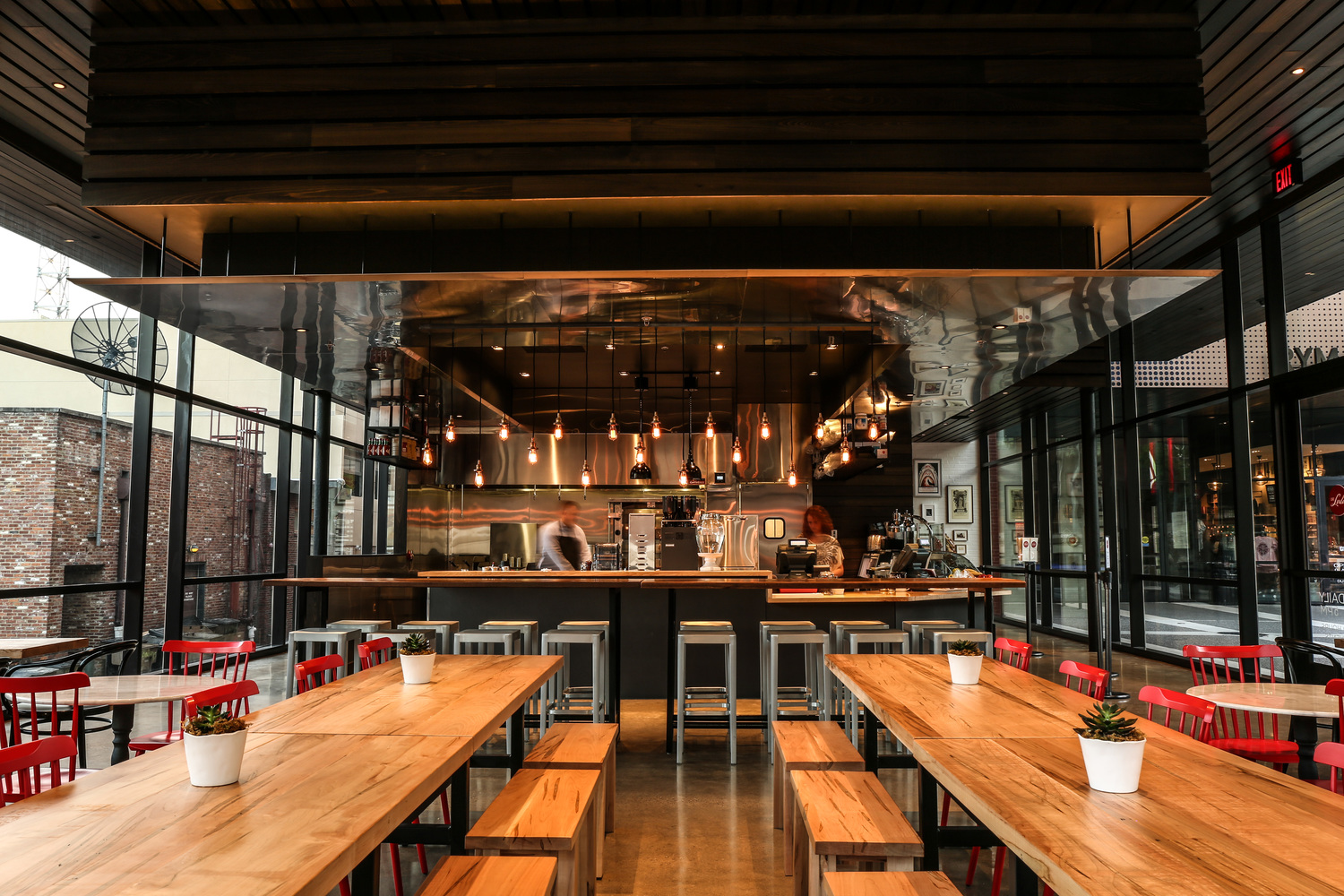
Describe your vision for interior and exterior design. Consider organic materials, color scheme, layout, seating, lighting, and budget. A great design attracts customers.
Consider proximity to customers, accessibility, visibility, parking, rent, and zoning. Research locations based on your budget and target market.
Discuss the organic restaurant market size, competition, and trends like technology, consumer demand, and regulations. Analyze the potential customer base.
Explain your plan for social media, content, influencer, email, and other marketing to build loyalty and attract customers. Budget enough time for organic marketing to produce results.
Discuss using experts, free resources, local organizations, and industry associations for advice and templates. Outline any outsourcing plans based on your needs and budget.
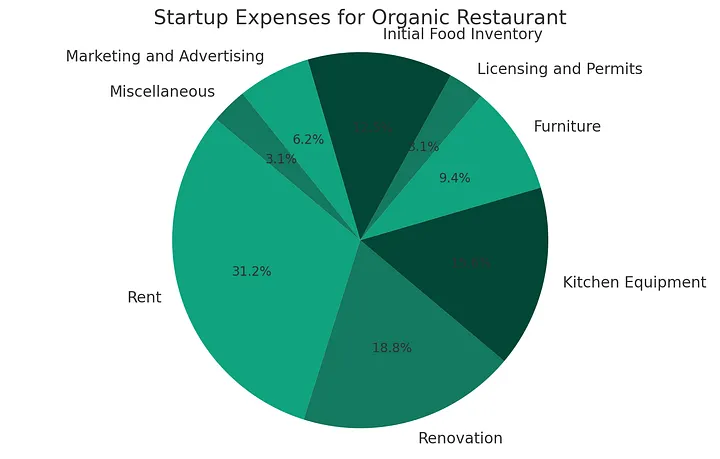
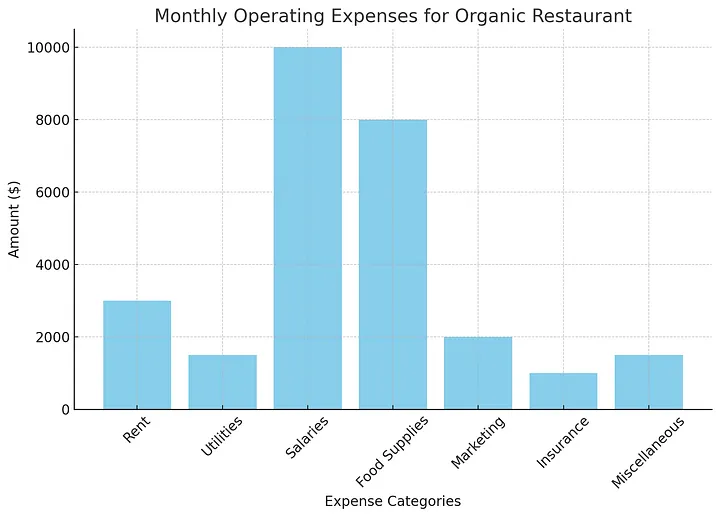
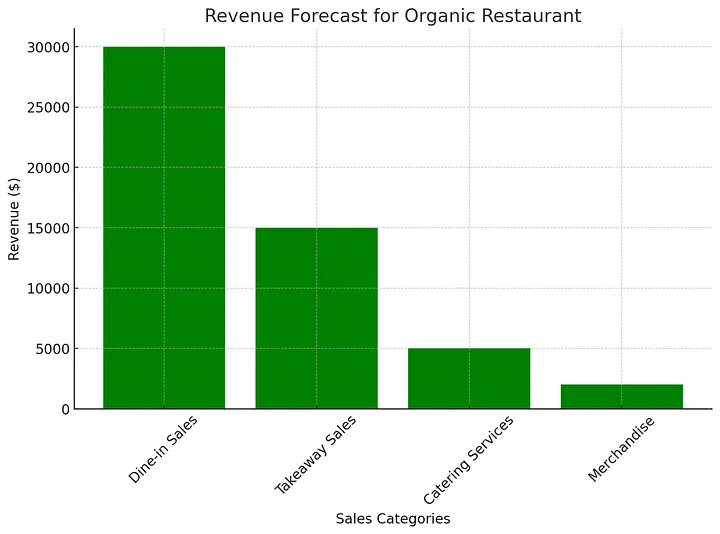
Include start-up, operating, staff, marketing, and ingredient costs. Calculate potential revenue and return on investment. Provide budgets, break-even analysis, and feasibility analysis to show the viability of your plan.
Need a Organic Restaurant Business Plan?
Create a custom business plan with financial projections and market research in minutes with ProAI’s business plan generator.
How long should an organic restaurant business plan be?
An organic restaurant business plan should be about 15 to 30 pages long. The exact length will depend on the complexity of your restaurant concept and model. You want to achieve a balance of being comprehensive while still being concise.
What are the most important sections of an organic restaurant business plan?
The most important sections are:
● Executive Summary: Briefly summarizes your entire business plan. This is the most important section and should be persuasive and compelling.
● Company Description: Provides an overview of your restaurant, including its mission and goals.
● Market Analysis: Shows you understand your target market, competition, and industry trends. This demonstrates the potential for success.
● Organic Menu: Details your menu offerings, showing how they meet current trends. The menu is the heart of any restaurant.
● Marketing Plan: Explains your strategies for reaching customers and how you will gain a competitive advantage.
● Financial Analysis: Proves the financial viability and potential profitability of your restaurant concept based on reasonable assumptions and cost projections.
● Management Team: Highlights the relevant experience and skills of your team. Investors want to see you have the expertise to execute your plan.
Should I include photos or illustrations in my organic restaurant business plan?
Including photos, illustrations, charts and graphs in your organic restaurant business plan is a good idea. Visual elements help bring your concept to life and break up large blocks of text, making the plan easier to read. Useful items to include are:
● Photos of sample menu items to give investors an idea of the type of food you will serve.
● Renderings or photos of your restaurant interior to convey the overall design and ambiance.
● Charts displaying industry trends, market analysis, marketing plans, or financial projections. These make data more visually compelling and easier to understand quickly.
● Location maps showing the neighborhood and proximity to competitors, public transit, parking, etc. This provides essential context for your site selection.
● Organizational charts highlighting your management structure and team qualifications. This allows readers to understand your reporting hierarchy at a glance.
Using visuals in your business plan, especially for a restaurant concept, helps bring the details to life and gives investors a clearer sense of your vision. However, be sure not to go overboard — your business plan still needs to have a good balance of text and visuals. Only include the most vital and compelling images that truly strengthen your plan.