15 Minutes Read
Creating A Winning Business Model
We see many entrepreneurs come to us with brilliant ideas an inventions, but the business model is lacking in some…

Last Updated: 12/17/2023
Are you passionate about art and education? Opening an art school museum can be an exciting venture for anyone looking to share their love of art with the local community. However, to ensure your museum is set up for long-term success, you need to develop a comprehensive business plan. A strong business plan provides a roadmap for how to achieve your goals and is essential for gaining investor trust and funding.
In this guide, we will walk you through how to write an effective art school museum business plan for 2023. We have included helpful tips and examples for each section to make the process as easy as possible. With some diligent planning and research, you will have a business plan ready to launch your new art school museum. Let’s get started!
Need a Art School Museum Business Plan?
Create a custom business plan with financial projections and market research in minutes with ProAI’s business plan generator.
A well-crafted business plan is the foundation for any successful art school museum. It helps you outline your vision, determine financial needs, build trust with stakeholders, uncover potential risks, and gain access to funding. Some of the key benefits of developing a business plan include:
•Defines your mission and goals. A business plan helps articulate your museum’s purpose and long-term objectives.
•Attracts investors and funding. The plan shows potential investors your vision is viable and worth funding. It can also help you obtain grants and loans.
•Mitigates risks. The planning process allows you to identify risks and create strategies to address them. This gives stakeholders confidence you will be able to navigate challenges.
•Serves as a roadmap. The plan maps out key milestones and a timeline for achieving goals so you can stay on track.
•Gains stakeholder trust. A well-researched plan demonstrates your competence and ability to reach key audiences. This builds credibility with partners, funders, and the local community.
In summary, a art school museum business plan is essential for turning your vision into a reality. Let’s look at how to craft an effective plan.
An art school museum business plan has several key elements:
The executive summary introduces your vision and captures the reader’s attention. It highlights your museum’s mission, offerings, target market, and financial projections. The summary should be concise while persuading the reader to continue onto the full plan.
Mission and vision statements define your museum’s purpose and long-term goals. The mission statement outlines your core purpose and values while the vision statement describes your ultimate aspirations. These help shape your strategic direction and set key priorities.
A market analysis assesses your industry, competitors, and target market. It helps determine how to differentiate your museum and reach key audiences. Conduct research on industry trends, competitive museums, and potential visitor segments to understand opportunities and challenges.
Detail the programs, services, events, and exhibits your museum will offer. Discuss educational programs, community outreach initiatives, performing arts, lectures, classes, and any partnerships. Explain how these align with your mission and meet visitor needs.
Your curatorial strategy outlines how you will acquire, preserve, and exhibit a collection. Discuss the types of art you will collect and what criteria you will use to make selections. Explain how you will conduct research, educate visitors, and develop exhibits to achieve your stated goals.
Determine how many staff you need and the necessary skills, experience, and qualifications for each role. In addition to curators, consider leadership, educators, guest services, operations, marketing, development, and administrative roles. Explain how each position supports key priorities.
A comprehensive marketing plan is vital for promoting your new art school museum. Define your target audiences, brand positioning, and the strategies you will use to build awareness and attract visitors. Consider social media, email marketing, advertising, partnerships, public relations, and community outreach. Provide timelines and budgets for key initiatives.
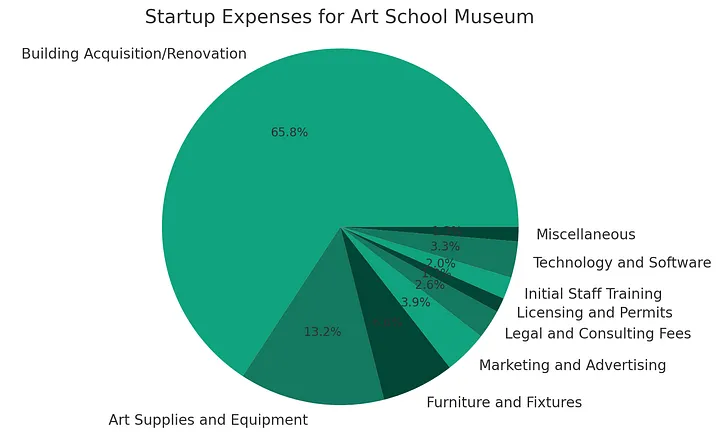
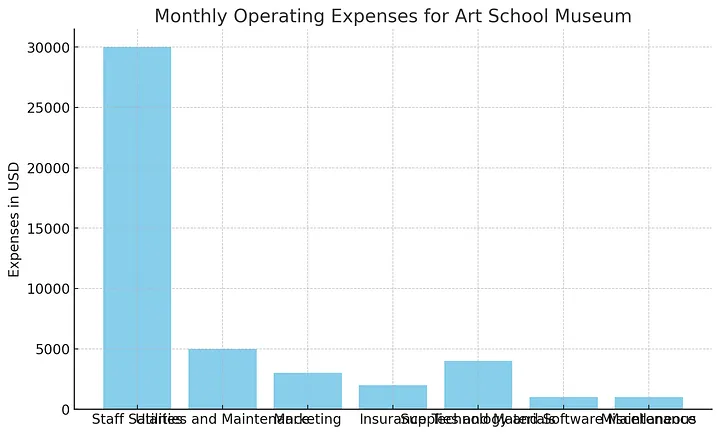
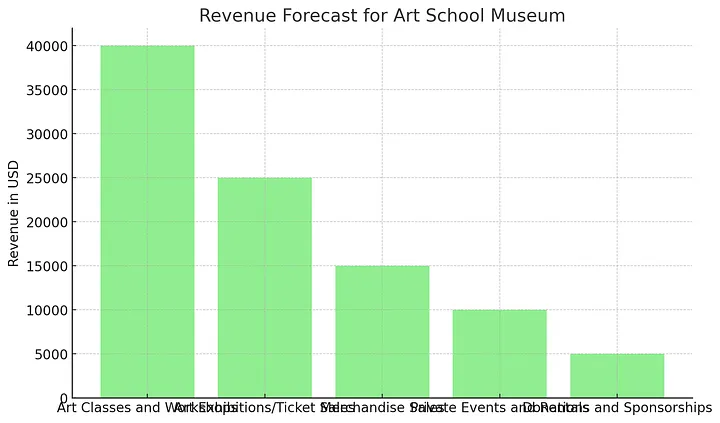
The financial plan details financial projections, capital requirements, and funding strategies. It includes income statements, cash flow statements, balance sheets, and key metrics and ratios for the next 3–5 years. Outline operating budgets, startup costs, revenue streams, and any funding from investors, donors, grants, or loans. Conduct a break-even analysis to determine financial sustainability.
A risk management plan addresses potential challenges that could impact your museum’s success. Identify key risks such as changes in the economy, education priorities, natural disasters, or public health issues. Develop strategies to mitigate risk exposure through diversifying funding, building strong community support, enhancing virtual offerings, and creating emergency response plans. Detail how you will monitor and address risks to adapt to a changing environment.
Discuss how you will leverage external support and resources to strengthen your museum. Consider partnering with local schools, arts organizations, tourism boards, and small businesses. Look for opportunities to collaborate with established museums to gain insights into best practices. Seek input from industry experts, educators, and financial advisors. Build connections with funders, donors, media contacts, and community leaders. Develop a network of support to help launch and sustain your new museum.
Does this help summarize how to write an effective art school museum business plan? Let me know if you have any other questions. I’m happy to help in any way I can. Good luck with your new venture!
Need a Art School Museum Business Plan?
Create a custom business plan with financial projections and market research in minutes with ProAI’s business plan generator.