15 Minutes Read
Creating A Winning Business Model
We see many entrepreneurs come to us with brilliant ideas an inventions, but the business model is lacking in some…

Last Updated: 12/17/2023
Opening a toy store is such a fun idea, isn’t it? Kids have a magical relationship with toys, so you’ll get to help create special memories while also running a successful business. But launching a toy store takes careful planning and preparation. Use this guide to learn everything you need to know about starting your own toy store.
First, pick a business structure. Here are your options:
– Sole proprietorship — Easy to set up but you’re personally liable for debts.
– Partnership — Share ownership and profits with a business partner. You’re also jointly liable though.
– Limited liability company (LLC) — Separate legal entity that limits your personal liability but allows pass-through taxes. Most toy stores pick this.
– Corporation — More liability protection but complex regulations and corporate taxes.
Talk to lawyers and accountants to decide what’s best for you. An LLC is a good middle ground for many.
Need a Toy Store Business Plan?
Create a custom business plan with financial projections and market research in minutes with ProAI’s business plan generator.
Every successful toy store needs a solid business plan covering:
– Executive summary — Highlights your plans.
– Company overview — Your vision, values, goals, etc.
– Market analysis — Research your target customers and competitors.
– Operations — How you’ll manage inventory, suppliers, equipment, staff, etc.
– Marketing strategy — Pricing, promotions, advertising, connecting with customers.
– Financial plan — Sales forecasts, costs, profit expectations, funding required.
Having a well-researched business plan is so important when getting funding and launching.
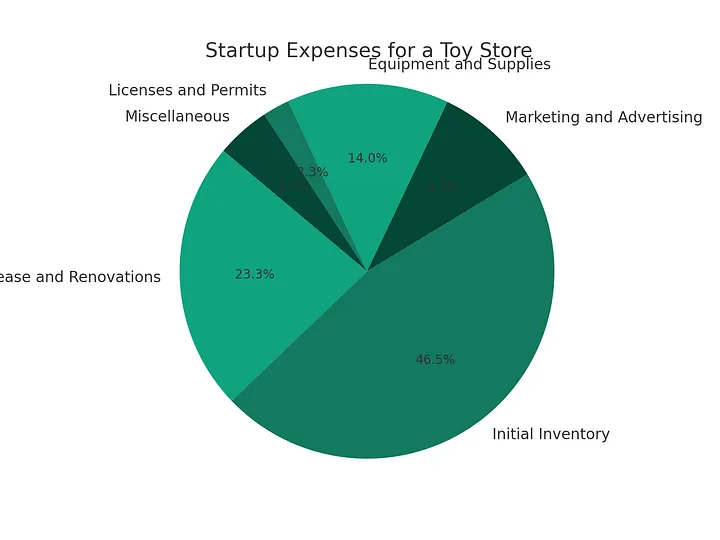
Starting a toy store requires big upfront costs:
– Rent
– Equipment like POS systems and security cameras
– Initial toy inventory
– Store build-out and renovations
– Furniture like displays and shelves
– Signage
– Permits and legal fees
– Website and tech costs
– Marketing promotions
– Insurance
– Professional services like accounting
Figure out exactly how much funding you need with detailed projections, then get that money through:
– Your own savings
– Loans from family and friends
– Small business loans and lines of credit
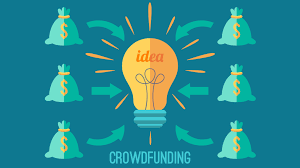
– Crowdfunding platforms like Kickstarter
– Grants and incentives
Give yourself plenty of time to secure enough startup funding before signing any leases.
The toys you sell make or break your business. Offer:
– Variety — Toys for all ages from infants to teens.
– Quality — Vet manufacturers to avoid unsafe products.
– Unique — Specialty toys not easily found in big box stores.
– Value — Reasonable prices families can afford.
– Learning — Educational toys that build skills.
– Fun — Toys that encourage creativity and joy.
Attending toy fairs helps discover new inventory. Order early for holidays like Christmas.
Design a retail space with:
– Kid-friendly layout — Low shelves, colors, interactive components.
– Easy navigation — Clear sections and signage to find toys.
– Test play space — Let kids try before buying.
– Checkout counter — With impulse purchase displays.
– Storage — Shelving and storage room to organize excess.
– Electronics — Cash register, credit card reader, security system.
– Furniture — Display cases, tables, baskets, shelves.
– Safety — Meet all codes and accessibility standards.
Get necessary permits as you set up. Perfect the customer experience in your space.
Promote your new toy store with:
– Website — Online shop plus toy content and brand info.
– Grand opening — Fun block party for the community when you open.
– Social media — Share updates and run contests on Instagram, Facebook, etc.
– Local ads — Place ads in parenting magazines, school flyers, etc.
– Signage — Eye-catching interior and exterior signs/displays.
– Partnerships — Team up with schools, party vendors, parent groups.
– Sales and coupons — Offer special deals during slow periods.
Connect with local families through creative, engaging marketing.
Starting a toy store takes major commitment but brings immense rewards. Help kids learn and play while running a fun, profitable business. Use this guide to turn your toy store dreams into reality!
Need a Toy Store Business Plan?
Create a custom business plan with financial projections and market research in minutes with ProAI’s business plan generator.
Thinking of opening your own toy store but still unsure about a few key details? Here are answers to some of the most common questions aspiring toy store owners have.
What are the main costs involved in starting a toy store?
The major costs include inventory, store rental payments, build-out/renovations, equipment, furniture, signage, insurance, professional services, inventory management systems, website building, marketing and more. Budget for at least $100,000 — $300,000 in startup costs.
What permits and licenses do I need?
You’ll likely need a general business license, sales tax permit, and zoning approval. Depending on your location, you may also need permits related to signage, food sales, noise, parking, etc. There are also toy safety regulations you must comply with.
How do I choose the right toys to sell?
Focus on variety, quality, unique/niche toys, educational value, and fun. Attend toy fairs to find vendors. Get customer input. Order the most in-demand, appealing toys but also take some risks on more unique items.
How do I compete with big retailers like Toys R Us and Walmart?
Offer better customer service, unique/hard-to-find toy brands, knowledgeable staff, hands-on demonstrations, gift wrapping, loyalty programs, community events, and a fun experiential shopper experience.
What retail location is best for my toy store?
Look for areas with high foot traffic, ample parking, and where families live or spend time. Retail space near schools, parks, kid hangouts and existing shops/restaurants frequented by families can be ideal.
How much store space will I need?
1,000–3,000 square feet is ideal for most independent toy stores. You’ll need enough room for retail floor space, storage, checkout counters, test play areas, aisles/navigation room and back office space.
What hours should my toy store be open?
Weekday hours from 9 or 10 AM to 7 PM work well for working parents. You may want to be open from 10 AM to 5 PM on Saturdays and for limited hours like 11 AM to 3 PM on Sundays. Adjust hours seasonally, as needed.
Should I sell toys online in addition to in-store?
Yes, having an ecommerce store allows you to expand your reach beyond just local customers. Offer in-store pickup options to drive traffic as well. Managing both physical and online sales channels takes more work but maximizes revenue.
What experience do I need to start a toy store?
Retail experience is very helpful. Passion for children and toys is most important. Hire staff with strong sales skills. Take small business management classes. Join industry associations to keep learning.