15 Minutes Read
Creating A Winning Business Model
We see many entrepreneurs come to us with brilliant ideas an inventions, but the business model is lacking in some…

Last Updated: 12/17/2023
Are you an aspiring musician, playwright, or theater director looking to make your mark in the music theater scene? Establishing a successful music theater business requires careful planning and an understanding of the industry. A music theater business plan is an essential tool that helps you map out your vision and objectives while outlining the steps you need to take to launch and operate your business. In this article, you’ll learn about the components of a music theater business plan and get tips for writing an effective plan for your business. So get ready to embark on the journey to success — let’s get started!
Many new theater producers fail to put together a well-thought-out music theater business plan because the process can seem daunting and time-consuming. However, without a proper music theater business plan, you’re shooting in the dark without an aim. Securing funding from investors for your theater dream would be nearly impossible without a proper plan. Even if funded, the lack of planning, proper preparation, and financial forecasts will likely set your theater up for failure. Your music theater business plan maps out how you plan to turn a profit, identifies where your theater fits into the saturated market, and outlines how you plan to stand out. The time and effort required to develop a thoughtful plan are worth the reward of running a successful theater in the long run.
Need a Music Theater Business Plan?
Create a custom business plan with financial projections and market research in minutes with ProAI’s business plan generator.
A good business plan for a music theater considers factors like the type of production, target audience, and location. Writing a business plan for a music theater can seem daunting, but with the proper guidance and key components, you’ll be on your way to success.
A music theater business plan should always begin with an executive summary. An executive summary not only acts as the introduction to your business plan but also a high-level overview of the entire concept. The main aim of an executive summary is to capture the reader’s (often an investor) interest in the rest of your business plan.
Common elements of an executive summary include:
– Mission statement
– Proposed theatrical concept
– Execution plan
– Brief overview of potential costs
– Expected return on investment
An executive summary is essential for those seeking investors to fund their projects. Instead of combing through the entire music theater business plan for information, investors can review the executive summary.
This section fully introduces your company. Begin with the name of your music theater, location, contact information, and relevant details. Also, include the owner’s details and experience.
The second part of the company description should highlight the legal standing of the music theater and outline short and long-term goals. Provide a brief market analysis demonstrating an understanding of regional music theater industry trends and why your theater will succeed. Include a mission statement to guide operations. Explain your competitive advantages over other local music theaters.
Explore the current state of the music theater industry. Consider popular shows and performances, market size, and growth potential. Conduct a thorough review of the market, industry trends, and growth opportunities.
Research the competition to develop a successful business plan. Identify other local music theaters, their pricing, marketing, and shows offered. Note what competitors are doing to create a unique business plan.
Include a marketing analysis in your business plan. Explain how you will reach your target audience. Describe promotional activities like print media, radio, social media, and online advertising. Provide a detailed marketing strategy and implementation timeline.
Your theater’s production is critical to success. Decide on a venue, musical director, actors, musicians, and more. If you have a venue and production staff, include that information in your business plan. Include additional costs like musicians’ salaries, equipment, rehearsal space, costumes, and props.
Include plans to promote the production like advertising, social media campaigns, and promotional materials. Include plans to solicit audience feedback to improve future productions.
For a detailed plan, include a production timeline with rehearsal start/end dates, show open/close dates, and post-show activities. This helps investors understand the scope and ensures everything stays on schedule.
A music theater business plan requires details about the cast and crew. Include lists of actors, musicians, and staff involved in the production.
Include behind-the-scenes staff like producers, directors, choreographers, designers, technicians, and engineers.
List qualifications, contact information, and bios for each cast and crew member. Investors want to know who is working on their project. Provide references to reassure them you have chosen the right people.
Location is one of the most important factors in a music theater business plan. The right location determines success.
Choose a location easily accessible to patrons, near other businesses, with plenty of parking. Consider the venue size. Too small limits patrons, too large wastes space.
Ensure the location is zoned for music theater to obtain necessary permits and licenses.
Understand the music theater market and your place in it before planning how to write a business plan. Identify industry trends and the competitive landscape to create a successful plan.
Research the industry. Consider local theaters, ticket prices, shows, production costs, and factors impacting your success.
Analyze your target audience. Who are they? What music and shows do they like? Know this to craft a plan that resonates.
Consider marketing and promotions. What works best? How will you get the word out?
Research competitors. Note their strengths, weaknesses, and how you will stand out. Answering these questions leads to a realistic, successful plan.
Key strategies for marketing a new music theater business:
Build an audience and demonstrate commitment with a website and strong social media presence. Create a press kit for local media and patrons.
Attend local events to meet potential investors, patrons, and industry professionals. New opportunities may arise.
Consider scaling marketing with SEO, content marketing, and digital strategies. This benefits the long run.
Writing a music theater business plan requires external help. Consider:
An accountant for financials and a lawyer for compliance.
Marketing help to reach the right audience.
A consultant for specifics if you lack music theater expertise. Valuable insight and advice help create the perfect plan.
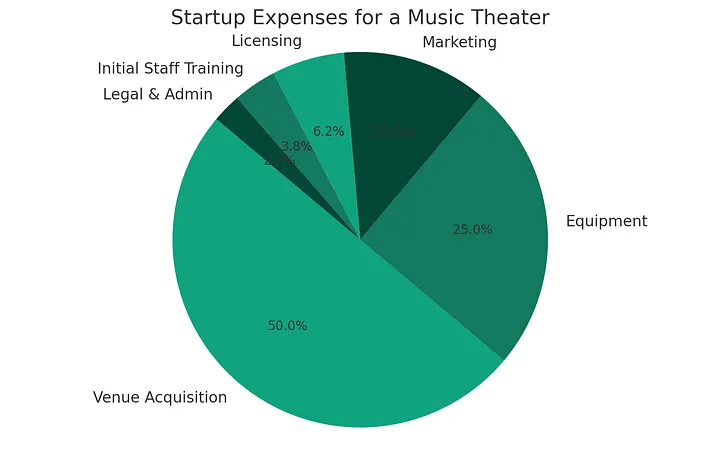
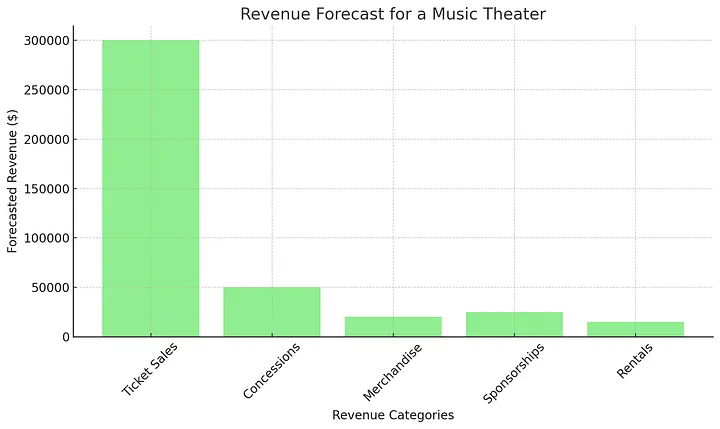
A financial analysis is essential for any business plan. Demonstrate potential revenue from ticket sales, concessions, merchandise, and other sources.
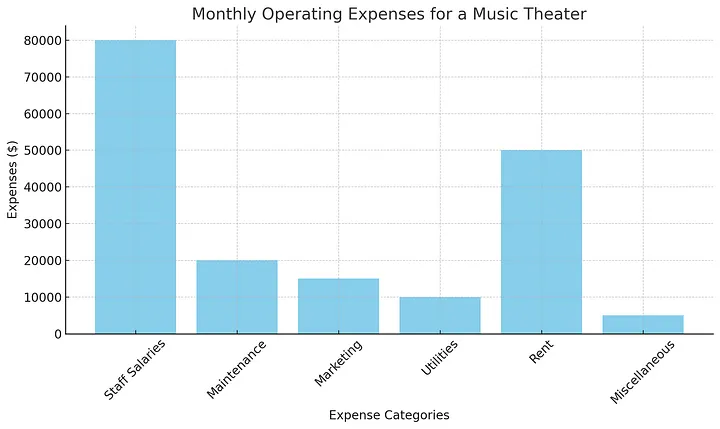
Provide expense estimates like labor, rent, marketing, and overhead. Include a break-even point so investors understand returns.
Include a cash flow statement outlining available money over time. This shows stability and the ability to repay investments.
Need a Music Theater Business Plan?
Create a custom business plan with financial projections and market research in minutes with ProAI’s business plan generator.