15 Minutes Read
Creating A Winning Business Model
We see many entrepreneurs come to us with brilliant ideas an inventions, but the business model is lacking in some…

Last Updated: 12/17/2023
Are you looking to start a business in the interior design industry? With the market for interior design services on the rise, now is a great time to get your business off the ground. But before you start, you need to create a comprehensive business plan with goals and strategies that will guide you to success. A business plan for interior design should include an analysis of the competitive landscape, a marketing strategy, and a financial plan. In this article, I’ll provide tips and examples to help you write a business plan for interior design in 2023.
A solid interior design business plan is essential for any aspiring interior designer looking to launch their own business. A comprehensive business plan will give you a clear roadmap of how to bring your vision to life and how to turn it into a profitable enterprise. A business plan will help identify the key areas of focus to maximize success. It will also help organize finances, create a marketing plan, and determine pricing. An effective business plan will also help secure funding from investors or lenders to launch the business. Without a well-thought-out plan, it is unlikely to succeed in the competitive interior design industry.
Need a Interior Design Business Plan?
Create a custom business plan with financial projections and market research in minutes with ProAI’s business plan generator.
A good interior design business plan for 2023 should consider factors like design style, target market, materials, and supplies. When writing the plan, include key elements: an executive summary, company description, market analysis, design plan, location, and financial analysis. Adjust the order to reflect priorities depending on the audience.
Here are the main components of an interior design business plan:
The executive summary gives a high-level overview of the interior design business concept and execution plan. It includes potential costs and expected return on investment.
The executive summary has a mission statement defining goals and objectives. It gives an overview of the concept including target market, pricing, and design approach. It summarizes the execution plan including resources, timeline, and marketing strategies.
The executive summary provides investors with a concise overview of the plan, keeping it organized and focused. Each section is relevant to the overall concept.
Introduce the interior design business including name, location, contacts, and owner details. Describe services, products, target market, pricing, and unique features. Explain how it will stand out and attract customers.
Include a SWOT analysis showing strengths, weaknesses, opportunities, and threats. Demonstrate understanding of the market and how the business will capitalize on opportunities.
The market analysis has three parts:
Industry Analysis: Discuss the interior design industry in 2023 including trends, growth, size, average cost of services, and expected growth.
Competition Analysis: Research the competition and explain how the business will stand out. Compare services, products, and pricing.
Marketing Analysis: Outline marketing tactics like digital marketing, print media, and promotional activities to reach potential customers.
The design plan provides details on how clients’ spaces will be laid out and decorated. It includes sketches, renderings, mood boards, timelines, and budgets for the completion of projects. Consider the cost of furniture, decor, contractors, and materials. Show preparedness and a clear plan for success.
List materials and supplies needed to launch the business including costs, quality, and availability. Consider any specialty tools or techniques to properly execute projects. Evaluate software and programs to create designs. Determine if materials will be purchased or rented, and if bulk discounts are available. Calculate the total cost to cover it within the budget.
Location is a major factor in starting an interior design business. If working with clients in-person, choose an accessible spot close to the target demographic. Consider the cost of renting space and pros/cons of different locations.
A physical office builds relationships with clients and partners. Plan to develop and maintain relationships with vendors, contractors, and potential partners. Consider potential growth and how to transition to a virtual setup if needed. Account for all scenarios and steps to ensure business growth.
Research the local landscape and regional or national trends. Determine the current interior design industry state. Identify larger trends to be aware of, new materials or techniques to consider.
Research the competition including services, products, pricing, and ways to differentiate. Realistic goals and objectives can be set, and a budget and plan created with market and competition knowledge. Understand the overall market for interior design services.
With a complete plan, it’s time to promote the interior design business. Advertising and promotion require creativity and budget.
Create an online presence including a website, blog, and social media showcasing work to attract customers. Use SEO and SEM for higher search engine rankings.
Traditional advertising like print ads, radio, and television are more expensive but can be effective for small businesses.
Include a call-to-action in ads. Offer limited-time discounts, coupons, and special offers to incentivize clients.
Consider external help when writing the business plan. A professional business plan writer helps create a compelling plan to attract investors.
Hire a photographer to capture design ideas. High-quality visuals show investors the vision. A photographer helps create a portfolio to market services.
A website designer is a must. A professional website connects with potential customers and showcases work.
A lawyer reviews the business plan and contracts ensuring compliance and providing advice to protect the business.
A financially sound business plan is key to success. Without accurate financials, investors won’t be interested.
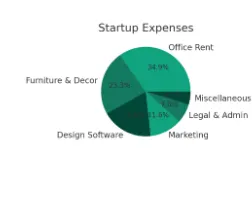
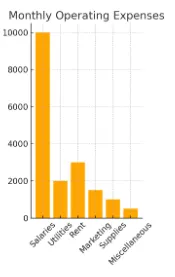
Determine start-up costs including labor, materials, equipment, and associated costs.
Project revenue for the first and second years. Revenue projections show business viability and investor confidence.
Cash flow is the amount of money coming in and out, affecting the ability to stay in business. Have a plan to manage cash flow including any loans or investments.
Track start-up costs, projected revenue, and cash flow. Make adjustments as needed to keep the business financially healthy. Financial diligence and oversight are required for success.
Need a Interior Design Business Plan?
Create a custom business plan with financial projections and market research in minutes with ProAI’s business plan generator.