15 Minutes Read
Creating A Winning Business Model
We see many entrepreneurs come to us with brilliant ideas an inventions, but the business model is lacking in some…


Last Updated: 12/17/2023
Starting a golf club manufacturing business is a great way to capitalize on the growing demand for high-quality golf clubs. To ensure your golf club manufacturing business succeeds, you need a comprehensive business plan. A good business plan will help you get financing, attract investors, and show potential partners your business is viable. It should also provide a roadmap for business growth over time.
In this article, we’ll provide information to write a golf club manufacturer business plan in 2023, including industry overview and step-by-step guide to writing a business plan.
A comprehensive golf club manufacturer business plan is essential for success. A business plan serves as your roadmap, guiding decisions and providing direction. When creating your business plan, consider your target market, financials, and strategies to achieve your goals. A good plan will help you get financing, attract investors, and show potential partners your potential. Without a proper plan, you’ll struggle without a clear vision or direction. Investing in a comprehensive plan now will help ensure your golf club manufacturing business’s long-term success.
Need a Golf Club Manufacturer Business Plan?
Create a custom business plan with financial projections and market research in minutes with ProAI’s business plan generator.
Writing a golf club manufacturer business plan can be difficult, but it’s essential for your business’s success. To get started, here are the key elements to include in your golf club manufacturer business plan:
A golf club manufacturer business plan should start with an executive summary, which acts as an introduction and summary of your entire business plan. The executive summary should draw readers (often investors) into the rest of your business plan.
Common executive summary elements include:
– Mission statement
– Proposed concept
– Execution plan
– Cost overview
– Expected return on investment
– Market overview
An executive summary is especially important for investors. Instead of combing through the entire plan, they can look through the executive summary to get the overview.
Introduce your company in this section. Include the company name, location, contact info, owner details, and owner experience. Describe company standing and short-term and long-term goals. Provide a brief market study showing you understand regional golf industry trends and why your business will succeed.
Include info on any competitors and your advantages over them. This shows investors you’ve done research and understand the market.
The market analysis section is typically divided into three parts:
– Industry Analysis: Explain your target market (demographics) and why customers will choose your golf clubs over others.
– Competition Analysis: Who are main industry players? Who’s most successful? Note their pricing, features, and designs. Explain how your golf clubs will differ.
– Marketing Analysis: Explain your marketing campaigns and how they’ll differ from competitors. How will you reach your target customers? Discuss pricing, distribution, and any customer preference research used to inform your strategy.
The product development section details how you’ll design, manufacture, and test your golf clubs and any other products. Do research to determine the best materials and designs. Include plans for customization (logos, colors) as an additional revenue stream. If using third-party testing, include those plans. A detailed product development process shows investors you’re serious about high-quality golf clubs.
The manufacturing process section shows how you’ll produce golf clubs, from materials and tools to the actual manufacturing steps. Outline specifics to show investors you understand costs involved and can deliver high-quality products.
Provide a timeline for product availability to show investors when to expect returns. Discuss any suppliers, materials provided, and how those demonstrate product quality.
The distribution plan section details how you’ll get golf clubs to customers. Will you sell directly or through retailers? What distribution network will you use? How will you handle inventory and shipping?
If selling online, discuss handling payments, customer service, and returns. If through retailers, discuss finding and working with retailers. Note the distribution plan may change as you learn more.
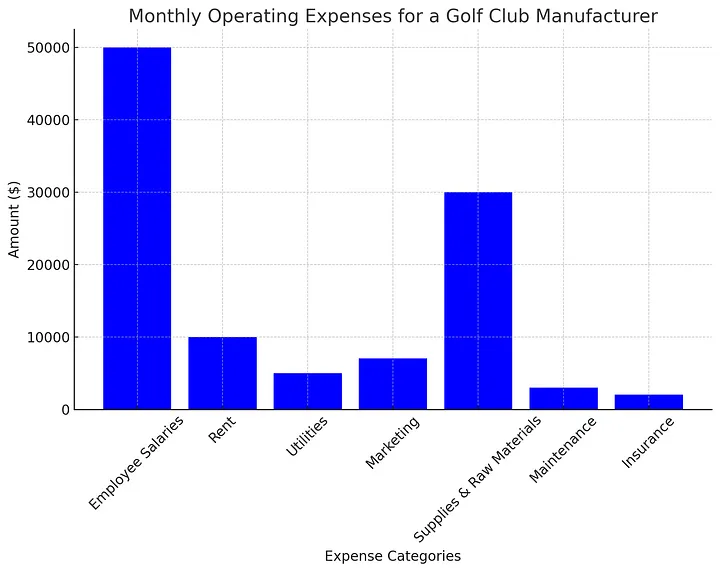
The financial plan includes costs of goods and materials, sales, labor, and overhead. Be realistic and conservative estimating these costs. Do a cost-benefit analysis of any investments. Show how much capital you need, including debt/equity financing and other funding sources like grants. Provide a budget with projected costs and income to give investors a clear financial picture.
The marketing plan details strategies and tactics to reach your target customers, including traditional (print, radio, TV) and digital (social media, email, content) marketing. Discuss how you’ll price and distribute golf clubs, showing you understand the market and customer needs. Include any customer research informing your marketing strategy.
To succeed, you’ll need suppliers, distributors, and other external help. Identify potential suppliers and distributors and negotiate agreements. Discuss pricing, delivery, terms, pricing, marketing strategies, legal/regulatory requirements (e.g. import/export regulations), and other needs like legal, accounting, or marketing services.
Discuss risks like financial, legal, and operational risks. Identify risks and mitigation tactics. Include a risk assessment, management action plan, and contingency plan. The risk assessment lists risks, likelihood, and impact. The management plan details how you’ll mitigate risks. The contingency plan outlines steps if risks become reality.
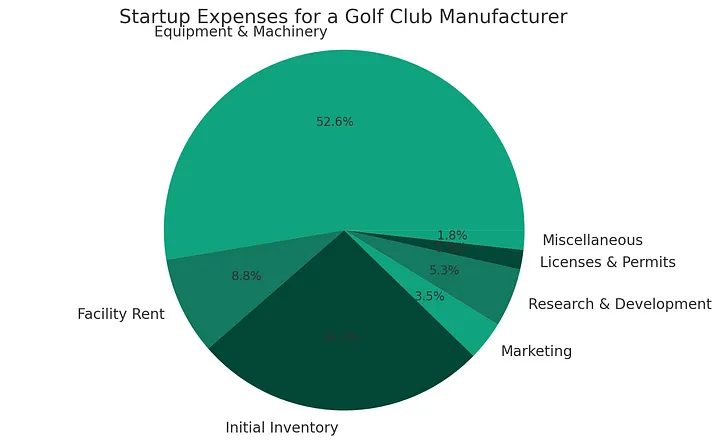
– Include amounts and sources of capital required, including the cost of equipment, materials, hiring, leasing space, and marketing.
– Provide five-year financial projections, including sales, costs, profits, and other metrics.
Need a Golf Club Manufacturer Business Plan?
Create a custom business plan with financial projections and market research in minutes with ProAI’s business plan generator.
How much does it cost to start a golf club manufacturing business?
The cost to start a golf club manufacturing business can vary significantly depending on the scale of your operations and quality of materials and equipment. You’ll need funds for rent, equipment, inventory, and staffing. Plan on at least $100,000 to $500,000 to get started for a moderately-sized operation.
Do I need a business plan to start a golf club manufacturing business?
Absolutely. A well-written business plan is essential for the success of any new business, especially a manufacturing operation. Your business plan will help you outline your vision and the steps to achieve it. It will also be critical for obtaining funding from investors, loans, and grants. Take the time to craft a comprehensive business plan before launching your golf club manufacturing business.
What equipment is needed for a golf club manufacturing business?
The necessary equipment will depend on the specific manufacturing processes, but typically includes:
– Raw materials like metals, composites, and grips
– Cutting tools like saws, routers, and grinders
– Welding equipment
– Polishing and painting equipment
– Testing equipment to ensure product quality
– Packaging equipment
– Computer systems for design, management, and ecommerce.
The specific equipment will depend on factors like production volume, level of automation vs. manual labor, and product customization options. Plan carefully to make sure you have the proper equipment to efficiently produce high-quality golf clubs.