15 Minutes Read
Creating A Winning Business Model
We see many entrepreneurs come to us with brilliant ideas an inventions, but the business model is lacking in some…

Last Updated: 12/17/2023
If you want to start a furniture manufacturing business, having a polished business plan is key to your success. A strong business plan not only maps out your path to success but also helps you determine strategies and tactics to achieve your goals. While a furniture manufacturer’s business plan is similar to plans of other industries, there are some specific factors to keep in mind when creating one. In this guide, we discuss all you need to know about crafting a furniture manufacturer business plan, including helpful advice and examples.
A furniture manufacturer business plan is vital for success when launching a furniture manufacturing company. Developing a plan helps you understand your financials and establishes the strategies and tactics you need to reach your goals. When making a furniture manufacturer business plan, consider the unique needs of the furniture industry. From understanding the competition to creating a marketing plan to setting quality standards, these elements are important for a successful furniture manufacturing business plan. By taking the time to make a comprehensive plan, you set your business up for success.
Need a Furniture Manufacturer Business Plan?
Create a custom business plan with financial projections and market research in minutes with ProAI’s business plan generator.
A furniture manufacturer business plan should include the following key sections:
The executive summary is the most critical section of your furniture manufacturer business plan. This section should provide an overview of your business plan, highlight key points and strategies, and summarize your mission statement, target market, and financial goals. This section should be concise yet impactful, leaving the reader eager to learn more about your business. It should also address any potential risks and plans to mitigate them. The executive summary should be the first section of your business plan, and often the only one potential investors will read. So, make sure it is well-written and compelling.
The company description should outline your company’s history. Include details like your founding date, background of the founders, and any awards or recognition. Also include a brief description of your current and future projects. This section should state your company mission and values, as well as your long-term vision. Keep this section concise but help potential investors understand who you are and what your company represents.
The market analysis should overview the industry and trends that may impact your business. Include a review of competitors, analysis of your target market, and a description of the furniture industry. Also note any regulations, laws, incentives or subsidies that may influence your business. Provide a detailed analysis of your product pricing and any potential discounts. This section helps potential investors understand the current market and opportunities and risks of your business.
The product line section should describe the furniture you plan to manufacture, any customization options or services offered. Include a description of the materials, tools, and techniques used. State any quality control standards, certifications or warranties offered. This section helps potential investors understand your furniture type and quality.
The manufacturing process section should detail the materials, tools, and techniques used to make your furniture. Include a timeline for each stage from sourcing materials to final assembly. State any quality control standards and address potential issues. Describe any safety protocols to ensure employee safety during manufacturing. Provide a timeline for completing each stage of manufacturing.
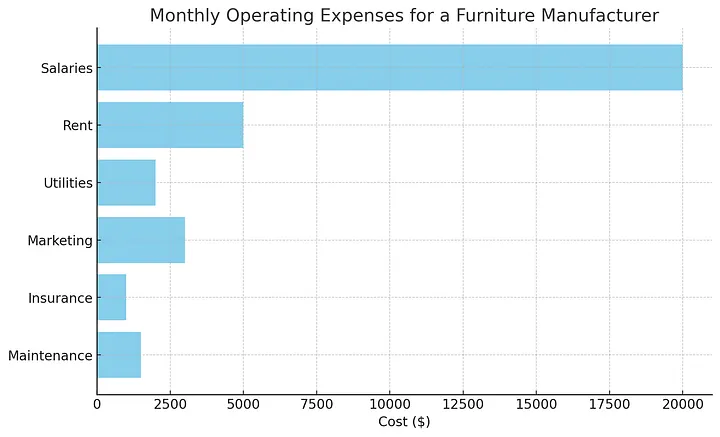
The financial analysis section should help potential investors understand your business’s financials. Include projected income, expenses, cash flow, pricing, and any discounts. Break down costs like materials, tools, labor. List capital expenditures, profits, losses. This section shows potential investors your business’s financials and potential return on investment.
The competitor analysis section should overview competition in the furniture industry. Review competitors’ products, prices, services. Analyze their marketing strategies and any advantages over you. Detail their strengths, weaknesses, and how you differ. This section helps potential investors understand the current market and opportunities and risks of your business.
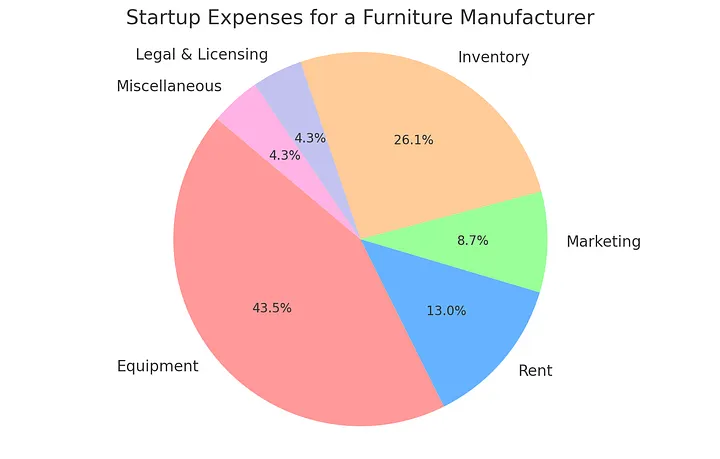
The funding requirements section should state how much you need to start your business and funding sources. Provide a breakdown of costs like equipment, materials, staff, and expenses. Explain how you will use funds to reach your goals. Note any potential investors, incentives, or terms of investment offered. This section gives potential investors a clear view of your startup costs and potential return on investment.
A marketing plan is key to your furniture manufacturer business plan. Show your understanding of the furniture industry, target market, and competitive advantages. Detail your marketing strategies like distribution, pricing, discounts, advertising, promotion. Provide a budget and analysis of potential return on investment for each strategy. This section shows potential investors your strategies to reach the target market and generate revenue.
The management team section should overview key people in your business. Describe team members’ roles, responsibilities, qualifications, and experience. Outline your organizational structure and growth plans. This section gives potential investors a clear view of who will drive your business success. It shows your team can achieve the goals in your business plan.
The risk analysis section should outline potential risks when starting and operating your business. Analyze potential financial risks like market changes, lack of demand, supply chain issues. Address potential legal risks such as complying with regulations or labor law changes. Discuss potential operational risks like technology or organizational changes. By outlining these risks and solutions, you show potential investors you have a plan to mitigate them and ensure business success.
Need a Furniture Manufacturer Business Plan?
Create a custom business plan with financial projections and market research in minutes with ProAI’s business plan generator.
How long should my furniture manufacturing business plan be?
An effective furniture manufacturing business plan should not exceed a few pages in length. Focus on being succinct yet compelling to keep the reader engaged. The ideal length is 30 to 50 pages including visuals. You want to hit the main points without being too brief. However, you do not need to include every detail in the written plan. You can have supplemental documentation to provide upon request.
Should I include visuals in my furniture manufacturing business plan?
Yes, including visuals like charts, graphs, images, and diagram infographics in your furniture manufacturing business plan is highly recommended. Visuals help break up a long document and make it less tired to read. They also present information at a glance that would otherwise require long descriptions. When used correctly, visuals make your business look more professional and give your readers tangible ways to understand your business quickly. Some suggested visuals to include are:
• Organization chart — Shows your business structure and would communicate this effectively with potential investors and employees.
• Product designs or photos — Giving potential investors a visual representation of your products helps them understand your offerings better.
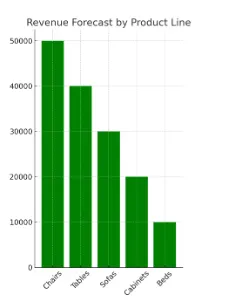
• Financial projections — Using charts and graphs to illustrate your financial forecasts over time gives potential investors a quick way to evaluate your growth potential.
• Marketing plan timeline — A visualized timeline or roadmap of your key marketing initiatives and milestones would show your marketing momentum in an easy to understand format.
• Location details — If location is important to your business, including a floor map, site map or exterior photo of your facilities gives context about your operations.
• Customer persona — Developing visual representations of the key customers and clients you aim to serve resonates better than describing them verbally.
What common mistakes should I avoid when writing a furniture manufacturing business plan?
Some common mistakes to avoid when crafting your furniture manufacturing business plan include:
• Lack of clear mission and vision: Not articulating your business mission, vision, and key objectives cohesively makes your plan lack direction and focus. Define where your business is heading and how you will get there.
• Inadequate market research: Analyzing your competition and trends in the furniture manufacturing industry is essential. Failing to properly understand the landscape you are entering leads to unrealistic assumptions and goals.
•Unrealistic financial projections: Your financial forecasts should be based on factual research and industry analysis. Avoid being too optimistic in your projections to appear more attractive to investors. Back up your forecasts with valid assumptions.
•Weak marketing plan: A poor or non-existent marketing plan indicates you have no viable way to reach your target customers and pitch your products. Develop a comprehensive and realistic plan to achieve your sales and growth targets.
•Lack of risks and mitigations: Every business faces potential risks and threats. Not addressing how you anticipate these potential risks and plan to mitigate them makes you seem unprepared as an entrepreneur. Discuss financial, operational, and competitive risks likely to impact your business.
•No stand-out features: You need key differentiators to make your furniture business stand out. Lacking a unique selling proposition means you have no competitive advantage or reason for customers to choose your products over alternatives. Focus on what makes you different and the problems you uniquely solve for your target customers.