15 Minutes Read
Creating A Winning Business Model
We see many entrepreneurs come to us with brilliant ideas an inventions, but the business model is lacking in some…

Are you looking to open your own animal day care center? The demand for pet care services is on the rise, and an animal day care can be a rewarding business opportunity. However, starting this type of business requires careful planning and forethought. To ensure your success, you’ll need to develop a comprehensive business plan. A strong business plan acts as a roadmap for your business, outlines your financial projections, and helps attract investors. In this article, I’ll walk you through the key elements of an animal day care business plan and provide tips and examples to help you get started.
Launching an animal day care business requires significant planning and preparation. A well-crafted business plan is essential. It will serve as your roadmap to success and help you secure financing. It can also help you anticipate risks, costs, and challenges. Your plan should include details on your business concept, financial projections, target market, competitive analysis, and more. With a solid plan in place, you’ll increase your chances of success and ensure you’re on track to achieve your goals. A professional business plan can also help you attract investors and funding to get your business off the ground.
Need a Animal Day Care Business Plan?
Create a custom business plan with financial projections and market research in minutes with ProAI’s business plan generator.
A good business plan for an animal day care accounts for factors like services provided, target market, location, and more. Developing a plan for an animal day care can be complex given the range of services offered. To get started, here are the key elements to include in your animal day care business plan:
Your business plan should begin with an executive summary. The executive summary not only introduces your business plan but also summarizes your entire concept. Its goal is to draw readers, especially potential investors, into the rest of your plan.
Elements of an executive summary include:
•Your mission statement. Learn how to write an effective mission statement.
•Your proposed concept.
•Your execution strategy.
•Overview of potential costs.
•Expected return on investment.
The executive summary is critical if you’re seeking investor funding. It allows readers to quickly grasp your objectives, services, target market, competitive advantages, financial projections, and other key highlights without reading the entire plan.
This section fully introduces your company. Start with your business name, location, contact information, and owner details. Describe your and any partners’ experience.
Outline your legal business structure and short- and long-term goals. Include a brief market analysis demonstrating your understanding of regional pet industry trends and why your day care will succeed. List any relevant certifications or qualifications in animal care that you hold.
The pet day care industry is growing fast. As more pet owners seek safe, engaging care options for their animals during the day, day cares offer an ideal solution. Explain current trends like increasing pet ownership and spending on pet services.
Research competitors and their services and pricing. Explain how your day care stands out. Create a marketing strategy. Develop a budget and plan to make the most of marketing efforts like advertising, public relations, and word-of-mouth.
Detail the services you provide, even if you only offer one. Spell out exactly what you offer and your value proposition.
If you offer multiple services like boarding, grooming, walking, or pet-sitting, include pricing, qualifications, and any packages. List any amenities like outdoor areas, pools, or overnight stays. Note any staff certifications in pet care.
Describe any discounts or promotions like referral programs or loyalty offers. This helps you stand out and attract more customers.
Consider how many employees you need to safely and effectively operate your day care based on services offered, facility size, and number of animals. Determine required experience and qualifications, especially for specialized or exotic animal care. Include costs like wages, benefits, training, taxes, and insurance in your plan to share with investors.
Safety is critical. Ensure you have proper fencing, cages, and enclosures. Design for maximum efficiency based on number of animals accommodated. Factor in different animals’ needs.
Consider aesthetics to please you, employees, and customers. Add features like play areas, seating, and amenities. Create a welcoming atmosphere for pets and owners.
Choose a location convenient and safe for customers and pets, zoned and licensed properly, affording a fun environment. Consider demographics, pet ownership rates, proximity to other pet businesses, facility options like retail, office, warehouse or home, space requirements, traffic accommodation capability, and costs like rent, utilities, and general overhead.
Understand your market. Research local demand and competition. Identify gaps your day care can fill. Note other day cares’ pricing structures.
Also research national trends in demand for pet day cares and new technologies or strategies that could benefit your plan. Understanding the market helps you identify opportunities, gain competitive insights, develop an effective marketing strategy, and create a viable plan.
External input provides an objective, fresh perspective on your plan. Help may be needed to develop your model, address financials, conduct market research, find investors, locate your facility, and more. Professional guidance can save time and energy while contributing valuable insights.
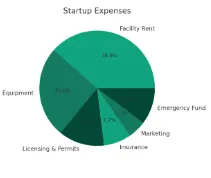
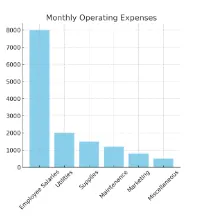
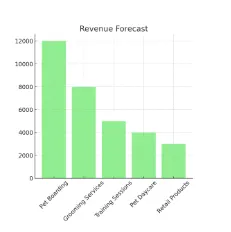
This is essential, especially for potential investors. Demonstrate your business’s potential profitability by outlining costs like supplies, rent, payroll, and general overhead as well as projected income based on services offered, animal numbers, and pricing during your first year. Include a break-even analysis showing how long until you’re profitable. This proves you’re serious about long-term success.
Need a Animal Day Care Business Plan?
Create a custom business plan with financial projections and market research in minutes with ProAI’s business plan generator.