15 Minutes Read
Creating A Winning Business Model
We see many entrepreneurs come to us with brilliant ideas an inventions, but the business model is lacking in some…

Are you an artist looking to take your business to the next level in the art world? To set yourself up for success, you’ll need a solid business plan to guide you on your journey. A business plan for an art packaging installation company is a detailed document that lays out your goals, strategies, and steps to launch and grow your business. It also gives potential investors and partners an overview of where you are now and where you want to go. In this article, we’ll explain why you need a plan and how to write one for an art packaging installation company in 2023.
A successful art packaging installation company needs an effective plan that maps out your goals, how you’ll achieve them, and how you’ll manage the financials. Without a good plan, it’s hard to get funding and resources to help your business thrive. A plan also helps identify risks and opportunities, attract customers and investors, and give stakeholders an in-depth overview of your business potential. Taking time to make a comprehensive plan is key to having a profitable art packaging installation company.
Need a Art Packaging Installation Business Plan?
Create a custom business plan with financial projections and market research in minutes with ProAI’s business plan generator.
Writing a plan for an art packaging installation company in 2023 is crucial to launching and running a successful business. Your plan acts as a roadmap by laying out everything you need to consider when starting and growing your company. It should include your goals, strategies, and financial projections.
Here are the main parts of an art packaging installation business plan:
The executive summary comes first and introduces your whole plan. Its goal is to grab attention and generate interest in your plan. A good executive summary includes:
– Your mission statement
– Your concept
– How you’ll execute your plan
– Estimated costs
– Expected return on investment
An effective executive summary lets potential backers quickly understand your plan without reading the whole thing.
This part fully introduces your company. Start with your name, location, contact info, owner details, and owner experience. Discuss your legal structure, short and long-term goals, and your vision in the region’s art packaging installation industry.
Industry Analysis — Discuss the industry, size, growth, key players, and trends. Explain why it’s a good opportunity.
Target Market Analysis — Discuss customer demographics like age, gender, income, location. Analyze their needs and how you’ll meet them.
Competition Analysis — Analyze competitors and your competitive advantage. Explain how you’ll stand out.
Good packaging helps sell your product and ensures it reaches customers intact. Consider size, shape, materials, branding, budget, workflow, safety, and your target audience’s needs. Develop a cost-effective but customer-focused packaging solution.
The right tools and materials are key to design and installation success. List them with costs to determine your budget and project fees. Consider how they improve workflow and productivity. Address proper safety protocols for equipment and supplies.
Correct installation is essential. You may need a detailed plan for larger or custom projects. Address:
-Materials
-Steps
-Staffing
-Safety
-Time estimates
-Potential hazards
Planning ensures high-quality, on-time completion and easy training and oversight.
Researching the industry, competitors, and customers is key to understanding challenges and opportunities. Study the industry size, trends, growth potential. Find competitors’ positioning. Determine customer needs and preferences. Look for growth opportunities from new markets, technologies, or other factors.
Focus marketing on social media, videos, photos of installations, and your website. Network locally, attend events, get community involvement, and work with suppliers for co-marketing. Leverage word-of-mouth through customer reviews and referrals.
Use free online resources for research and planning. Hire a consultant to help write your plan. Ask your network for input or connections. Contact local agencies about available support like grants.
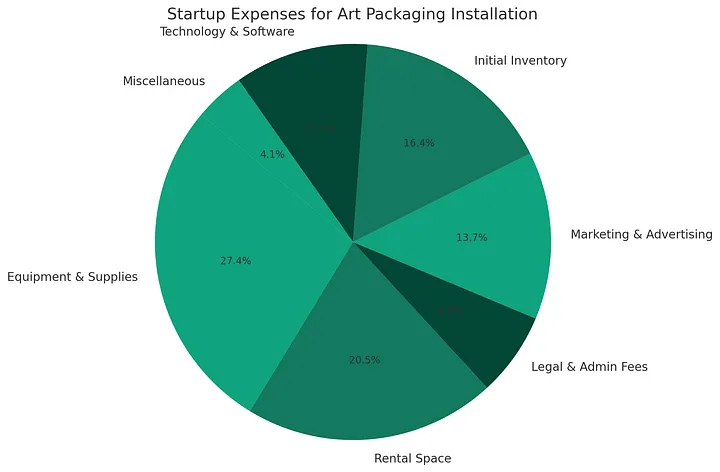
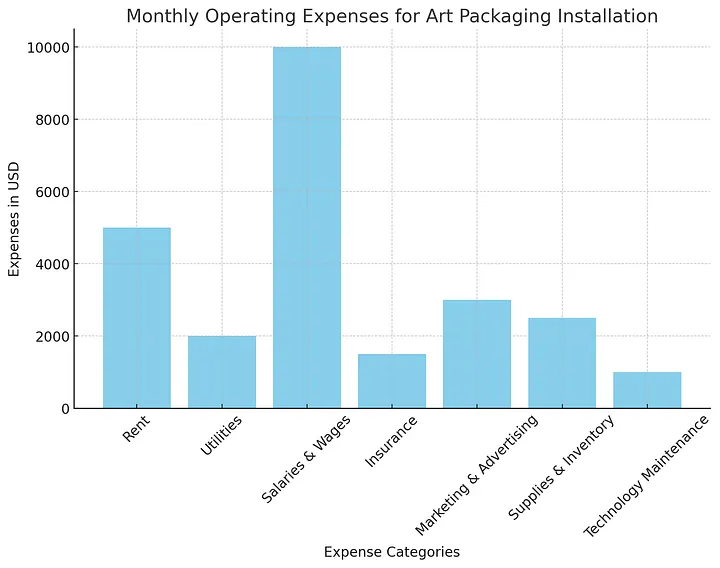
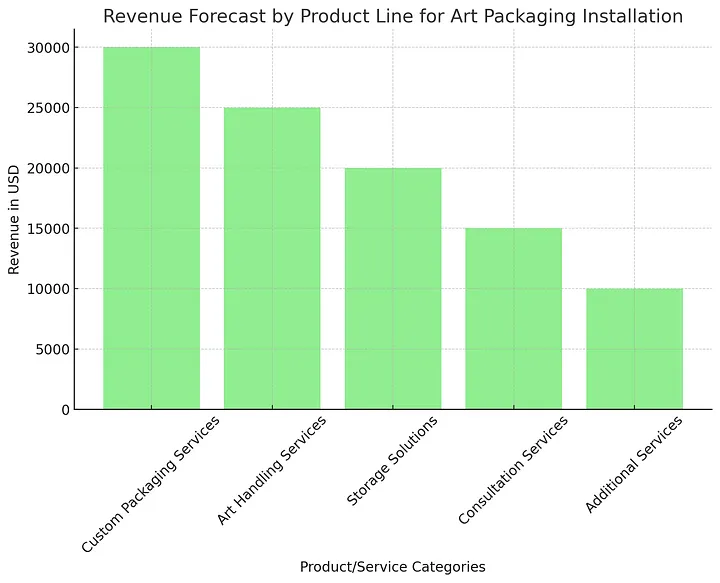
Project income, expenses, cash flow, and break-even point over 3–5 years. Include costs like materials, labor, etc. Evaluate the current market by analyzing the competition and industry. Discuss market size, potential customers, opportunities, and risks. This helps investors gauge your potential success.
Need a Art Packaging Installation Business Plan?
Create a custom business plan with financial projections and market research in minutes with ProAI’s business plan generator.
Q: How long should my business plan be?
A: An art packaging installation business plan should typically be 15 to 30 pages long. The executive summary should be 1 to 2 pages.
Q: How often should I update my business plan?
A: You should review and update your art packaging installation business plan at least once a year or if major changes occur, such as:
-Pivoting to a new target market
-Developing a new product or service
-Opening a new facility or location
-Taking on new investors or investment capital
Q: Should I include financial projections in my business plan?
A: Yes, including 3–5 years of financial projections is essential for an art packaging installation business plan. Your financial projections should include:
-Income statements (profit and loss statements)
-Cash flow statements
-Balance sheets
-Break-even analysis
-Funding requirements
Financial projections help validate your business model and show how much funding you need to launch and sustain your business.
Q: What resources are available to help me write my business plan?
A: Here are some helpful resources for writing an art packaging installation business plan:
-Online business plan templates from services like LivePlan or Business Plan Pro
-Business plan writing consultants and coaches
-Online courses on Udemy or Coursera
-Local Small Business Development Centers or SCORE chapters, which offer free business planning advice and resources
-Books on how to write a business plan for creative entrepreneurs and artists
-Your personal and professional networks for advice and peer review of your plan.