
15 Minutes Read
Creating A Winning Business Model
We see many entrepreneurs come to us with brilliant ideas an inventions, but the business model is lacking in some…

Last Updated: 12/17/2023
As an ASP software developer, having a solid business plan is key to your success. A business plan outlines your company’s goals, strategies, financial projections, and other critical plans. Every business needs a well-developed business plan to achieve its goals. Creating a successful business plan takes time but is well worth the effort.
In this article, I provide tips and advice on how to write an ASP software developer business plan for 2023. I discuss including key elements like market analysis, financial forecasting, and management structure. I give examples and stress the importance of regularly updating your business plan. With guidance, you can craft a winning business plan to achieve your vision.
As an ASP software developer, your business plan is your roadmap to success. It defines your business’s direction, goals, strategies, and timeline. Investors want to see evidence of a well-thought-out plan for future growth. A business plan helps you prioritize, anticipate risks, and stay ahead of competitors. With a comprehensive business plan, you ensure you’re on the path to success.
Need a ASP Software Developer Business Plan?
Create a custom business plan with financial projections and market research in minutes with ProAI’s business plan generator.
Writing a business plan for an ASP software development company is crucial to success in a competitive tech industry. A successful plan includes a detailed market analysis, financials, and software development/implementation roadmap.
Here are the primary components of an ASP software development business plan:
The executive summary provides an overview of your business plan and project. It includes your mission statement, concept, execution plan, costs, and ROI forecast. For a software developer, focus on your skills, experience, key team members, timeline, strategy, target market, and legal issues.
Introduce your company, including name, location, contacts, owner details, experience, legal standing, short/long-term goals, and market position. Explain why your company will succeed.
Industry Analysis: Discuss the current ASP software development industry, trends, challenges, and opportunities.
Competitor Analysis: Assess the competition’s landscape, major players, new entrants, and your differentiation strategy.
Target Market Analysis: Identify your target customers, their needs/wants, pain points, and how you’ll reach them.
Your software development plan should state your goals, timeline, budget, resources, quality assurance, testing, and deployment process. Objectives, resources, and deployment are all key.
Success depends on support and maintenance. Provide customer service, technical support, product updates, and bug fixes. Outline services, contact methods, technical support types, product update frequency, and bug fix timing. Set customer expectations and build loyalty.
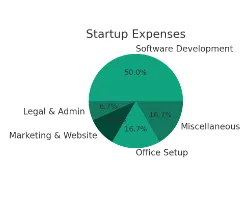
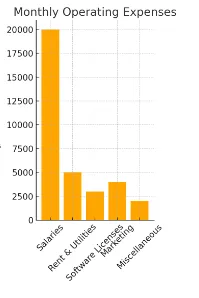
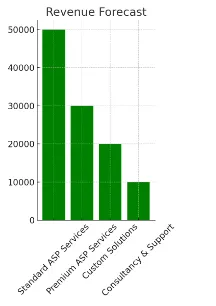
Your financial plan includes budgets, cash flow analysis, income statements, balance sheets, assumptions, and break-even/financial forecasts. Review for accuracy and consistency.
Assess market, industry, technology, regulation, customer, economic, political risks, and mitigation strategies like diversifying customers, new tech investment, contingency plans, and a risk management plan with monitoring and progress tracking.
Analyze competitors’ size, industry focus, capabilities, advantages/disadvantages, features/services, pricing/discounts, customers, and geographic scope. Identify opportunities.
Research target markets and their social media/search engine use and trends. Create a content delivery plan with content types, frequency, and channels. Choose metrics like traffic, leads, and sales to measure success.
Break down the development process into prioritized, realistic, achievable tasks. Factor in testing, debugging, marketing, customer service, and other items. Update regularly. Include deadlines and ensure all understand them.
Find developers and engineers to bring your vision to life and adapt to change. Consider freelancers vs. employees. Select, manage, and plan for growth of the right people with the skills and experience to deliver excellent work.
Understand legal requirements like licenses, registration, permits, insurance, intellectual property, copyright, outsourcing, and labor laws. Abide by all laws to succeed.
Need a ASP Software Developer Business Plan?
Create a custom business plan with financial projections and market research in minutes with ProAI’s business plan generator.
Why should I create a business plan?
A solid business plan is critical to an ASP software developer’s success. It provides direction, helps secure funding, guides decision making, and tracks progress. Without a plan, you risk aimless wandering and eventual failure.
How often should I update my business plan?
Update your business plan regularly, at least annually. Monitor progress, revisit assumptions, account for industry/market changes, and make necessary adjustments. An outdated plan is useless and potentially dangerous. Stay on top of change.
What metrics should I use to measure success in my business plan?
Track customer retention/growth, market share, revenue, profit margins, product adoption rates, and customer satisfaction. Look for trends over time. While exact metrics depend on your business model, these provide a good starting point to determine if you’re achieving key business plan goals.
How much detail should I include in each section?
Provide as much detail as possible while keeping each section concise. Give enough information for the reader to understand your vision. For example, include 3–5 key risks/mitigation strategies in the risk analysis rather than 10–15. Use bullet points where appropriate. Ensure readability and flow for the best results.
Should I include appendices or other attachments in my plan?
Attach documents that provide additional details, context, examples or visuals as appendices. Items like SWOT analyses, product roadmaps, organizational charts, competitor profiles or sample marketing materials make useful appendices. Refer to appendices in the relevant plan sections so the reader understands their importance. Keep appendices concise and streamlined like the overall plan.