

Frequently Asked Questions
What types of flowers work best for drying?
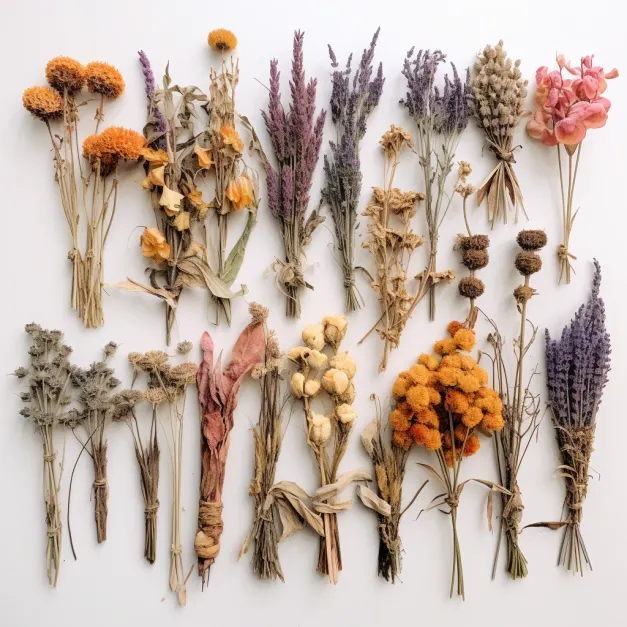
The best flowers for drying have low moisture content and sturdy petals that hold their shape when dried. Top picks include ammobium, statice, lavender, roses, hydrangeas, protea, gomphrena, baby’s breath, and cotton. Avoid delicate flowers like tulips and carnations which don’t preserve well.
What methods can be used to dry flowers?
Common drying methods include air drying by hanging upside down in a dark, dry area, using silica gel, pressing between books or using a flower press, and drying in the microwave or oven at a very low temperature. Experiment to see which method works best for each bloom.
How long does the drying process take?
Drying times range from 1–3 weeks on average depending on factors like humidity, the flower variety, and drying method used. Frequent checking is key to catch them at just the right moment before they over-dry. Patience is required for the best results.
Should dried flowers be preserved or sealed?
It’s smart to preserve dried flowers by sealing or spraying them as the final step. This helps protect the flowers from humidity, dust, and pests so they maintain vibrant color and form. Common sealants include hairspray, floral sealant sprays, and varnish.
What are some tips for arranging dried flowers?
Use floral wire or tape to assemble arrangements, clustering stems together for fullness. Mix in greenery and filler like grasses and vines for texture. Prune extra leaves and petals as needed for the look you want. Play with heights, angles, and asymmetry for visual interest. Keep florals looking light and airy.
How long will dried flower arrangements and wreaths last?
With proper sealing and care, dried floral designs can last 1–3 years. Avoid direct sunlight, humidity, and heat which shorten their lifespan. Periodically clean away dust buildup. Re-seal yearly and replace any flowers that degrade. Handle gently to prevent breakage.
What are some top uses for dried flowers?
Dried flowers make gorgeous wedding bouquets and centerpieces. They add rustic charm to home decor in wreaths, wall art, and arrangements. Crafters use them in DIY projects and handmade gifts. Event planners utilize them for corporate functions and parties. Dried flowers even make whimsical cake toppers!