startup
15 Minutes Read

How to Start a Podcasting Business in 2023

Last Updated: 12/17/2023 Starting a Podcasting Business: The Complete Guide for 2023 Podcasting has blown up over the past few years. Millions tune in daily to their favorite shows, presenting…

Last Updated: 12/17/2023

Starting a Podcasting Business: The Complete Guide for 2023

Podcasting has blown up over the past few years. Millions tune in daily to their favorite shows, presenting an exciting opportunity for aspiring media entrepreneurs. If you’ve ever considered starting a podcast, now’s an ideal time. This guide covers everything you need to launch a successful podcast biz in 2023.

Choose Your Niche

First, decide on your topic and format. With over one million podcasts out there, focus on a niche or underserved audience. Consider your unique interests, experiences, and expertise. Popular genres include true crime, comedy, sports, storytelling, news, health, business, and tech. But specialized or educational shows within a genre can thrive too.

Need a Podcasting Business Plan?

Create a custom business plan with financial projections and market research in minutes with ProAI’s business plan generator.

Outline Your Content Strategy

Once your niche is set, start developing content. Map out your show format and flow. Most episodes range 20 minutes to an hour. Outline 4–6 segments per episode and scripts for intros and closes. Prep talking points for interviews or co-hosts. Having a flexible structure makes recording easier.

Get the Right Gear

You can record a podcast on your phone or computer mic. But affordable studio equipment gives way better sound quality. Here’s what you need:

– Microphone — A USB or XLR mic provides pro results. The Blue Yeti and AT2020 are solid starter options under $150.

– Headphones — Invest in over-ear headphones like the Sony MDR-7506 to monitor audio and prevent echo.

– Editing Software — Programs like Audacity, GarageBand, or Adobe Audition simplify editing.

– Pop filter — This foam screen eliminates harsh “p” and “b” sounds.

– Microphone stand — Stabilizes positioning. A boom arm allows flexibility.

Recruit Engaging Guests

Booking interesting guests attracts new listeners and adds variety. Make a list of ideal guests in your niche like authors, entrepreneurs, influencers, or experts. Reach out over email or social media to gauge interest. Explain why your show’s a great fit and the promotional benefits of coming on.

Launch and Promote Your Show

Once you’ve recorded episodes, it’s launch time. Host your files on a platform like Buzzsprout, Libsyn, or Podbean. Get your show on Spotify, Apple, Google and more. Building a website provides a hub for content and marketing. Promote new episodes on social media, email lists, paid ads, forums, guest appearances, and other channels. Consistent high-quality content, listener engagement, and promotion will grow your audience.

Monetizing Your Podcast

It takes time and listenership to make money, but here are some options:

– Sponsorships — Pitch relevant brands to sponsor episodes. Ad rates often range $10-$50 per thousand listeners.

– Affiliate Marketing — Earn commissions promoting products, services, or podcasts with your unique links.

– Merch — Design t-shirts, mugs, and branded merch for fans to buy.

– Paid Subscriptions — Offer exclusive bonus content or community access to paying members on Patreon.

– Live Events — Host live recordings, discussions, or conferences to connect with devoted listeners.

Podcasting requires consistency, creativity, and commitment. But by providing value to a specific audience, the rewards of launching your own successful podcast biz can pay off. Use this guide to plan, build, and grow your ideal podcasting business and brand in 2023.

Need a Podcasting Business Plan?

Create a custom business plan with financial projections and market research in minutes with ProAI’s business plan generator.

Podcasting Financial Forecasts

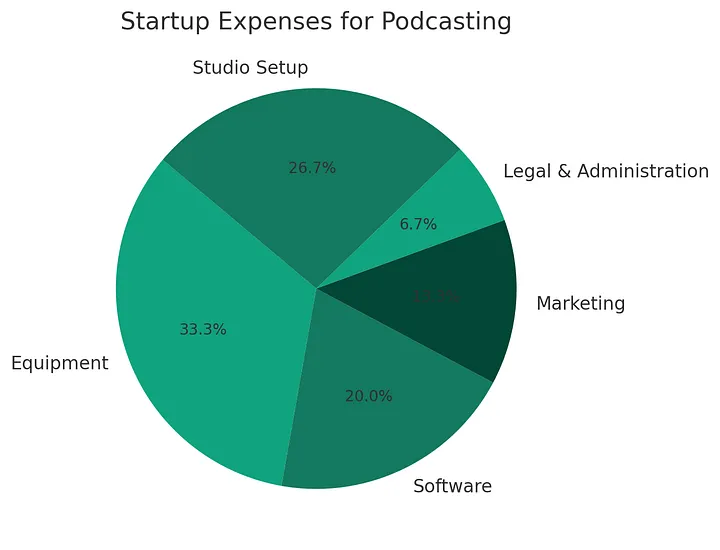
Startup Expenses

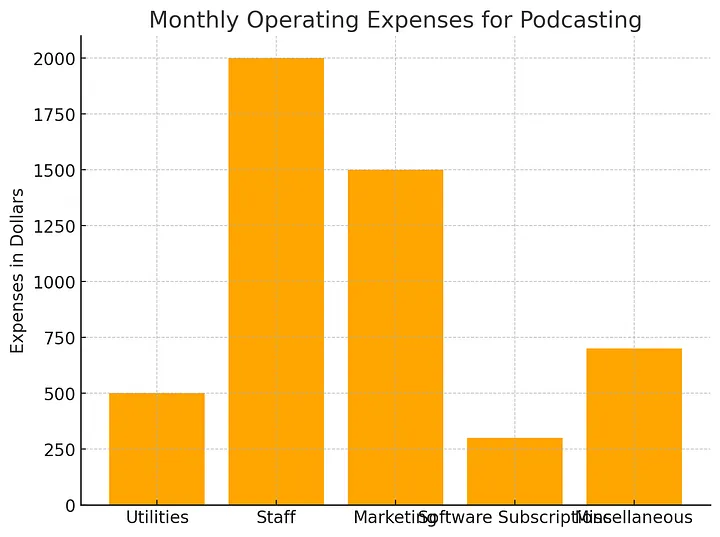
Monthly Operating Expenses

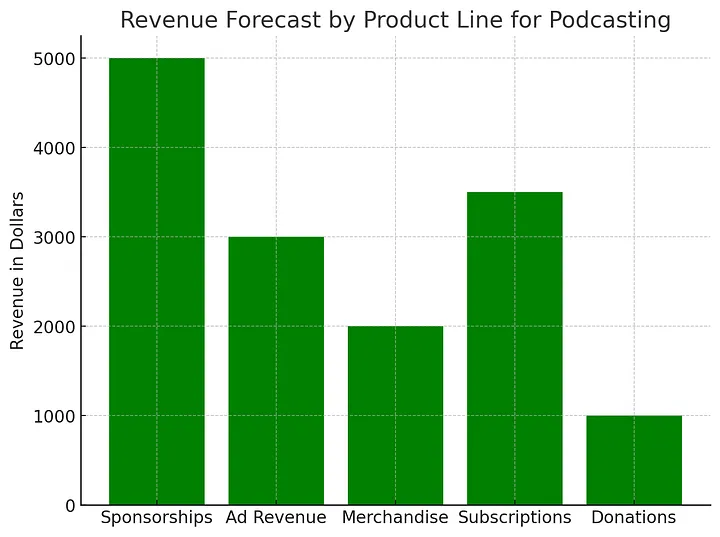
Revenue Forecast

FAQ

What equipment do I really need to start a podcast?

At the bare minimum, you need a microphone and headphones to record a podcast. For best results, invest in a USB or XLR condenser microphone like the Blue Yeti or Audio-Technica AT2020, headphones like the Sony MDR-7506, a mic stand, and a pop filter. Audio quality is important for engaging listeners.

How much does it cost to start a podcast?

You can launch a podcast for less than $200 in basic equipment. Ongoing costs will include media hosting (around $5–20/month), your website domain/hosting, marketing expenses, and any paid subscription services for recording like Descript or Squadcast. But bootstrapping on a budget is very doable in podcasting.

How do I submit my podcast to directories?

Popular podcast directories like Apple Podcasts, Spotify, Google Podcasts, and Stitcher all have free submission forms to get your show listed. Submit your RSS feed URL and relevant show details like title, description, and artwork. This makes your show searchable and accessible across platforms.

How do I attract sponsors and make money?

Having at least 1,000 engaged listeners per episode gives you leverage to start pitching relevant sponsors. Research brands that align with your audience and niche. Craft sponsorship proposals that include audience details, download numbers, and promotional options like ads, dedicated episodes, or giveaways.

What makes for compelling podcast content?

The best podcast content teaches listeners something new or tells a story in an entertaining way. Bring on interesting guests. Have genuine back-and-forth conversations. Share personal anecdotes and insights. Production quality and clear audio are also key for a polished, professional show.

Should I focus on long or short episodes?

Episode length depends on your topic and format. Interview shows can often run an hour. Solo shows as short as 15–20 minutes may be ideal for commuters with limited time. Test different episode lengths and see which perform best with your audience over time.

How often should I release new episodes?

Most successful podcasters aim for 1–2 new episodes per week, or every 3–5 days. This strikes the right balance between supplying fresh content for listeners while managing production time. Just ensure consistency with your release schedule.
You May Also Like