15 Minutes Read
Creating A Winning Business Model
We see many entrepreneurs come to us with brilliant ideas an inventions, but the business model is lacking in some…


Last Updated: 12/17/2023
I get it. You love wine and you’ve always dreamed of owning your very own vineyard. Who hasn’t, right? Well let me tell you, it’s a ton of work, but it can be done if you’re truly committed. I started my own vineyard a few years back, so I want to share some tips I wish I knew before I got started.
Choosing the right spot is crucial. You want good soil (drainage is key!), the ideal climate for the grapes you want to grow, and a place with access to water for irrigation. Do your homework to figure out what varietals thrive in different regions, then visit some local wineries to get a feel for potential vineyard sites. I looked at over 20 properties before finding my perfect match!
Need a Vineyard Business Plan?
Create a custom business plan with financial projections and market research in minutes with ProAI’s business plan generator.
Once you’ve got land, carefully select which grape varieties you’ll grow. Consider factors like climate, demand, and what grapes are kicking butt for other nearby wineries. Go with vines that are certified virus-free to give your vineyard a healthy start. Plant a mix of reds and whites to diversify what you can produce. Cabernet, Merlot, Chardonnay are popular choices. I planted some Malbec too for a unique twist!
Here comes the tough part — patience! It takes about 3–5 years for vines to mature enough to produce quality wine grapes. I know, I know, but trust me, it’s worth the wait to do it right. While your grapes get their grow on, get your equipment, distribution plan, branding and all the biz stuff in place. Those first bottles of estate-grown vino will taste so much sweeter after years of groundwork!
Making good wine is hard! Bring in help from experienced winemakers, vineyard workers, and consultants — at least at first. I worked with a winemaking pro for my first 2 vintages before I felt ready to fly solo. No shame in asking for guidance when you’re getting started. Oh, and be prepared for things to go wrong…weather, pests, fermentation failures. It’s all part of the process!
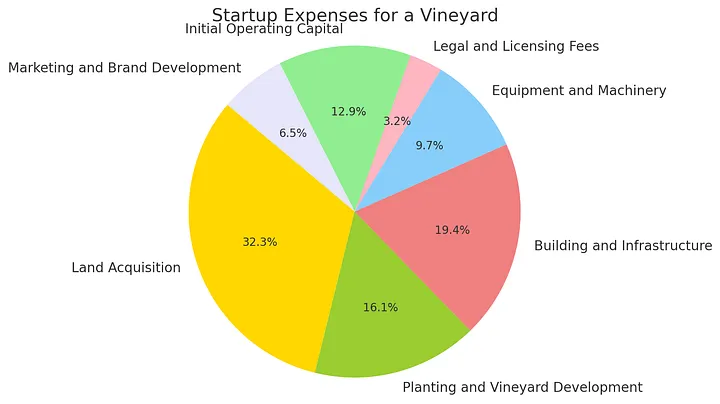
Starting a vineyard requires some serious coin. Develop detailed financial projections and have contingency plans, because costs often run higher than expected. It takes years to turn a profit, so be prepared to make big upfront investments in land, equipment, staffing, etc before the juice starts flowing, figuratively and literally!
Well, here’s my two cents! Let me know if you have any other questions. Us vineyard folks need to stick together. I hope these tips give you a real feel for what it takes to get your own wine business off the ground. It’s a ton of work, but when you drink that first glass of your own vino, it all pays off. Cheers and good luck!
Need a Vineyard Business Plan?
Create a custom business plan with financial projections and market research in minutes with ProAI’s business plan generator.
If you’re considering starting your own vineyard, you probably have plenty of questions. Here are answers to some of the most common FAQs about getting into the vineyard business:
How much does it cost to start a vineyard?
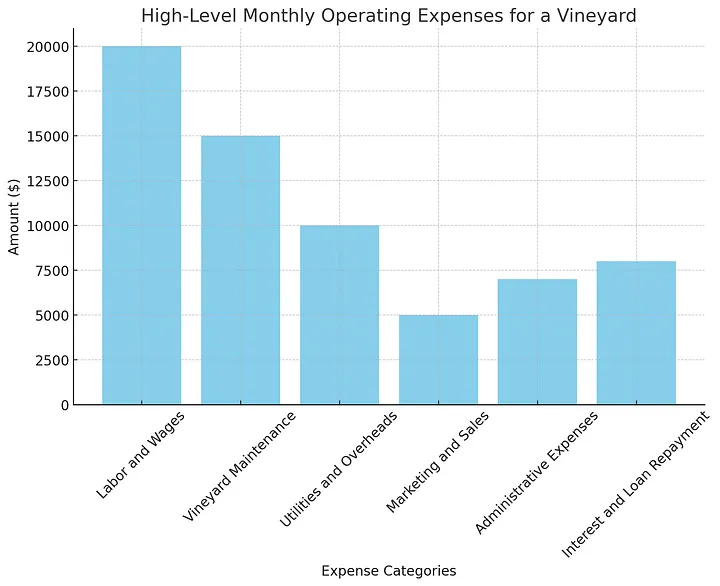
The costs to start a vineyard can vary widely, but expect at least $30,000 — $50,000 per acre in upfront establishment costs, including land purchase, planting, equipment, and infrastructure. Operational costs for maintenance, staffing, production, etc. average $12,000 — $15,000 per acre annually.
What is the most profitable grape to grow?
The top red wine grapes in demand and price are Cabernet Sauvignon and Pinot Noir. For whites, Chardonnay, Sauvignon Blanc, and Pinot Grigio tend to be most profitable. Look at vineyards in your local area to see which varieties command the highest bottle prices.
How many acres do I need to start a vineyard?
You’ll need at least 5–10 acres to make starting a vineyard worthwhile. This provides enough grapes (2–3 tons per acre annually) to produce wine commercially rather than just for personal use. To generate a full-time income, 20+ acres is typically needed.
Can I run a vineyard on my own?
It’s highly challenging for one person to manage all aspects of running a vineyard and winery. Seek experienced staff, winemaking consultants, and vineyard management support, especially in your first years. At maturity, plan for 1 full-time employee per 8–12 acres.
How long before my vineyard is profitable?
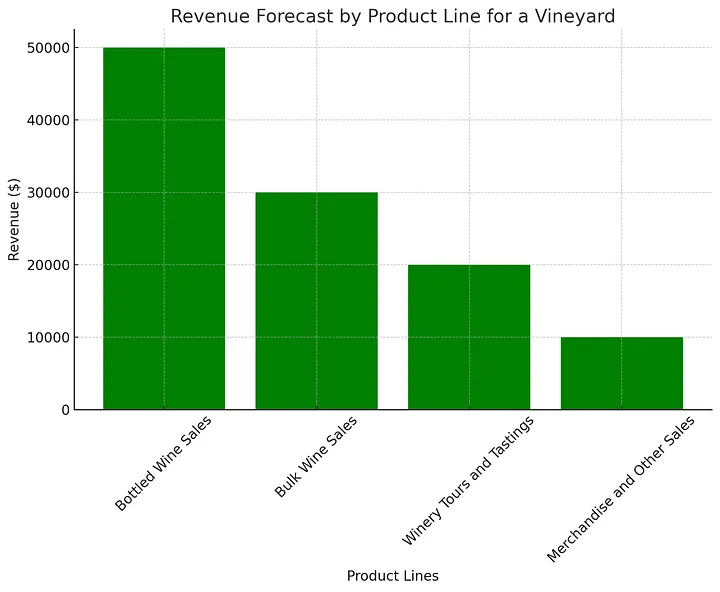
It typically takes at least 5 years for a new vineyard to turn a profit. You need upfront years of investment to establish vines, produce the first crops, and age the initial vintages of wine before bringing product to market. Have sufficient capital to carry costs during the unprofitable years.
What are the biggest risks?
Weather events like hail, frost, drought, and extreme temperatures can wipe out entire crops. Pests and diseases can ravage vines. Market saturation makes selling your wine a challenge. Startup costs and ongoing expenses may run higher than expected. Plan for contingencies and have accessible reserves.
Is my area suitable to grow wine grapes?
Ideal conditions include a long frost-free growing season, plenty of sunshine, moderate rainfall during dormancy, good wind circulation, sloped terrain, and proper drainage. The soil should be deep, nutrient-rich, and slightly acidic. Enlist viticulture experts to assess your climate and land.
Can I start small?
You can start with just 1–2 acres, but this is generally a hobby-level vineyard. With under 5 acres, it’s very hard to achieve economies of scale or invest in enough equipment and infrastructure to operate efficiently and commercially. Go bigger if you want meaningful production and profit.
What grapes grow well in my state?
Research the top varieties of local wineries. Talk to viticulturists about the grape clones best suited to your climate and terroir. For example, Pinot Noir thrives in cool climates like Oregon while Malbec and Cabernet do well in warmer regions like California.
Should I make my own wine or sell my grapes?
Many new vineyards opt to sell grapes to other wineries to avoid the steep learning curve of winemaking. However, making and bottling your own wine allows much higher profit margins. If going the winemaking route, consider hiring a seasoned winemaker to guide you initially.