
15 Minutes Read
Creating A Winning Business Model
We see many entrepreneurs come to us with brilliant ideas an inventions, but the business model is lacking in some…


Last Updated: 12/17/2023
If you love building websites and apps, starting your own web development company can be an awesome way to make money doing what you enjoy. But launching a successful business takes more than just coding skills — you need to get strategic if you want to thrive. Let me walk you through the key steps to get up and running:
Before jumping in, spend time researching other web dev companies in your area. Check out their services, pricing, clients, websites, reviews — get a feel for what they offer. Look for gaps you could fill or needs you could meet that competitors aren’t. This intel will help shape your business plan.
Even if you already know HTML, CSS, JavaScript etc., level up your expertise. Take online courses in trending languages like React, Node.js or Python. Brush up on areas like responsive design, accessibility, security. The wider your skillset, the more value you can provide clients.
Need a Web Development Company Business Plan?
Create a custom business plan with financial projections and market research in minutes with ProAI’s business plan generator.
Sole proprietorship, partnership, LLC, corporation — each has pros and cons. LLCs and corps limit personal liability if sued, but cost more to set up and run. Do your homework to pick what suits your biz model best.
Mapping out details for operations, marketing, finances — this prep work is key. Having a thorough plan not only focuses your strategy, but investors will want to see it if you need funding.
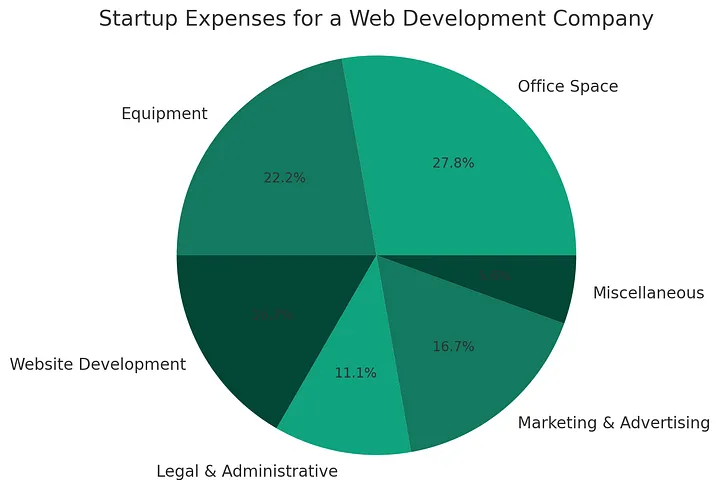
Most web dev companies need capital to launch. Figure out your startup costs — office space, equipment, staffing, insurance etc. Then look into small business loans, crowdfunding, angel investors, or your own savings to cover what you need.
For legitimacy with clients, you’ll want a professional workspace — not just your basement. Research rental rates for small offices or coworking spaces to fit your budget. You can always upgrade as your biz grows.
Register your business name, establish a legal entity, get required licenses — don’t skip these crucial legal steps. Complete all paperwork and pay fees to stay compliant in your state and city.
As a web developer, your own site better be sleek, modern, and show off your work! Invest time or money to create an eye-catching but easy to navigate website to attract clients.
Do market research to identify high demand web services in your area — ecommerce sites, custom web apps, WordPress, mobile optimization, etc. Start by offering a few services you excel at as you build expertise and a client roster.
Underpricing could sink you, but overpricing will turn away clients. Analyze competitor rates, your costs, and target profit margins to find the sweet spot. Consider hourly or retainer fee structures.
An impressive portfolio is key for winning new business. Collect your best client work and personal projects, and feature them prominently on your site (with permission!). Demonstrate exactly what you can deliver.
Promote your biz through your website, social media, networking events, local advertising, direct outreach to potential clients — get the word out! Offer deals to score some initial projects.
Initially, play to your strengths and specialize in certain site types you excel at — ecommerce, web apps, etc. But take on diverse projects to expand your skills. Later, you can position yourself as a versatile full service agency.
Don’t just hand off a site and disappear! Offer tech support, site updates, maintenance — clients will appreciate your ongoing help. Assign account managers to foster relationships too.
This industry evolves fast. Read web dev newsletters, take continuing ed classes, experiment with new languages and frameworks. Staying on the cutting edge will make you more valuable to clients.
Follow these tips, and you can launch a thriving web development company. Leverage both your tech expertise and business savvy. With hard work and adaptability, you got this! Let me know if you have any other questions — happy to help!
Need a Web Development Company Business Plan?
Create a custom business plan with financial projections and market research in minutes with ProAI’s business plan generator.
What technical skills do I need to start a web development company?
To start a successful web development company, you need expertise in several web programming languages and frameworks. Proficiency in HTML, CSS, JavaScript, PHP, Python, and MySQL are very useful. Knowledge of content management systems like WordPress is also important. Ongoing learning is crucial to keep your skills current.
How much does it cost to start a web development company?
Startup costs vary widely, but plan for at least $10,000 — $30,000 to cover initial expenses like incorporation, office space, equipment, marketing, insurance, and any startup staff. Significant capital reserves are necessary to operate any business. Search for creative ways to bootstrap or fundraise if your budget is limited.
What legal steps do I need to take to start a web development company?
You need to choose and register your official business structure, like an LLC or corporation. Handling the proper legal formation and paperwork is crucial. Make sure to obtain all required licenses and permits for an IT or web development business for your state and local jurisdiction.
How do I find clients when first starting out?
Marketing your services through your website, social media, paid ads, networking events, and direct outreach are all important when launching a web development company. Offering affordable introductory rates or free website audits can help secure those critical first clients and projects.
Should I specialize or offer diverse web development services?
Early on, specializing in certain types of sites you excel at, like ecommerce or web apps, can be beneficial. But don’t turn away other work. Gaining experience with diverse sites and clients will make you a more versatile web developer. Once established, you can position yourself as a full-service firm.
How can I ensure my web development company is successful?
Success requires technical expertise but also savvy business skills. Build an impressive portfolio, understand client goals, provide outstanding service, set competitive rates, invest in marketing, leverage positive reviews, and constantly expand your knowledge. Running a profitable business takes tenacity, diligence, and adaptability.