
15 Minutes Read
Creating A Winning Business Model
We see many entrepreneurs come to us with brilliant ideas an inventions, but the business model is lacking in some…

Last Updated: 12/17/2023
In the era of digital disruption, the success of any business largely depends on leveraging technology for maximum efficiency and productivity. For any business to survive and thrive, a solid IT strategy is essential. This is where a well-crafted information technology business plan comes into play. An IT business plan outlines goals, objectives, and strategies for using technology to grow your business. It details investments in IT infrastructure, resources to support it, and processes to maintain and update it. Here we explore how to write a successful IT business plan in 2023.
An IT business plan is crucial to starting a successful company. Without a sound plan, securing funding and understanding your market and competition is difficult. A business plan offers an overview of goals, how to achieve them, and how to measure success. It sets out details on company structure and management, operations, and finances. A clear, concise plan ensures the best chance of success in IT.
Need a Information Technology Business Plan?
Create a custom business plan with financial projections and market research in minutes with ProAI’s business plan generator.
Writing an IT business plan can be daunting. Here are the key elements to include:
The executive summary is the most important part of an IT business plan. It should clearly and concisely outline overall goals, expected return on investment, strategies to achieve goals, and budget.
The executive summary should include:
– A description of the IT business, including its mission statement
– A brief industry overview
– A summary of the proposed concept
– A short description of executing the plan
– Cost estimates to implement the plan
– Expected return on investment estimates
The executive summary is the first impression potential investors will get of your plan. Make it clear, concise, and compelling to demonstrate the value of your plan and encourage further reading.
This section fully introduces your company. Start with the name, location, contacts, and other details. Include the owner’s details and experience.
The second part highlights the legal standing and short- and long-term goals. Provide a brief market study showing you understand regional IT industry trends and why your business will succeed. Describe products and services, competitive advantages, patents, trademarks, or copyrights critical to success.
The market analysis has three parts:
What is your target market? Which industries and organizations will your products and services target? Explain your target market to investors and why customers will choose you over competitors.
Don’t assume everyone will choose you. Research competitors, including pricing, services, products, and customer service. Explain how your offerings will differ.
Investors will want to know your marketing strategy. How will your campaigns differ from competitors’? How will you reach your target market? Outline any planned campaigns or strategies to get your services and products in front of the right people.
Services are the foundation of any IT business. Articulate the services you’ll offer, how you’ll offer them, and pricing. For pricing, consider how you’ll compete and whether to offer discounts or promotions to attract customers, especially early on. Decide how you’ll structure payment terms.
Consider how you’ll deliver services. For example, if offering IT support, will you provide on-site or remote support? Online or phone support? Consider whether services will be one-time or ongoing.
Employees are critical to executing an IT business plan. Consider the skills and number of employees needed. Too few and you can’t handle the workload; too many and you’ll overspend. Make sure the number of employees you plan to hire is realistic.
Consider the cost to hire and train employees, including salaries, benefits, and onboarding costs. Have an accurate cost estimate before starting your business.
The right location can attract clients, talent, materials, and services. Identify where you’ll do business and analyze if locations suit your needs.
Compare multiple locations through cost-benefit analysis. The more data the better. Use market analysis to determine any local regulations to follow. Show in your plan that you’ve ensured compliance.
The IT services market is growing rapidly, expected to reach $5.2 trillion by 2023. To succeed, stay ahead of competition.
Research the tech landscape, trends, future developments, and key players. Understand the customer base and target market for IT services.
Assess risks and challenges to launching an IT business. Develop plans to mitigate them.
Include a competitive analysis. Show how you’ll differentiate from competitors and position as an industry leader.
Your marketing strategy should be a key part of an IT business plan. Consider how to reach your target audience and differentiate from competitors.
Research competitors: their products, services, and marketing. Determine effective strategies for you.
Once you’ve identified your target audience, consider how to reach them. Are traditional (print) or digital (content, social) better? Use content marketing like podcasts, blogs, and social media.
Consider how to differentiate from competitors. What unique value do you offer? How will you stand out? Address in your marketing strategy.
Outsourcing some work ensures a comprehensive, well-thought out IT business plan. Depending on budget and complexity, hire professionals.
For example, hire a consultant for guidance on financials, market research, and marketing strategies. A consultant can identify risks, opportunities.
If you have no budget to hire a consultant, look for free resources online, including templates, how-tos, and sample plans.
Reach out to other IT professionals for support, advice, and feedback. Bouncing ideas around helps stay organized and on track.
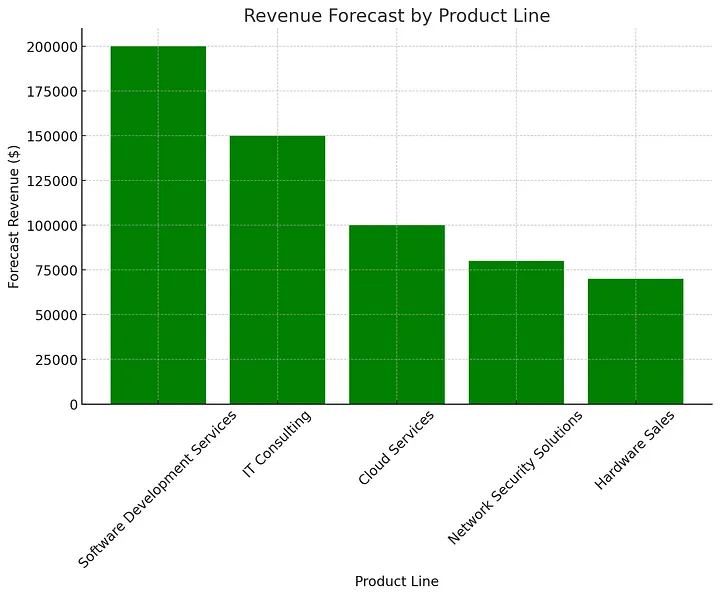
Include a financial analysis in your IT business plan. Help investors understand projected profits, losses, cash flow, and financing.
Include projected income statements, balance sheets, and cash flow statements. Explain projected break-even analysis and expected investment returns. Show financial risks and rewards.
Discuss your financing strategy in detail. Explain how you’ll use funds and raise more if needed. Explain any risks and rewards in your financing strategy.
Need a Information Technology Business Plan?
Create a custom business plan with financial projections and market research in minutes with ProAI’s business plan generator.
How much does it cost to start an IT business?
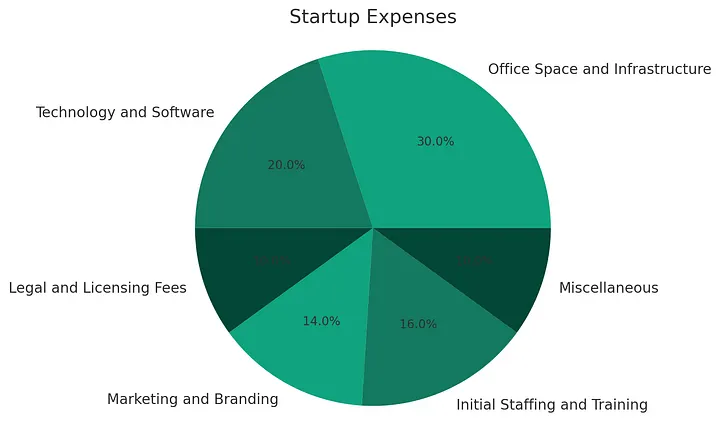
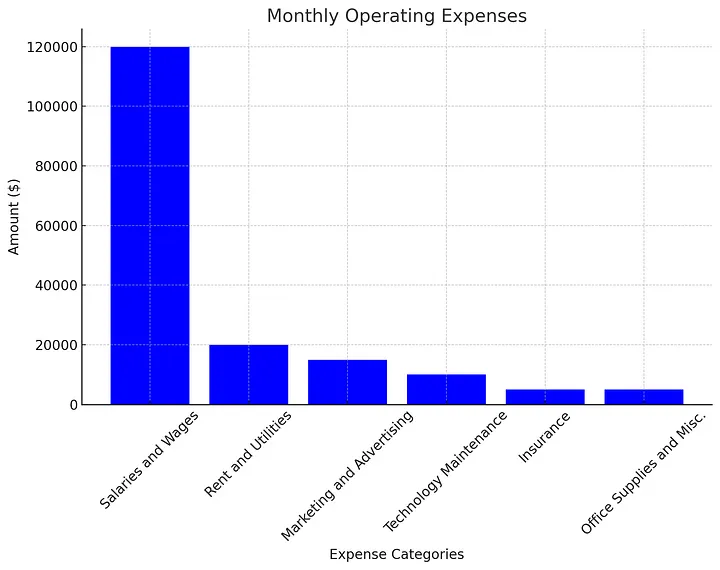
The cost to start an IT business can vary significantly depending on the type of services you offer. At a minimum, you will need funding for expenses such as:
•Incorporation and business licensing fees: $500-$5,000
•Office space: $1,000-$5,000 per month
•Computer systems and software: $5,000-$50,000
•Employee salaries: $3,000-$10,000 per month
•Marketing expenses: $1,000-$5,000 per month
The total cost to start an IT business typically ranges from $25,000 to $250,000. You can start an IT business with very little capital by operating as a sole proprietorship and providing basic services from a home office. However, additional funding will be required to scale and expand the business.
What are the key skills needed to run an IT business?
To run a successful IT business, you must have a mix of technical, business, and soft skills. Key skills include:
•Technical skills: Expertise with software, hardware, networks, and IT systems. The ability to provide high-quality IT solutions and support.
•Business skills: Strong knowledge of sales, marketing, finance, and project management. The ability to develop IT strategies that align with business goals.
•Communication skills: Excellent verbal and written communication skills. The ability to communicate with both technical and non-technical audiences.
•Problem-solving skills: The ability to diagnose and resolve IT issues and challenges. Strong analytical and critical thinking skills.
•Leadership and management skills: The ability to build, lead, and motivate an IT team. Skills to manage projects, clients, and business operations effectively.
•Customer service orientation: A commitment to providing high-quality customer service and support. The patience to address clients’ needs and concerns.
What are the key trends in the IT industry?
Some of the top trends in the IT industry include:
•Cloud computing: The adoption of cloud infrastructure and software is growing rapidly. Many businesses are migrating their systems and applications to the cloud.
•Artificial intelligence: AI technologies like machine learning and automation are being integrated into more IT systems and applications.
•Cybersecurity: As technology becomes more advanced, the demand for cybersecurity solutions is increasing. Protecting data and systems from threats is a high priority.
•Big data and analytics: The use of data to gain business insights and drive smarter decision making is a fast-growing trend. Demand for data analysts and scientists is increasing.
•Remote work: There is a growing trend toward remote IT teams and virtual offices. More companies are adopting flexible and remote work arrangements.
•Modern application development: Use of agile frameworks and modern languages like Python and JavaScript to develop software applications more efficiently.
•Internet of Things: Connecting operational technology and smart devices to the internet is enabling more automation and integration. The IoT market is expanding rapidly.