15 Minutes Read
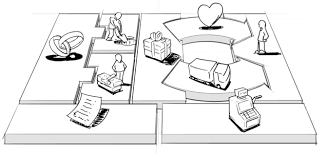
Creating A Winning Business Model
We see many entrepreneurs come to us with brilliant ideas an inventions, but the business model is lacking in some…


For generations, we have defined a successful career by stability. A steady paycheck. Employer-sponsored health insurance. A retirement plan. For many Americans, especially those who pursued credentials, certifications, and licensure, that promise of stability shaped major life decisions.
Yet something does not quite add up.
Across nursing, education, engineering, accounting, skilled trades, therapy, and dozens of other regulated professions, people devote years to training. They assume personal liability. They maintain licenses. They pay for continuing education. They build expertise that organizations depend on. Over a lifetime, they generate extraordinary economic value.
And still, most finish their careers with no transferable asset tied to the work itself.
When they change jobs, their income resets. When they burn out, the system replaces them. When they retire, the institutional knowledge they built disappears into the organization that employed them. Their skill created value, but that value rarely became something they owned.

This pattern affects not only high earners. It affects mid-career nurses managing heavy patient loads. It affects licensed tradespeople who carry tools, insurance, and regulatory compliance on their backs. It affects therapists who navigate reimbursement complexity. It affects civil engineers whose stamp carries legal responsibility. Many of these professionals would not describe themselves as wealthy. Yet they are highly productive and highly accountable. Their labor supports critical systems. Their balance sheets do not reflect it.
Over the past few decades, we have tried to address this imbalance.
Equity compensation promised alignment, but most employees never realize meaningful liquidity. Gig work promised autonomy, but often shifted volatility onto individuals without providing stability or long-term value. Freelancing provided flexibility, but left many professionals without benefits, bargaining power, or saleable infrastructure. Full entrepreneurship works for some, but it requires capital, appetite for risk, and operational bandwidth that many skilled practitioners do not want.
What remains largely unexplored is a different framing: treating skilled labor as an enterprise rather than a role.
Imagine a licensed professional operating through a formal entity that contracts for services, maintains reserves, carries insurance, provides benefits, and builds continuity beyond a single contract. External capital can help stabilize income and fund infrastructure in exchange for a defined share of profits. Over time, that entity accumulates systems, contracts, reputation, and recurring revenue that can be sold or transitioned.
A career becomes something that compounds.
This concept is not foreign. Independent medical practices have existed for decades. Accounting firms operate as partnerships. Skilled contractors build crews and client books that hold resale value. Dental and veterinary practices regularly transact as assets. These examples demonstrate that professional labor can be organized into durable, financeable structures.
The difference is accessibility and intentional design. In many cases, existing models concentrate ownership in a small group of partners or outside investors. A broader framework could allow more professionals to build equity in the platform that delivers their work, while preserving autonomy and maintaining ethical guardrails.
The benefits are straightforward. A professional who operates through a durable entity can contract with one client or several. They can negotiate terms from a position of stability rather than dependence. They can diversify risk. They can retain institutional memory inside their own organization. Over time, they build an asset that reflects the cumulative value of their expertise.
This does not replace employment. Many people will continue to prefer traditional roles, and many organizations will continue to rely on core staff. The goal is not to dismantle the employment model. It is to expand the menu of legitimate options so that skilled workers are not forced to choose between security and ownership.
For this idea to move from theory to practice, several developments would help.
First, infrastructure must exist for professionals to form and manage service entities without excessive administrative burden. Access to pooled insurance, portable benefits, billing systems, and compliance support lowers the barrier to entry.
Second, regulatory clarity is essential. Lawmakers and licensing bodies can define safe harbors for professional service entities that protect consumers while enabling independent contracting. Clear standards around supervision, insurance minimums, and disclosure can prevent abuse.
Third, capital providers must adopt governance models that respect practitioner control. Structures that include buyback rights, transparent profit sharing, and limits on extractive terms will build trust and long-term viability.
Finally, institutions can experiment. Hospitals, engineering firms, municipalities, and large companies can pilot engagements with practitioner-owned entities for specific scopes of work. These pilots can generate data on cost, quality, and continuity.
The broader cultural shift may be the most important step. We have grown accustomed to thinking of work as something we rent out by the hour or year. We rarely ask whether the systems surrounding that work allow value to accumulate for the person producing it.
Many credentialed professionals feel the strain of rising responsibility without corresponding wealth creation. They do not seek windfalls. They seek stability, dignity, and the ability to convert years of effort into something lasting.
If we design structures that allow skilled workers to build equity in the platforms that deliver their labor, we can create a more balanced relationship between institutions and individuals. Careers would no longer end as consumed income streams. They could mature into transferable enterprises.
Where this model makes sense, it offers a path toward greater resilience and shared prosperity. It invites capital to support labor without subsuming it. And it gives professionals a chance to own, in a very real way, what they spend a lifetime building.