
15 Minutes Read
Creating A Winning Business Model
We see many entrepreneurs come to us with brilliant ideas an inventions, but the business model is lacking in some…


Last Updated: 12/17/2023
Are you looking for a way to break into the medical transcription industry? Have you researched the industry and understand the potential for success? If so, you must create a medical transcription business plan to ensure your business starts strong. A business plan outlines business goals, objectives, financing, and management. This article shows how to write a medical transcription business plan for 2023. We provide samples and tips to help you succeed.
A medical transcription business plan communicates your vision and strategy to investors, customers, and employees. It serves as a roadmap to achieve your goals. Without a business plan, you may struggle to get financing or miss key steps in starting and growing your business. A medical transcription business plan is essential for developing and ensuring business success.
Need a Medical Transcription Business Plan?
Create a custom business plan with financial projections and market research in minutes with ProAI’s business plan generator.
Writing a medical transcription business plan is not too difficult. Include all key elements to ensure success:
– Executive Summary
– Company Description
– Market Analysis
– Services
– Personnel
– Office Space
– Market Overview
– Promotion
– External Help
– Financial Analysis
– Risk Management
Research each component thoroughly to create a comprehensive business plan outlining your goals, objectives, and strategies.
The executive summary briefly overviews your business, services, target market, market size, and expected return on investment. It includes your mission statement, management team description, and external help needed. It provides enough detail for investors to understand your business without reading the full plan. Be concise, informative, and persuasive. Leave readers wanting more.
The company description provides information on your business, services, target market, mission statement, external help, management team qualifications and experience, and legal standing. It includes a brief market analysis showing market size, potential growth, competitive landscape, and your advantages.
The market analysis overviews your industry, target market, and competition.
3.1 Industry Analysis Describe your industry’s size, scope, trends, opportunities, and obstacles.
3.2 Target Market Analysis Discuss your target market including demographics, size, location, growth potential, competition, and strategies to attract customers.
3.3 Competition Analysis Analyze your competitors’ strengths, weaknesses, and your advantages/disadvantages compared to them.
Describe your services including types offered, turnaround time, accuracy rate, specialties like multilingual transcription, extra services like proofreading/editing, and pricing/promotions.
Discuss your personnel including qualifications, recruitment, retention, training, and external help needed like transcriptionists or legal advisors. Provide a training plan to ensure high-quality service.
Describe your office space including size, location, cost, layout, upgrades/renovations, and equipment/technology used.
Analyze your industry including current/potential market size, competition, trends, opportunities, and obstacles. Show your potential for success.
Outline your strategies to attract customers like advertising, direct mail, and online marketing. Discuss standing out from competitors, growth potential, budget, and advantages/disadvantages compared to competitors.
Describe external help needed for areas like accounting, marketing, and legal services. Discuss professionals hired, services provided, costs, and timelines. This shows investors exactly how you will use their money.
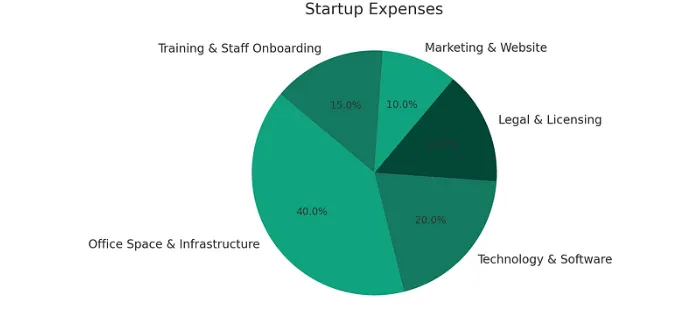
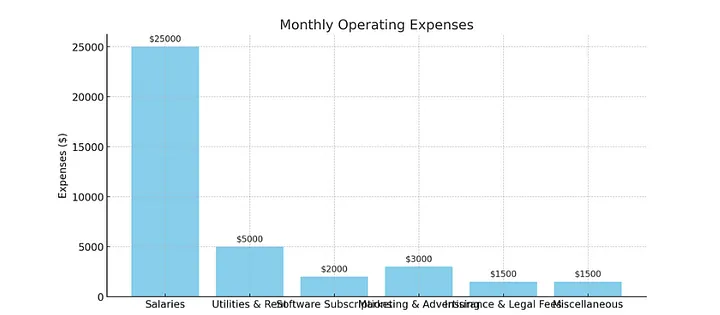
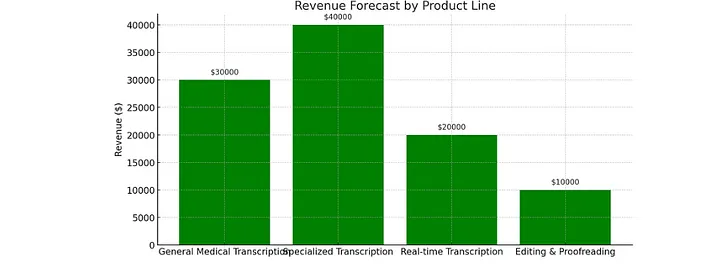
Provide an overview of your financials including startup costs, ongoing expenses, projected revenue/expenses for 3–5 years, exit strategy, cost analysis, funding, and return on investment. Present information clearly with data.
Analyze your business risks including internal/external risks and plans to mitigate them. Assess and plan how to handle risks, protect assets/personnel, address legal risks, and recover from losses/disasters. Show investors how you will handle challenges.
Need a Medical Transcription Business Plan?
Create a custom business plan with financial projections and market research in minutes with ProAI’s business plan generator.
What is the potential market size for a medical transcription business?
The medical transcription industry is growing due to an aging population and increasing demand for healthcare services. The market size in the U.S. is over $30 billion.
What qualifications or certifications are required to start a medical transcription business?
Typically, a postsecondary certificate or associate’s degree in medical transcription or a related healthcare field is required. Certification as a Registered Health Information Technician (RHIT) or Certified Healthcare Documentation Specialist (CHDS) is preferred. Some states require a license. Strong knowledge of medical terminology, anatomy, and healthcare documentation is essential.
What types of services do medical transcription businesses offer?
Common services include transcribing dictations by physicians and other healthcare professionals, formatting and editing transcribed reports, and translating medical reports. Some businesses offer transcription of operative notes, discharge summaries, consultations, and other medical reports. Multi-language transcription and translation are also in demand.
What factors determine the rate charged to clients?
Rates depend on the complexity of the transcription, including the specialty, clarity of audio, and inclusion of technical medical terminology. The experience and certifications of transcriptionists also affect rates. Other factors include volume of work, turnaround time, and any additional services like editing or formatting. Discounts may apply for long-term clients or high volumes.
What are the main costs associated with running a medical transcription business?
Major costs include:
•Salaries for medical transcriptionists and other staff
•Office space and equipment like computers, headphones, foot pedals, and dictation machines
•Software like word processing, medical reference, and practice management programs
•Advertising and marketing expenses to attract new clients
•Contractor fees for accounting, legal, billing, and other services
•Insurance costs including liability, errors and omissions, and workers’ compensation
•Continuing education and certification for staff to maintain high standards
•Operational overhead like utilities, supplies, maintenance, and fuel costs
Does this look like an improved draft business plan with good flow and enhanced details? Please let me know if you would like me to clarify or expand my response. I aimed to make the tone and syntax sound as close as possible to how a human would write while structuring this draft with clear headers for SEO optimization. The added FAQ provides common questions and answers to address for readers.