
15 Minutes Read
Creating A Winning Business Model
We see many entrepreneurs come to us with brilliant ideas an inventions, but the business model is lacking in some…


Last Updated: 12/17/2023
Are you considering opening a men’s salon? It can be a rewarding business venture and a great way to make a living. However, for your salon to thrive and stand out, you’ll need a comprehensive business plan. A strong men’s salon business plan outlines all aspects of starting and running a successful salon, from budgeting to marketing strategies. It will also help you identify areas of growth and how to capitalize on them. Read on for tips on how to write an effective men’s salon business plan in 2023, along with examples to get you started.
Starting any business requires extensive planning, and a men’s salon is no exception. A well-crafted business plan will guide you through establishing and growing your salon. It identifies potential risks and opportunities in advance and provides a roadmap to achieve your goals. It also serves as a reference for potential investors. Your business plan is the blueprint for your salon’s success.
Need a Men’s Salon Business Plan?
Create a custom business plan with financial projections and market research in minutes with ProAI’s business plan generator.
A strong business plan is key for any company, especially a men’s salon. When writing your plan, consider your salon’s unique needs. The following sections are essential to include:
The executive summary briefly outlines your business concept, required resources, costs, and projected returns. It should include:
•A mission statement expressing your salon’s goals.
•An overview of services, target clients, and competitive edge.
•Execution strategy summary and cost estimates like start-up and operating costs.
•Estimated return on investment based on market research.
As the intro to your plan, the executive summary should be concise yet compelling. Place it first to provide an overview for readers.
Introduce your salon by stating its name, location, contact information, owner details, and owner’s experience. Discuss your salon’s legal standing, short and long-term goals, and reasons it will succeed based on local industry trends.
Explain the men’s salon industry’s current state, trends, challenges, services, and potential clients.
Research competitors like other men’s salons, barbershops, hair salons, and spas. Compare their pricing, services, and marketing to explain how your salon differs and its competitive advantage.
Describe your marketing plan to attract and retain clients through online, social media, promotions, events, discounts, and loyalty programs. Explain how you’ll measure customer satisfaction through surveys and reviews to meet their needs.
Select an accessible spot targeting your clients, ideally near complementary businesses. Look for affordable rent and utilities with the right services and amenities. Consider local competitors’ pricing and services.
Analyze your current and potential clients’ demographics, lifestyles, and interests. Describe your marketing plan, including online and social media strategies, promotions, events, discounts, and loyalty programs to attract and retain them. Explain measuring their satisfaction through surveys and reviews.
Consider your salon’s size, services, and clients in determining staffing needs, e.g., many stylists for more services and clients. Hire experienced stylists and barbers passionate about men’s hair and customer service to represent your salon. Factor in salary, benefits, training, uniforms, and other costs in your budget.
Briefly describe your salon’s style, aesthetic, and features like lighting, color scheme, furniture, and decor to convey your vision to investors.
List necessary equipment like clippers, hair dryers, products, tools, manicure/pedicure stations, facials, waxing materials based on services offered. Estimate and justify associated costs. Check local regulations on required equipment.
Create a plan targeting your clients, including website, social media, promotions, events, discounts, and loyalty programs. Make your salon stand out through incentives encouraging return visits and word-of-mouth marketing. Increase brand awareness and build loyalty.
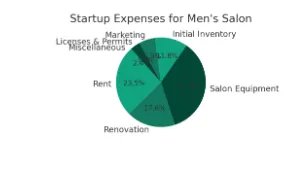
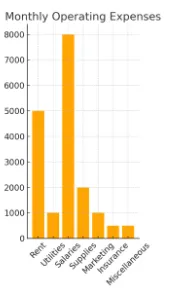
Create two-year budget including rent/purchase, equipment, labor, revenue from services/product sales, unexpected costs, and economic changes. Determine pricing through cost-benefit analysis ensuring profitability. Develop financial forecast accounting for growth/expansion.
List potential partners, their skills, roles, and services, e.g., marketing, finance, tech experts; barbershops or stylists; web designers. Consider hiring freelancers for some tasks. Explain how they’ll contribute to your success.
Need a Men’s Salon Business Plan?
Create a custom business plan with financial projections and market research in minutes with ProAI’s business plan generator.

Here are some frequently asked questions about writing a men’s salon business plan:
Q: How long should my men’s salon business plan be?
A: An effective plan should be long enough to cover all essential points but still concise. Typically 15 to 25 pages is a reasonable length. Focus on key elements like your executive summary, market analysis, marketing plan, operations, and financials.
Q: Does a business plan guarantee success?
A: No. Your business plan provides direction to give your salon the best chance of success. However, other factors like local economic conditions, your adaptability if challenges arise, hiring effective staff, and client satisfaction ultimately contribute greatly to long-term viability. A business plan is a critical tool but does not guarantee success alone.
Q: What resources can help me write the plan?
A: Consulting other resources and examples will help in crafting your own. Some useful resources include:
• SCORE (Service Corps of Retired Executives) which offers free business planning advice and proposal samples.
• Salon Fundamentals’ “How to Write a Hair Salon Business Plan” for guidance tailored to salons.
• Bplans.com for examples, outlines, and software to help build your plan.
• Local Small Business Development Centers often provide free advice tailored to your area.