Business Planning
15 Minutes Read

Retail Property Sub-leasing Business Plan: the Ultimate Guide for 2024

Are you interested in sub-leasing your retail property to generate extra income? Sub-leasing is a great way to maximize your property’s potential, but you need a solid business plan to be…

Are you interested in sub-leasing your retail property to generate extra income? Sub-leasing is a great way to maximize your property’s potential, but you need a solid business plan to be successful. A retail property sub-leasing business plan should analyze your market, project finances, outline marketing strategies, and more. In this article, you’ll learn how to craft a comprehensive sub-leasing business plan for your retail property in 2023. I’ll provide helpful tips and examples to guide you through the process.

Why Do You Need a Retail Property Sub-leasing Business Plan?

Many new retail property sub-lessors skip creating a business plan because it seems tedious. However, without proper planning, your business is unlikely to succeed or attract investors. Your business plan maps out how you’ll turn a profit, identify your competitive advantage, and mitigate risks. The time required to create a strong plan is worth the reward of a successful, sustainable business.

Need a Retail Property Sub-leasing Business Plan?

Create a custom business plan with financial projections and market research in minutes with ProAI’s business plan generator.

How to Write a Retail Property Sub-leasing Business Plan

Writing a retail property sub-leasing business plan may seem daunting, but the right approach can make the process manageable. Here are the key sections to include:

1. Executive Summary: Your executive summary is your plan’s introduction and highlights key details like your mission, concept, costs, and potential ROI. It should convince readers to continue reading your full plan.

2. Company Description: Describe your property, location, owner details, and business goals. Include the property type, size, and amenities. Discuss your business’ legal standing and short/long-term goals. Briefly analyze market trends and your competitive advantage.

3. Market Analysis: Analyze your target tenants, competition, and local economy. Discuss tenant demographics, local businesses, foot traffic estimates, and economic climate. Compare competitor properties’ costs, amenities, pros and cons. Examine key local economic indicators and projected growth to determine its impact.

4. Property Overview: Research your property’s zoning laws, ordinances, existing leases, layout, and safety features. Obtain blueprints and records to understand the property. Assess any repairs or issues to address.

5. Sub-leasing Agreement: Your agreement should outline lease terms, rent, payment schedule, and responsibilities between the property owner and sub-lessee. Ensure it meets regulations and benefits both parties. Clarify financial obligations and liability protections.

6. Legal Considerations: Review zoning regulations, laws, taxes, contracts, and insurance needs. Verify that existing leases and service agreements comply with laws. Consider the implications of laws on your business model, agreements, and risk management. Protect your business and sub-lessees with proper insurance coverage.

7. Financial Analysis: Analyze market conditions, economic factors, costs, income, cash flow, and ROI. Review historical data and forecasts to project revenue and expenses. Calculate acquisition, operating, and rental costs. Determine ROI, net present value, and return on investment.

8. Business Model: Explain how you will generate revenue through lease agreements, commissions, advertising, and service fees. Provide financial projections for each revenue stream and risk management strategies.

9. Marketing Plan: Research your target customers and market. Develop a budget and timeline for strategies like social media marketing, email marketing, SEO, and content creation. Set specific, measurable goals for each campaign. Evaluate and adjust as needed.

10. Risk Management Plan: Consider risks like unpaid rent, property damage, zoning issues, lease disputes, and terminated agreements. Thoroughly vet tenants, comply with laws and leases, and have plans to resolve disputes. Establish a strong relationship with the property owner. Prepare an exit strategy in case the sub-lease ends.

11. Exit Strategy: Plan how you will sell, transfer or close your business. Compare pros, cons, and financial impacts of options like selling, IPO, merger or closure. Develop a timeline to execute your exit strategy.

Need a Retail Property Sub-leasing Business Plan?

Create a custom business plan with financial projections and market research in minutes with ProAI’s business plan generator.

Retail Property Sub-leasing Financial Forecasts

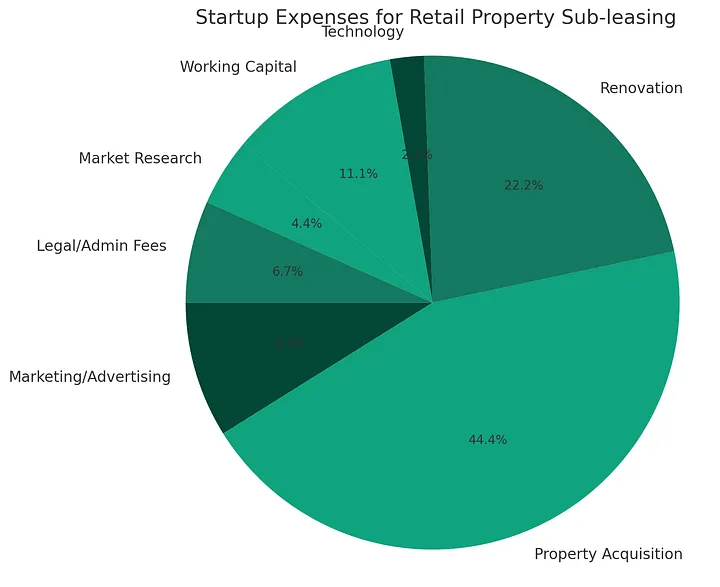
Startup Expenses

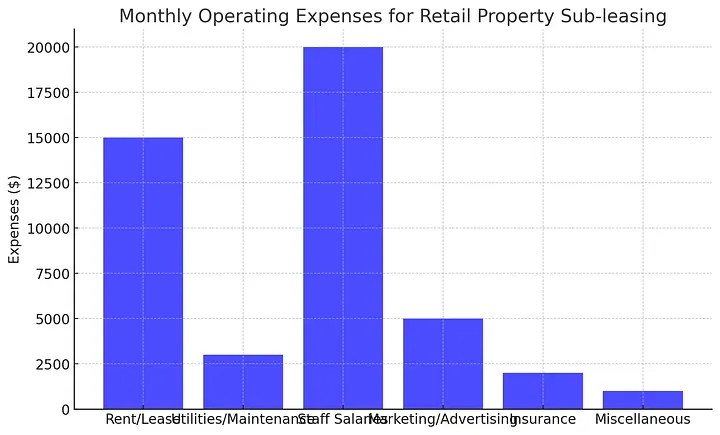
Monthly Operating Expenses

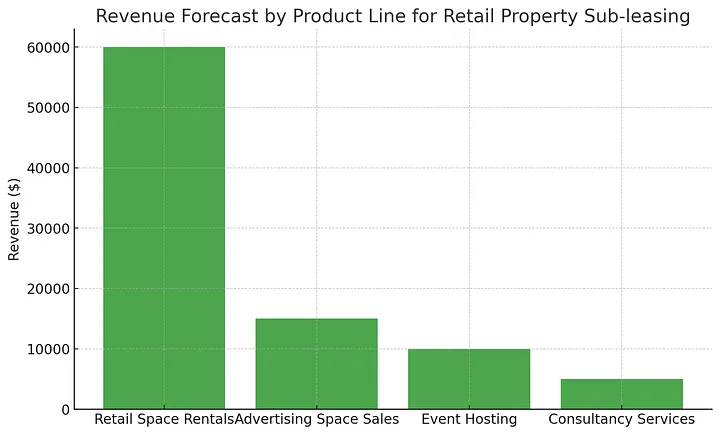
Revenue Forecast

Frequently Asked Questions

Here are some common FAQs about writing a retail property sub-leasing business plan:

How long should my plan be? Keep it as concise as possible while still being compelling and comprehensive. Aim for 15 to 30 pages. Focus on providing key details, not excruciating depth.

Do I need professional help? While not always necessary, a business plan consultant can help you develop realistic financial projections, properly assess risks, and craft a persuasive marketing strategy. Consider your budget and experience in determining if outside help would benefit you.

How often should I update my plan? Review and revise your plan at least annually and when major changes occur, like new economic conditions, marketing strategies, or business costs. Make adjustments to projections, goals, and risk management strategies as needed.

What if I’ve never written a business plan before? Don’t worry if you have no experience writing plans. Focus on conducting thorough research, analyzing all facets of your business and market, setting concrete goals, and being transparent about challenges. Plain language and a logical structure can make up for lack of experience.

How do I know if my plan is good enough? A strong plan should convince readers that you understand your business and market, have a high chance of success, and will achieve a solid ROI. It should mitigate major risks, have realistic projections, and outline a clear path to achieving goals. If your plan establishes your credibility and viability, it should be good enough.

You May Also Like