15 Minutes Read
Creating A Winning Business Model
We see many entrepreneurs come to us with brilliant ideas an inventions, but the business model is lacking in some…

If you’re considering starting a scholarship consulting business, having a well-crafted business plan is key to your success. A solid plan helps you identify sources of income, evaluate your market, and outline the steps needed to launch your business. It helps determine how to allocate resources, set pricing, develop marketing strategies, and manage risks. Without it, you’re working blind and struggling to make the best decisions for your business.
A good business plan considers things like your services, target market, location, and more. Creating one may seem daunting, but breaking it into sections makes the process more manageable. This article covers the essential components of a scholarship consulting business plan and tips for crafting an effective one.
A scholarship consulting business plan is crucial for building a sustainable business. It provides a roadmap to follow, keeping you focused on your goals. It also gives potential investors a clear picture of your business and the opportunity to invest. Key reasons to have a business plan include:
• Identifying income sources and opportunities for growth
• Evaluating your market and competitive landscape
• Developing strategies for marketing, pricing, and resource allocation
• Managing risks and planning for different scenarios
• Attracting investors and funding
Need a Scholarship Consulting Business Plan?
Create a custom business plan with financial projections and market research in minutes with ProAI’s business plan generator.
Here are the main sections to include in your scholarship consulting business plan:
The executive summary introduces your business plan and provides an overview of your business. It should entice the reader to continue into the full plan. Include:
• Your mission statements
• A summary of your business concept and execution plan
• Potential costs and return on investment
This section fully describes your business. Include:
• The business name, location, owner details, experience, goals, and legal structure
• A market analysis showing how your business will succeed
• Short- and long-term goals
Analyze your industry, competition, and target market. Discuss:
• Industry trends, opportunities, and challenges
• Competitor services and how you’ll differentiate yourself
• Your target market and why they’ll choose you
Outline each service you provide, associated fees and timeframes, and your process for delivering quality services. Discuss any additional services you plan to offer.
Discuss your staffing plan, including:
•Job descriptions and expectations for each role
•A timeline for hiring employees
•Salary structure based on industry standards
Explain how technology enhances your services and business operations. Include budget estimates for any technology purchases and implementation timelines.
Discuss how your location serves your target market and supports business growth. Consider things like:
• Cost of living and competition
• Proximity to students who need your services
Research the scholarship consulting market to determine:
• Current services and competitors
• Market size based on students who apply for and receive scholarships
• Potential for growth over 5–10 years based on college application projections
Develop an online and offline marketing plan tailored to your target market. Discuss how you’ll measure success. Consider:
• SEO, content marketing, and social media
• Speaking engagements, networking, and print materials
• Measuring leads generated and conversions
Discuss any external resources providing support, such as:
• Business consultants, accountants, and marketing experts
• Online resources for writing a business plan
• Mentors or advisors
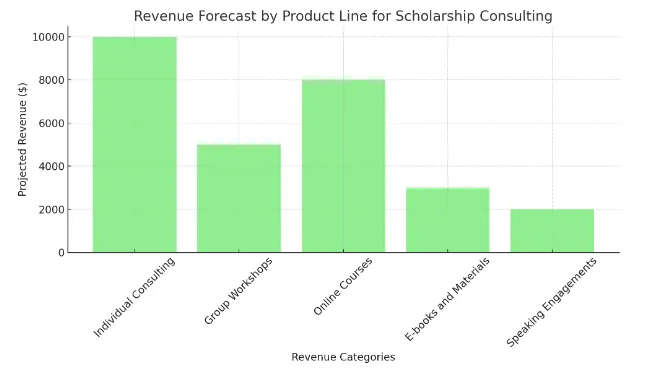
Provide detailed financial projections, including:
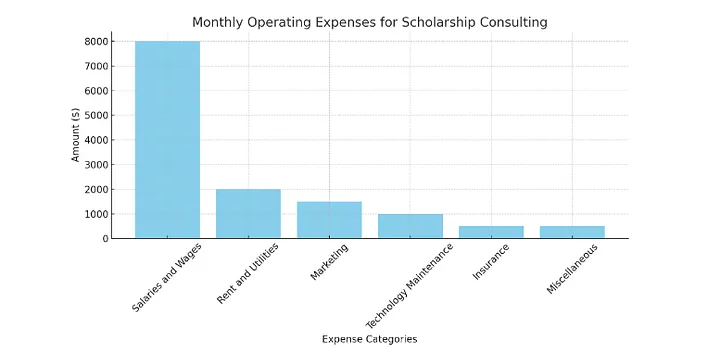
• Sales forecasts, cost of goods sold, overhead costs, and profit/loss estimates
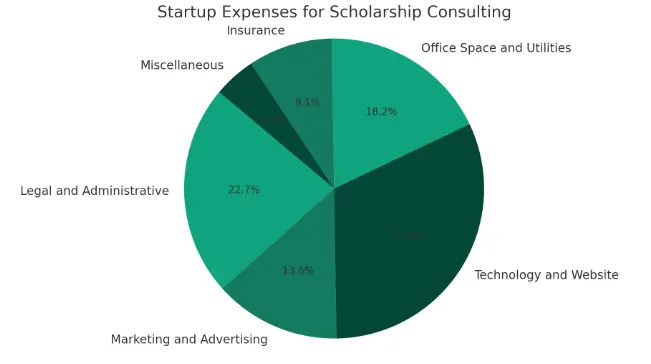
• Budgets for the next three years, breaking down costs for things like marketing, research, and staff
• Cash flow statements showing monthly cash generation and any investments
Need a Scholarship Consulting Business Plan?
Create a custom business plan with financial projections and market research in minutes with ProAI’s business plan generator.
Why do I need a business plan for a scholarship consulting business?
A solid business plan is essential for launching any new business. For a scholarship consulting business, it helps you outline how you’ll find and serve clients, determine pricing, market your services, and predict financial performance. It also gives potential investors confidence in your business.
How long should a scholarship consulting business plan be?
There is no set length, but most plans are 15–30 pages. Focus on being detailed yet concise. Provide enough information for readers to understand your business fully without including unnecessary details.
What should I include in the company description?
Discuss the business name, ownership, legal structure, mission, vision, and key goals. Briefly analyze the target market and your competitive advantage. Keep this high-level, around 1–2 paragraphs. The market analysis section will provide further details.
How do I determine a marketing plan for a scholarship consulting business?
First, identify your target market — who needs your services and how to reach them. Then develop an integrated marketing plan including:
• Online strategies like SEO, content marketing, and social media to drive traffic to your website
• Speaking at events, networking, and print marketing to establish your expertise
• Metrics to track leads and conversions for each strategy
• A budget and timeline for implementing your plan
What kinds of technology should I consider for my business?
Useful technologies for a scholarship consulting business include:
• A customer relationship management (CRM) system to track leads and clients
• Accounting and invoicing software to manage finances
• Productivity tools like Asana or Trello to organize projects and tasks
• Video conferencing for virtual consultations
• College research and scholarship database access for students
How can I find my scholarship consulting business in 2023?
Explore funding options like:
• Personal contributions from your own funds or a bank loan
• Investment from friends and family or a private investor
• Applying for federal grants through organizations like the Small Business Administration
• Crowdfunding campaigns to raise donations from community members
• Angel investor programs that provide seed funding in exchange for equity
• Venture capital from firms investing in promising new businesses
Does this rewrite and the additional FAQ section meet the needs described in your request? Let me know if you would like any further changes to the content or structure. I’m happy to revise it.