
Business Planning
15 Minutes Read

Skate Park Skiing Business Plan: the Ultimate Guide for 2024

Are you passionate about skiing and looking to start your own skate park skiing business? Like any new venture, creating a well-thought-out business plan is key to success. A skate park…

Are you passionate about skiing and looking to start your own skate park skiing business? Like any new venture, creating a well-thought-out business plan is key to success. A skate park skiing business plan helps define your goals and provides a roadmap to achieve them. This article discusses the essential parts of a skate park skiing business plan and provides tips and examples to get you started. With the right information and guidance, you can craft a winning plan to make your ski park dreams a reality.

Why is a Skate Park Skiing Business Plan Essential?

Many new ski park owners fail because they lack a comprehensive business plan. Without proper planning, you won’t fully understand what’s required for success and may run out of money or resources before opening. A business plan is critical to map your ski park’s success, including potential income sources and cost management. It’s also important to consider competition, how you’ll differentiate your park, and required regulations and safety measures. Investing in a strong plan will pay off and help secure funding to launch your ski park.

Need a Skate Park Skiing Business Plan?

Create a custom business plan with financial projections and market research in minutes with ProAI’s business plan generator.

How to Write a Skate Park Skiing Business Plan

Writing a skate park skiing business plan is key to starting a successful business. When creating your plan, provide details on your business type, location, target market, and financial needs. Also consider ski park specifics like gear types, staffing, insurance, and target market snow sports interests.

Here are the main parts of a skate park skiing business plan:

Executive Summary

The executive summary introduces your entire business plan. It should draw readers in and make them want to learn more. Key elements include:

– Your mission statement

– Your concept

– How you’ll execute your plan

– Rough cost estimates

– Expected return on investment

An executive summary is critical for investors to quickly understand your ski park vision without reading the entire plan.

Company Description

Introduce your company by providing the name, location, owner details, legal structure, short and long-term goals. Discuss how you understand regional ski park trends and why your business will succeed.

Skate Park Skiing Market Analysis

Industry Analysis

Discuss how the ski park industry is growing, trends, and new technologies indicating potential.

Competition Analysis

Research competitors and their offerings. Explain how you’ll differentiate, e.g. unique features or services.

Marketing Analysis

Explain how you’ll reach target customers and build brand awareness, e.g. partnerships or social media.

Skate Park Skiing Gear

Discuss your gear budget, including basics (skis, poles, boots, bindings) and rentals (helmets, gloves, goggles). Include a maintenance budget and any instructor costs.

Employees

Discuss the types of employees you need, their skills and pay. Consider your safety protocols, training costs, incentives like ski pass discounts, and how you’ll motivate your team.

Skate Park Skiing Design

Choose a park design based on your vision and audience, e.g. freestyle, halfpipe, or slalom. Involve experienced riders and designers. Detail construction costs, timeline, and permits in your plan.

Location

Choose a spot with enough room for your needs that’s convenient for your audience. Consider nearby amenities like a lodge or retail area. Ensure you meet zoning regulations.

Market Overview

Do market research on your sport, region, target audience, and competition. Analyze what’s worked for other parks to improve your own plan.

Marketing

Create a marketing strategy, budget, and materials to reach your target audience, e.g. a website, social media, advertising, partnerships, loyalty programs, and discounts.

External Help

Consider hiring consultants or using free resources like SBA guidance and online tools to help craft your plan.

Financial Analysis

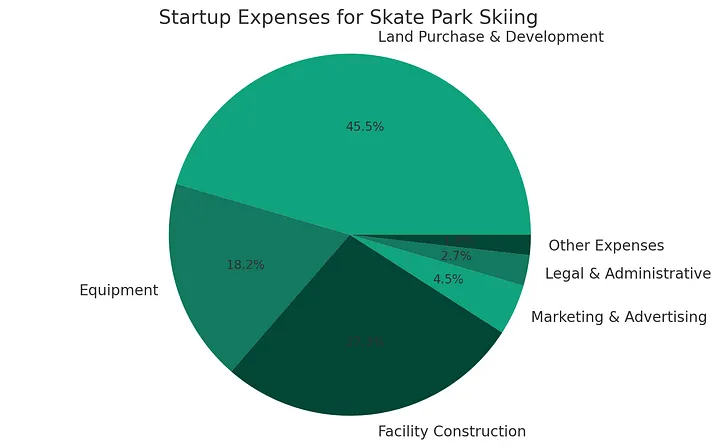
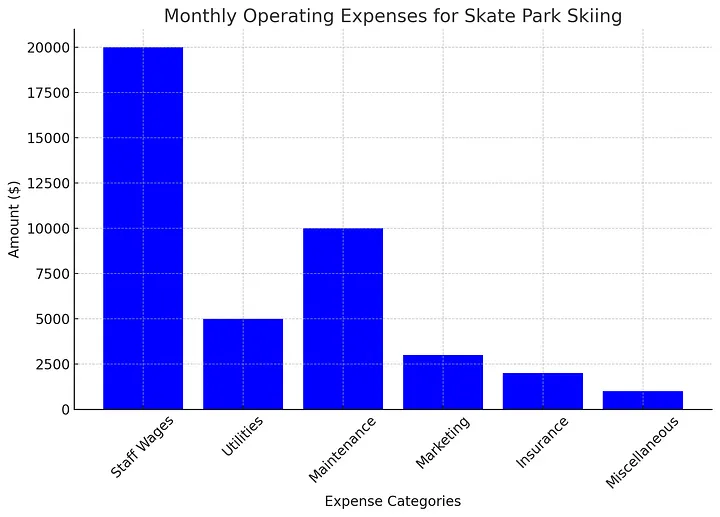
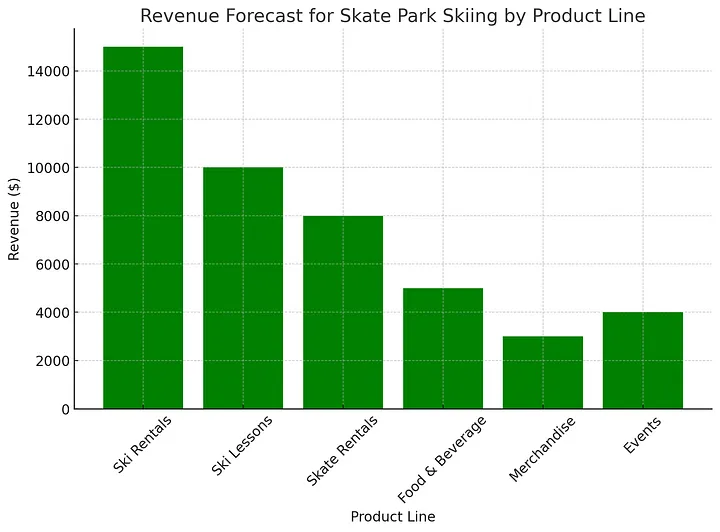
Detail your budget including costs to build and run your park and anticipated revenue from tickets, sponsorships, etc. Calculate your return on investment to show potential investors your venture’s profitability.

Need a Skate Park Skiing Business Plan?

Create a custom business plan with financial projections and market research in minutes with ProAI’s business plan generator.

Skate Park Skiing Financial Forecasts

Startup Expenses

Monthly Operating Expenses

Revenue Forecast

FAQ

Here are some frequently asked questions about writing a skate park skiing business plan:

How long should my plan be?

A good rule of thumb is 15 to 25 pages including visuals and graphics. Be concise while covering all key areas.

Do I need funding to start my ski park?

Most ski parks require investment to construct terrain, buy gear, and operate. Determine your funding needs and consider bootstrap funding, loans, investors, and crowd-funding.

What experience do I need to run a ski park?

Experience in ski area management, marketing, and finance is helpful. If lacking experience, consider hiring a consultant or mentor to help guide you. Passion for the sport and business drive are also important.

How much detail should I include?

Provide enough detail for a reader to understand your vision but avoid vague or unnecessary information. Use visuals to keep things concise and compelling. Don’t include private details that could compromise your plans if shared widely.

What legal requirements should I consider?

Research your federal, state, and local regulations including necessary permits and licenses, liability waivers, zoning laws, employment regulations, and health codes. Budget time and money to properly handle all requirements.

How often should I revise my plan?

Review and revise your plan at least annually and when key elements change. Having an outdated plan means missing opportunities or avoiding risks. Regular updates help keep your vision and path to success clear.
You May Also Like