15 Minutes Read
Creating A Winning Business Model
We see many entrepreneurs come to us with brilliant ideas an inventions, but the business model is lacking in some…

Last Updated: 12/17/2023
Are you excited to launch your sports equipment rental business? While the industry holds a lot of potential, you’ll need a comprehensive business plan to set yourself up for success. A well-crafted sports equipment rental business plan outlines your operations, financials, marketing strategy, and path to profitability. It is an essential tool for any new business owner. In this guide, we’ll explore how to write an effective sports equipment rental business plan.
Many new entrepreneurs wrongly assume business plans are unnecessary or too difficult to create. However, a business plan is crucial for establishing a successful sports equipment rental company. Without proper planning, you’ll lack the direction and focus to thrive in this competitive market. A business plan helps you identify necessary resources and steps to launch your business. It enables you to set and track key milestones and plan for potential risks. An effective business plan can also help you secure financing from investors and build valuable relationships. Ultimately, investing the time to craft a detailed business plan helps ensure your sports equipment rental business’s success.
Need a Sports Equipment Rental Business Plan?
Create a custom business plan with financial projections and market research in minutes with ProAI’s business plan generator.
Developing a business plan for a sports equipment rental company can seem daunting. To get started, here are the key sections you’ll need to include:
Your sports equipment rental business plan should begin with an executive summary. An executive summary not only introduces your business plan but also summarizes your entire business concept. Its goal is to draw readers, like potential investors, into the plan.
Components of an executive summary include:
– Your mission statement
– Your business concept
– Your execution strategy
– Estimated costs and expected ROI
– An analysis of the sports equipment rental industry and your target market
– How you’ll differentiate from competitors
An executive summary is critical for investors. Rather than reading the entire plan, they can review the summary to understand your vision, the industry’s potential, and your path to profitability.
This section fully introduces your business. Start by sharing your company name, location, and contact details. Also include background on the owner(s) and their relevant experience.
Next, discuss your business’ legal structure and short-/long-term goals. Share a brief market study demonstrating your industry knowledge and how your business will succeed. Explain the types of sports equipment you’ll rent, your services, and customer satisfaction strategies. Finally, share your competitive advantage and how you’ll stand out.
Discuss current sports equipment rental industry conditions and trends as well as your target market. Explain how you’ll differentiate from competitors.
Research competitors to understand their pricing, services, and competitive advantages. Identify any gaps in the market you could fill.
Outline your marketing strategy for reaching target customers through social media, word-of-mouth, and other channels. Discuss your specific strategies and how you’ll measure success.
Consider the types of sports equipment you’ll rent based on your target sports. Ensure you’ll have enough inventory to meet demand while still managing storage and costs. Research equipment costs, lifespan, and how that will impact your rental fees. Consider any additional equipment or amenities, like uniforms or safety gear, as well as necessary insurance.
Outline the roles and positions required to operate your business. Discuss your recruitment, training, retention, compensation, and benefits strategies for attracting and keeping great employees. Share your health, safety, and security policies for protecting staff.
Selecting the right location is crucial for a sports equipment rental business. Research your target customers’ demographics and preferred activities to determine optimal locations. Consider the competition in potential sites and your differentiators. The location must match your equipment offerings, e.g., ski rentals should be near resorts.
Conduct a market analysis to identify your potential customers, the industry’s size, competitive landscape, key players, trends, and economic factors. Use these insights in your business plan to show your market and industry knowledge. Tailor your strategy and pricing to match customers’ needs. A strong market overview builds investor confidence.
Share how you’ll leverage digital and traditional marketing to reach customers. Build an easy-to-use booking website and list on popular rental sites. Use email, social media, content marketing, and advertising to engage your audience. Consider partnerships with influencers who can promote to their followers. Discuss your specific strategies and metrics for measuring success.
Don’t create your business plan alone. Resources like Entrepreneur, Small Business, and SCORE offer tips for starting a sports equipment rental business. Consult business and legal experts on financial and operational issues. Join sports and recreation organizations to network and learn from other entrepreneurs.
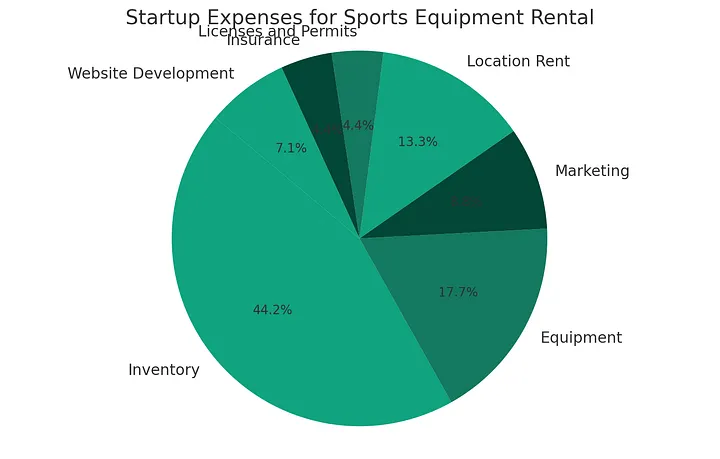
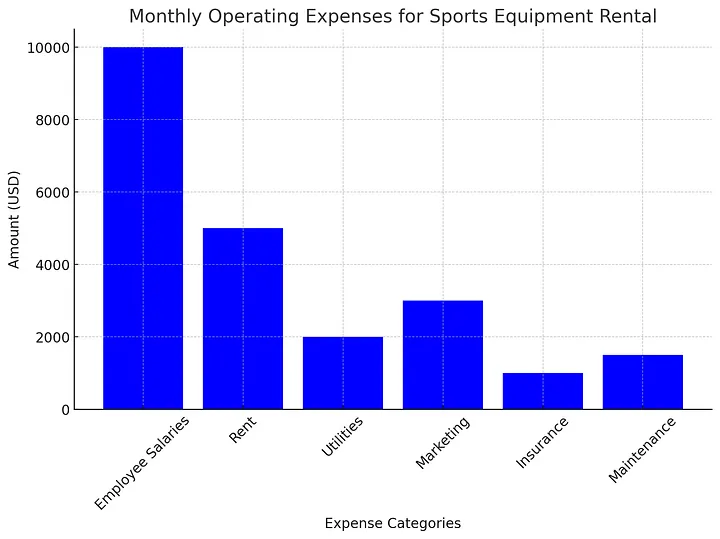
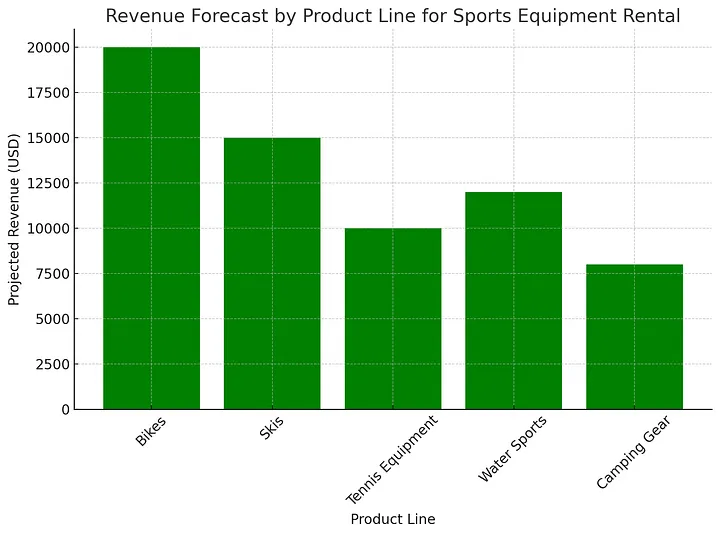
Provide a detailed financial analysis, including startup costs, fixed and operational costs, marketing spend, and other expenses. Share cash flow statements, income statements, break-even analysis, and financing plans. Discuss how you’ll fund your business through investors, loans, and other means. A financial analysis proves your business model’s viability and your path to profitability to readers and funding sources.
Need a Sports Equipment Rental Business Plan?
Create a custom business plan with financial projections and market research in minutes with ProAI’s business plan generator.