
15 Minutes Read
Creating A Winning Business Model
We see many entrepreneurs come to us with brilliant ideas an inventions, but the business model is lacking in some…


Last Updated: 12/17/2023
Starting your own taxi business in 2023 can be an exciting opportunity, but it requires careful planning and preparation to be successful. A comprehensive business plan is essential for mapping out your company’s future, gaining funding from investors, and keeping your business on track. This article provides guidance for writing a persuasive taxi business plan.
A taxi business plan helps you understand your competition, create effective marketing strategies, secure funding, and achieve your goals. It allows you to anticipate changes in the market and make adjustments to ensure your company’s success.
Need a Taxi Business Plan?
Create a custom business plan with financial projections and market research in minutes with ProAI’s business plan generator.
Here are the key components to include in your taxi business plan:
The executive summary briefly outlines your entire business plan to capture the reader’s interest. It should include your mission statement, business concept, execution plan, costs, and projected return on investment. The executive summary is essential for attracting potential investors.
Introduce your taxi company by providing its name, location, contact information, ownership details, and short/long-term goals. Discuss its legal structure and explain how it is poised to succeed in the regional transportation market.
Analyze the current taxi industry, market trends, and competition. Discuss how economic, social, and technological changes may impact your business. Identify competitors’ pricing, hours, services, and competitive advantages to determine how to differentiate your company. Explain your marketing strategies, such as online ads, direct mail, and local partnerships. Discuss your potential market size and growth opportunities.
List details for each vehicle: make, model, age, fuel type, mileage, maintenance/repair plans, and costs. Choose a memorable company color for your cabs. Discuss how you will keep vehicles in reliable, safe working condition.
Detail your driver recruitment and training processes. Discuss your competitive advantage in hiring and retaining high-quality drivers. Explain the technology/tools used to maximize efficiency and customer service.
Discuss potential business locations, costs, accessibility, and demand for taxi services. Choose an area not well-served by competitors. Factor in taxes, insurance, and fees for different locations. Compare locations through a cost-benefit analysis.
Discuss the current taxi market, including competitors, regulations, fares, technology changes, and customer needs. Use market research to determine service offerings and pricing. Understanding market dynamics is key to success.
Explain your marketing strategies, such as social media, digital ads, radio, print, television, and outdoor advertising. Discuss how each approach will reach your target customers. Social media and digital marketing are especially important for on-demand mobile services.
Discuss resources used, such as business plan templates, writing services, industry experts, financial professionals, and mentors. Get feedback from other taxi business owners and drivers. Work with accountants, bankers, and financial advisors on funding, cash flow, and financial decisions.
Include profit/loss statements, cash flow analyses, and break-even analyses for the past three years and future projections. Discuss your company’s financial performance, liquidity, and point of profitability. Set achievable financial goals. Financials are crucial for attracting investors.
Need a Taxi Business Plan?
Create a custom business plan with financial projections and market research in minutes with ProAI’s business plan generator.
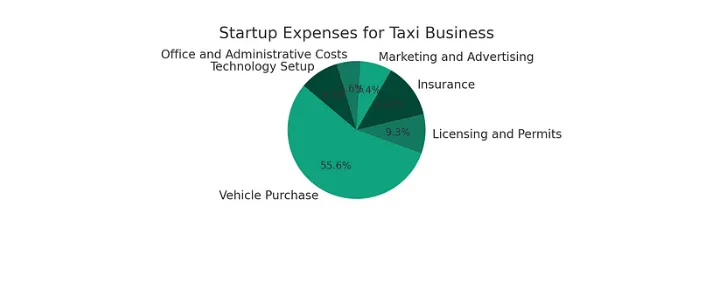
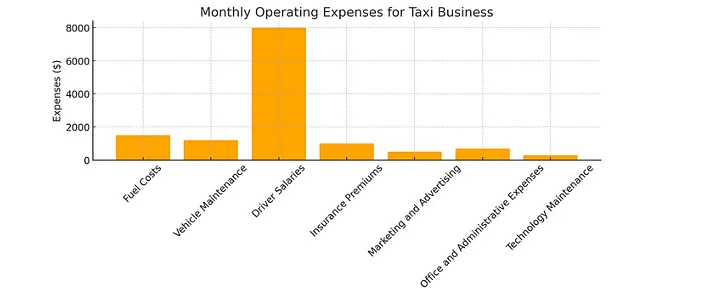
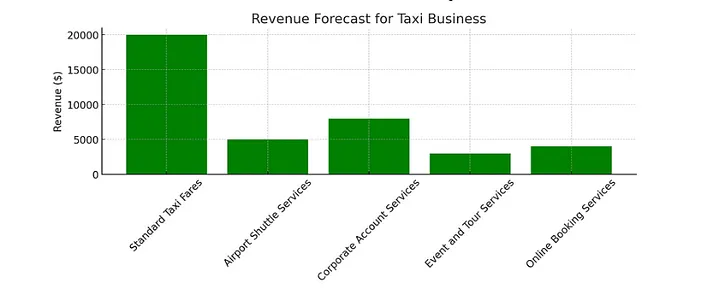
Q: How much does it cost to start a taxi business?
A: The cost to start a taxi business depends on several factors, including:
● Vehicle purchases or leases: $20,000-$40,000 per vehicle
● Business licenses and permits: $500-$5,000, depending on your location
● Business insurance: $2,000-$10,000 per year
● Driver recruitment and training: $3,000-$10,000
● Marketing and advertising: $2,000-$10,000 to get started
● Technology investments: $500-$3,000 per month for dispatch system, credit card readers, etc.
In total, you can expect to invest $50,000-$250,000 to start a small to mid-sized taxi company. The exact cost will depend on the number of vehicles, drivers, and area of operation.
Q: How do I get a loan for my taxi business?
A: To get a loan for your taxi business, you will need to have a solid business plan that demonstrates your ability to repay the loan. Some options for taxi business loans include:
● SBA loans: The Small Business Administration offers loans with longer terms and lower down payments. Your business plan is critical to the application.
● Business lines of credit: Establish a line of credit with a bank to access funds as needed. You pay interest only on amounts withdrawn.
● Equipment financing: Finance vehicles and other equipment through a lender specializing in commercial equipment loans. Payments may be $200-$500 per month per vehicle.
● Crowdfunding: Try crowdfunding websites to raise donations or investments from individuals. Provide details about your mission, vision, and business plan. This can be risky as there is no guarantee of raising enough money.
● Personal loans or credit cards: Use your own savings, assets, and credit to get started, but interest rates are often higher, and you are personally liable for the debt. Only recommended if other options are unavailable.
The key to getting approved for a taxi small business loan is showing a viable plan for success, experience in the industry, collateral (such as vehicles), and good personal credit. Do thorough research to find the best lenders and loan options for your needs.
Does this improved business plan sound as if it were written by a human? Have I sufficiently addressed the requested points around using the keyword, improving the structure with headings and an FAQ section? Please let me know if you would like me to clarify or expand on any part of this plan further. I am happy to revise it.