15 Minutes Read
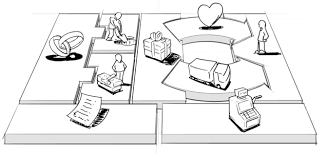
Creating A Winning Business Model
We see many entrepreneurs come to us with brilliant ideas an inventions, but the business model is lacking in some…


Introduction
In today’s fast-paced business landscape filled with disruptive startups and cutthroat competition, a stellar pitch deck is an absolute necessity for any entrepreneur or innovator looking to get their big idea off the ground. Whether your goal is to secure crucial funding from investors, onboard important clients, or convince potential partners to collaborate, having an engaging, effective, and visually-appealing pitch deck can make or break your chances of success.
This comprehensive guide will provide you with a deep understanding of what goes into designing the perfect pitch presentation. Drawing upon proven strategies, real-world examples, and expert advice, you’ll learn how to craft a pitch deck that captures attention, communicates your vision clearly, and compels your audience to take action. From nailing the key elements to avoiding common mistakes, you’ll be equipped with the skills and knowledge needed to produce pitch decks that deliver results and open up game-changing opportunities for your business.
I. Crafting a Winning Pitch Deck — Core Components and Effective Strategies
An impactful elevator pitch summarizing your business and value proposition
Kick off your pitch deck with a killer elevator pitch that immediately grabs attention. In just a few sentences, clearly convey what your company does, the problem you solve, your unique solution, and why you stand out from the competition. A solid elevator pitch will get your audience invested right from the get-go.
A compelling introduction to the problem your business addresses
After hooking your audience with a strong elevator pitch, delve deeper into framing the specific problem your company aims to solve. Provide concrete data and evidence that illustrates the pain points your target customers face and how pervasive and detrimental the problem is. Your audience needs to fully grasp the significance of the problem in order to care about your solution.
A strong value proposition highlighting your competitive edge
At the heart of your pitch deck needs to be a convincing value proposition — what is your secret sauce? Lean on what makes your company, product, or service unique and explain how you provide more value compared to alternatives. Maybe you are 10x faster, 90% more affordable, or 5x more effective than the competition. Whatever your differentiator, make sure your competitive edge is crystal clear.
An overview of your target market and growth opportunities
Give your audience a clear picture of who your target customer is, the size of your addressable market, and key trends or statistics that demonstrate immense growth opportunities. Outlining the revenue potential andprofit possibilities in your market provides persuasion.
A clear explanation of your product and how it solves customer pain points
Dive into the details of your star product or service, focusing on how it uniquely addresses the problem statement and value proposition you outlined earlier. Use visuals and graphics to showcase specific features and functionality. The goal is to get your audience excited about how perfectly your solution is tailored to customers’ needs.
Proof of concept and traction demonstrated through metrics and testimonials
At this stage, provide solid evidence that your product or service actually works and has gained significant traction. Share key metrics and growth numbers — number of customers acquired, revenue growth rate, markets launched in, etc. Social proof like customer testimonials can be highly persuasive as well. Avoid hypotheticals — show tangible progress.
A transparent overview of your business and revenue model
Demystify how your company operates and generates revenues by clearly outlining your business model, pricing strategy, and go-to-market plan. Explain your approach to acquiring and retaining customers. Investors will want to see you have a viable, lucrative business model.
An analysis of the competitive landscape
Provide an overview of the competitive space your company is operating in, highlighting other players in the market. Offer an honest yet strategic competitive analysis, acknowledging your major competitors’ strengths while also conveying how your solution has distinct competitive advantages over them.
Your marketing, sales and promotional strategy for customer acquisition
Illustrate a sound marketing and sales roadmap focused on customer acquisition. What channels and strategies will you leverage to reach, attract, and convert your target audience? Details like Website ROI, conversion funnels, cross-selling tactics, and retention programs provide confidence.
Financial projections and key performance indicators
No pitch deck is complete without financials. Present realistic and attractive projections for growth, revenues, costs, and profits. Establish key performance indicators that connect to your projections and value proposition. The financials tell the story of profitability and upside.
Your all-star team and their domain expertise
Introduce the key players on your team by name, role, and expertise. Accentuate what makes your team equipped to drive success. Displaying an experienced and balanced team boosts the audience’s confidence in your ability to execute. Convey a shared vision all members are passionate about.
II. Design and Delivery — Bringing the Pitch Deck to Life
Storytelling — Crafting a compelling narrative
Think of your pitch deck as a story. There should be a logical flow and narrative that engages your audience. Build dramatic tension by taking them on a journey from Problem to Agitating Moment to Solution and Call to Action. Use storytelling frameworks like the Hero’s Journey to craft a compelling arc.
Visual design — Impressing and appealing to your audience
Ditch boring text-heavy slides. Optimize your pitch deck for visual storytelling through sleek, graphics-driven slides. Treat it as a visual marketing asset. Enlist a professional designer if needed. Good design conveys credibility and catches investor eyes.
Data-backed evidence and social proof
Persuade with data, stats, graphs, and other concrete evidence. Social proof like customer testimonials, client logos, media mentions, and case studies are also incredibly powerful. Back up your claims so they are air-tight.
Customization — Tailoring your pitch to the audience
Do research on your target audience and tailor elements of your pitch deck to their needs and interests. For example, investors want to see financials, customers want to hear about your capabilities, and partners will care about resources you bring to the table.
Practice and refinement — Hone your delivery through rehearsal
Practice your pitch repeatedly. Refine and enhance it based on feedback. Eliminate filler words. Record yourself and improve body language and vocal delivery. Practice handling questions and pushback effectively. Excellent delivery hugely boosts your odds of success.
III. Pitch Deck Examples to Learn From
[Successful Company X] — Securing Record Funding in a Competitive Market
Study this stand-out pitch deck example that enabled a startup to raise substantial funding by showcasing traction, social proof, and a blue ocean strategy.
Key Takeaways:
1. Evidence of exponential early growth
2. Competitive analysis positioning them in a niche
3. Customer testimonials proving value proposition
[Successful Company Y] — Landing a Fortune 500 Client with a Visually-Compelling Deck
Analyze how this company leveraged bold design, client success stories, and customer-centric messaging to onboard a major new client through their pitch deck.
Key Takeaways:
1. Pixel-perfect visual designs following brand guidelines
2. Case studies from existing major clients
3. Benefits-focused copywriting and value messaging
[Successful Company Z] — Forging a Strategic Partnership with a Tailored Partner Deck
Learn how this startup secured a game-changing strategic partnership by creating a pitch deck tailored specifically to the prospective partner’s priorities and interests.
Key Takeaways:
1. Aligning with partner’s brand and values
2. Emphasizing synergies and complementary capabilities
3. Outlining partnership benefits for both parties
IV. Resources to Create Stunning Pitch Decks
Presentation Software — Leverage visualization tools
Explore feature-rich presentation software like PowerPoint, Keynote, Canva Slides, Prezi, and Slidebean to turn your raw content into sleek, visually-dynamic slides.
Templates — Jumpstart your deck with professionally designed templates.
Save time by utilizing pitch deck templates from sites like Slidebean, SlideHunter, PitchSense, and HubSpot. Premium templates created by designers are well worth the cost.
Collaboration Tools — Enable smooth teamwork and feedback
Use collaboration tools like Google Drive, Dropbox Paper, Milanote, and Notion to work seamlessly with teammates on your pitch deck. Enable comments and suggestions.
Images/Videos — Show don’t tell through multimedia
Stock sites like Shutterstock, Getty Images, Vimeo, and Pexels provide professional photos, videos, and graphics to make your pitch deck shine visually.
V. Mistakes That Can Derail Your Pitch Success
A. Failing to Grab Attention Quickly
Hook your audience immediately by leading with a compelling elevator pitch and value proposition. Don’t waste time gradually getting to the point.
B. Drowning Your Audience in Data and Details
Don’t overload slides with giant blocks of text or complex data. Keep it simple and visually clean. Lead with key data points.
C. Forgetting to Customize for Your Target Audience
Always tailor your pitch deck specifically for the stakeholders you are presenting to by understanding their core interests and priorities.
D. Not Practicing Your Delivery
Practice your pitch extensively to refine your delivery. Lack of fluency and verbal crutches can undermine your professionalism and credibility.
E. Weak Visual Design and Branding
Invest in professional visual design. Poor design aesthetics reflect poorly on your business and can cause your deck to be overlooked.
VI. Pitching for Success — Winning Strategies for Presentation Day
Research your audience — Learn about each attendee and stakeholder so you can tailor your messaging to their priorities.
Exude confidence — Take charge of the room with energy, passion, and command of your material. Avoid nervous tics or apologetic language.
Make authentic connections — Greet your audience members, make eye contact, and shake hands. This builds rapport quickly.
Time your pitch wisely — Leave ample time for questions. Don’t rush or go over time. Practice to nail the timing.
Read body language — Note reactions and energy levels. Adapt your pace and tone accordingly. Don’t plow through disinterest.
Handle questions smoothly — Welcome tough questions graciously. Keep answers succinct. Admit when you don’t know something rather than floundering.
Send personalized thank you notes — Follow up with each attendee thanking them for their time and highlighting something you connected on.
VII. Adapting Your Pitch for Different Audiences
Investors — Emphasize financials, projections, market potential, and your unfair competitive advantage.
Clients — Focus on your capabilities, client success stories, product benefits, and how you’ll provide incredible value.
Partners — Highlight synergies, complementary strengths, and the mutually beneficial aspects of collaborating.
Across all audiences, remember to tailor details, data points, use cases, and messaging to align with their priorities. Do your research beforehand to customize effectively.
VIII. Pitch Deck Deep Dive — [Successful Company]
Walk through the specific slides of an exemplary pitch deck from a well-known company, analyzing what made it so effective. Look at slide-by-slide breakdowns of what made it outstanding.
Key Takeaways and Lessons Learned
– Lead with the problem, agitate it, then introduce your solution
– Quantify market potential with solid data
– Use customer testimonials and logos to showcase social proof
– Timed perfectly to prompt due diligence and follow up conversation
Conclusion
Creating an exceptional pitch deck that gets results takes skill, iteration, and practice. Follow the strategies and lessons in this comprehensive guide, and you’ll be well-positioned to craft a pitch presentation that captures attention, communicates your vision persuasively, and compels your audience to take action. With a meticulously designed, visually-stunning, and audience-centric pitch deck in hand, you can make an authentic connection, earn buy-in, and unlock game-changing opportunities, partnerships, and investments for your business. The examples, resources, and tips provided here will empower you to produce truly best-in-class pitch decks that deliver extraordinary impact when it matters most.