15 Minutes Read
Creating A Winning Business Model
We see many entrepreneurs come to us with brilliant ideas an inventions, but the business model is lacking in some…


Last Updated: 12/17/2023
So, you want to start your own video television production company? Congratulations! The first step is developing a comprehensive business plan. A strong business plan is key to securing funding and setting your company up for success.
A business plan serves as your roadmap for the future. Without one, it’s nearly impossible to get investors on board or handle unexpected challenges. A good plan helps you:
● Demonstrate your potential for success to investors.
● Ensure you comply with regulations.
● Forecast performance and identify risks.
With a solid plan in place, you’ll be poised to achieve your goals.
Need a Video Television Production Business Plan?
Create a custom business plan with financial projections and market research in minutes with ProAI’s business plan generator.
Your plan should be tailored to your needs and provide details on your industry, market, and strategy. Here are the sections you’ll want to include:
The executive summary is your chance to hook investors and give an overview of your company. Include:
● Your mission statement.
● A summary of your concept and strategy.
● Projected costs and returns.
This section should convey the key points of your plan in a compelling yet concise way.
Introduce your company, including:
● Company name, location, and contact info.
● Owner details and experience.
● Company goals and legal standing.
● A market study showing your potential for success.
3.1 Industry Analysis Discuss the industry, its size and trends, and the overall outlook.
3.2 Market Analysis Analyze your key competitors, their services, and the total market opportunity. Discuss emerging trends that could impact the future.
3.3 Competitive Analysis Discuss your competitors in detail — their services, differentiators, advantages, etc. Explain how you’ll stand out.
Outline your financial plan, including:
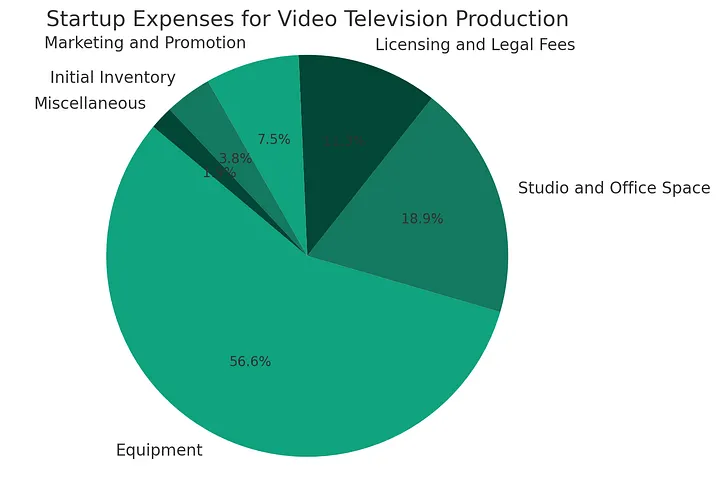
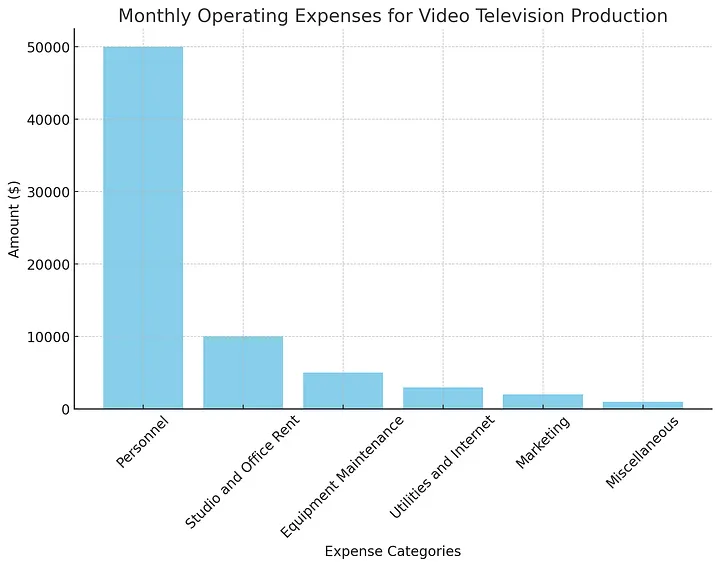
● Your production budget (costs for staff, equipment, etc.).
● Specific financial goals (to make a profit or showcase your work).
● Financial objectives for the short and long term.
Create timelines for each stage of pre-production, production, and post-production. For each activity, list:
● Duration and personnel involved.
● Resources needed like equipment and props.
● Ways to cut costs without compromising quality.
● Time for meals, breaks, and delays.
Discuss the equipment and software you need to operate. Technology choices impact your budget, timeline, and resources. Consider:
● Cameras, lighting, audio equipment, editing software, etc.
● Cloud storage, streaming services, video editing tools, etc.
● Compliance with laws and regulations.
Identify your team members, their roles, and salaries. Discuss:
● Freelancers you’ll hire like writers, editors, directors, etc.
● Managing your team’s workflow, communication, conflicts, etc.
● Incentives and team-building to promote productivity and creativity.
Explain how you’ll distribute content and reach your audience. Discuss:
● Broadcast partners and platforms you’ll use.
● Partnering with streaming services or other companies.
● Promotional tactics like advertising, digital marketing, and PR.
● Measuring the success of your promotional efforts.
● Budget allocation for each promotional activity.
Discuss legal issues like getting permits, licenses, and researching relevant laws. Consider:
● Copyright, trademarks, and talent release forms.
● Local filming rules and restrictions.
● Licensing requirements for any copyrighted material used.
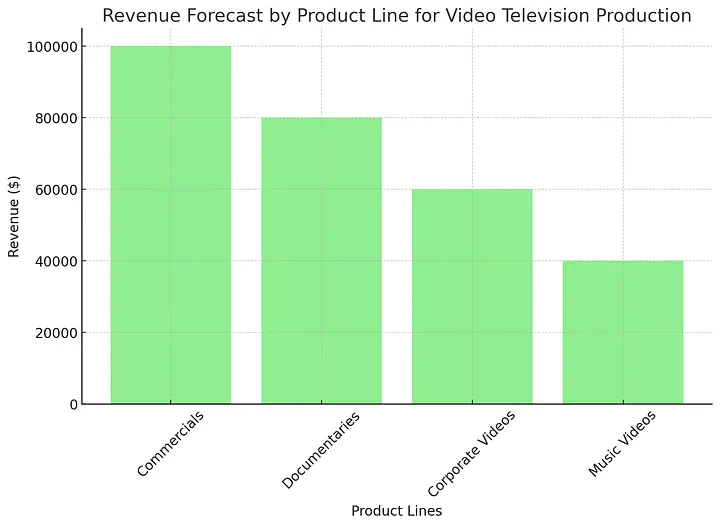
Develop financial statements, a break-even analysis, and projections of costs and revenue. Project how trends may impact your business. Discuss:
Income statements, cash flow statements, balance sheets.
A break-even analysis comparing income and expenses.
Projected costs like labor, equipment, and production.
Potential revenue from advertising, sponsorships, distribution, etc.
How economic and industry trends may affect your projections.
Need a Video Television Production Business Plan?
Create a custom business plan with financial projections and market research in minutes with ProAI’s business plan generator.