Business Planning
15 Minutes Read

Vintage Store Business Plan: the Ultimate Guide for 2024

Last Updated: 12/17/2023 Are you passionate about all things vintage and looking to turn your love of vintage goods into a business? Opening a vintage store is an exciting new venture,…

Last Updated: 12/17/2023

Are you passionate about all things vintage and looking to turn your love of vintage goods into a business? Opening a vintage store is an exciting new venture, but to be successful, you need to have a solid business plan in place first. A vintage store business plan helps you outline all the important details of your business, set goals, plan finances, market your store, and anticipate potential obstacles.

Read on to learn how to craft a winning vintage store business plan to launch your business.

Why You Need a Vintage Store Business Plan

Many new business owners forgo writing a business plan because it seems like a lot of work. But having a comprehensive plan is key to your success. Here are a few reasons why a vintage store business plan is so important:

● It helps you define your mission and set concrete goals. What do you want to achieve with your store? How will you achieve it? A plan helps outline the steps to get there.

● It’s essential for funding and investors. Good luck getting a small business loan or investor without a proper business plan. Your plan shows them your vision and why they should put their money into your idea.

● It prepares you for challenges. A good plan considers potential obstacles and how you’ll overcome them. You’ll be poised to solve problems efficiently instead of being caught off guard.

● It maximizes your chances of success. Over 50% of small businesses fail within the first five years. A business plan greatly improves your odds of thriving and growing.

Need a Vintage Store Business Plan?

Create a custom business plan with financial projections and market research in minutes with ProAI’s business plan generator.

How to Write a Vintage Store Business Plan

Here are the key sections you’ll want to include in your vintage store business plan:

Executive Summary

The executive summary is a high-level overview of your entire business plan. It should be short but impactful, highlighting your vision, mission, goals, and competitive edge. The summary should capture investors’ interest and make them eager to learn more.

Company Description

Describe your business in detail, including your legal business structure (LLC, corporation), business name, owners and operators, work experience, business goals, etc. Explain your vision for the company culture and values. Discuss how your experience and skills will contribute to your success.

Vintage Market Analysis

Analyze your target customers, competition, and industry trends. Discuss what sets you apart and your competitive advantage. Show how you’ve identified a strong customer base and that there’s an opportunity in the market. Provide data from industry reports and your own market research.

Vintage Items

List the types of goods you plan to sell, their prices, and your sourcing strategy. Your items should align with current trends and your target market. Show how your products give you a competitive edge. Discuss merchandising and sales strategies.

Store Design

Describe your retail space, layout, furnishings, fixtures, and decor in detail. The design should enhance your customers’ shopping experience and fit your vintage aesthetic and brand. Include images if possible. Discuss how the location and design will attract customers.

Employees

Outline key roles you need to fill, responsibilities, required skills and experience, salaries, and employee benefits. Discuss your hiring, training, and retention strategies to build an effective staff. Show how your employees’ experience and expertise will contribute to your success.

Marketing

Discuss how you’ll attract and retain customers through social media marketing, content creation, events, promotions, partnerships, publicity, and any other strategies. Provide a budget and analytics for your campaigns. Show how your marketing efforts set you apart and reach your target audience effectively.

Financial Projections

Provide income statements, balance sheets, cash flow statements, and projections for the next 3–5 years. Discuss revenue streams, costs, profits, losses, investments, risks, and performance. Your projections should show that your idea is financially viable and will generate substantial profits.

Need a Vintage Store Business Plan?

Create a custom business plan with financial projections and market research in minutes with ProAI’s business plan generator.

Vintage Store Financial Forecasts

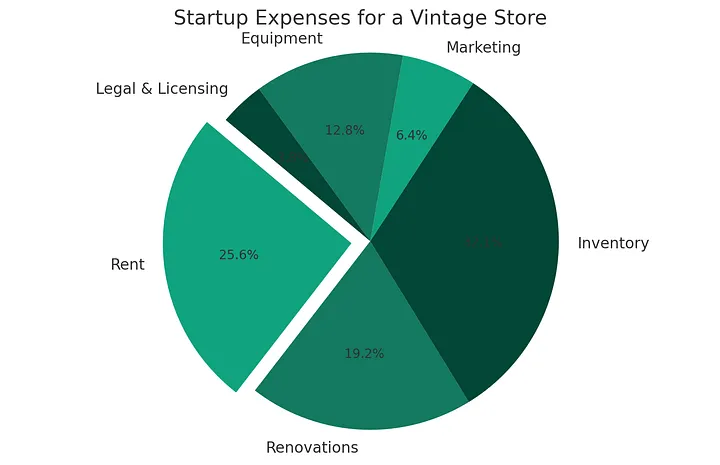
Startup Expenses

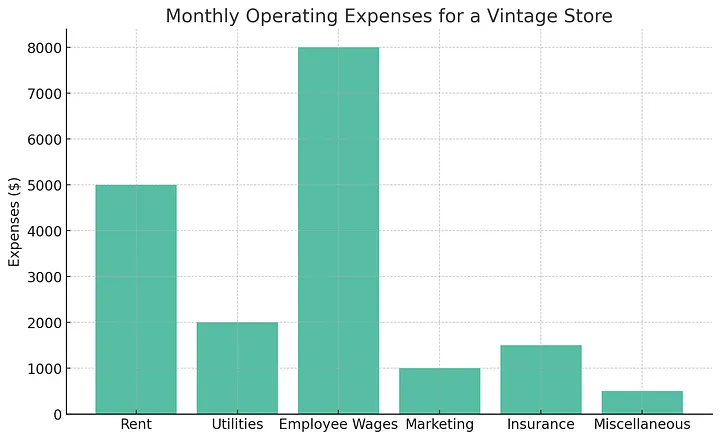
Monthly Operating Expenses

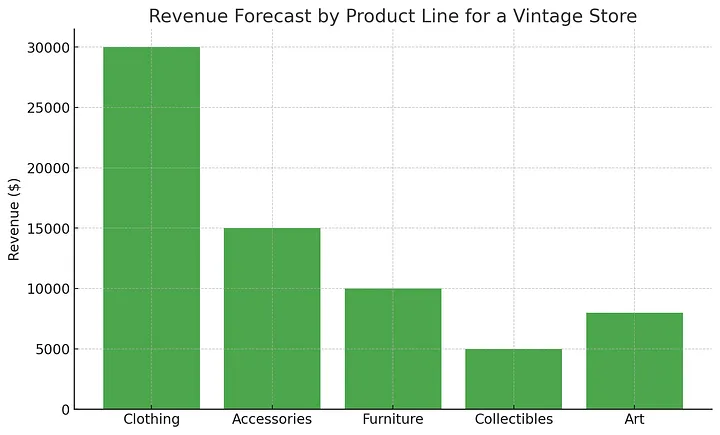
Revenue Forecast

FAQ

Q: How long should a vintage store business plan be?

A: There is no set length, but most plans are 15 to 30 pages long. Focus on being concise while covering all essential details. Your plan should be long enough to convey your vision fully but avoid fluff and redundancy.

Q: Do I really need funding and investors to start a vintage store?

A: It depends on your situation. If you have enough money to cover all startup costs and operational expenses, you may not need outside funding. However, most new stores do require additional capital, whether from investors, small business loans, crowdfunding, or other sources. A solid business plan is required to raise funds from external sources.

Q: How often do I need to revise my vintage store business plan?

A: You should review and revise your business plan regularly, ideally every 6–12 months. Update it when major changes occur, like adding new products or services, moving to a new location, or adjusting financial projections. As your store evolves, refer to your plan to ensure you’re meeting key milestones and make any necessary changes to keep strategies and goals on track. A current business plan is essential for continued success and funding.
You May Also Like