
15 Minutes Read
Creating A Winning Business Model
We see many entrepreneurs come to us with brilliant ideas an inventions, but the business model is lacking in some…


Last Updated: 12/17/2023
Are you looking to start a wholesale food business? If so, creating a comprehensive business plan is critical to your success. A well-thought-out business plan can help identify risks and opportunities, provide a roadmap for growth, and is usually required by investors and lenders. Writing a business plan for a wholesale food company may seem overwhelming, but by breaking it down into sections, it becomes much more manageable. This article provides an overview of how to write a successful wholesale food business plan along with tips and resources to get you started.
A business plan is essential for the success of any wholesale food company. It provides direction, identifies risks and opportunities, and helps plan for the future. It acts as a reference point for decision making and a source of inspiration for growth.
A well-developed business plan helps stay focused on goals, ensures necessary steps are taken, and provides clarity to your team, investors, and customers about your business, goals, and path forward.
A business plan is also crucial for securing financing. For investors and lenders, a comprehensive business plan proves you understand the financial aspects of the business and have a clear vision and plan for success.
Ultimately, a business plan helps stay organized, prepared, and on track to reach your goals. It will guide your wholesale food business to success.
Need a Wholesale Food Business Plan?
Create a custom business plan with financial projections and market research in minutes with ProAI’s business plan generator.
A good business plan varies for each business and considers factors like products, target markets, and location. For a new wholesale food company, creating a business plan may seem challenging. To help get started, here are the key sections to include:
The executive summary introduces your business plan and the entire business idea. Its goal is to draw the reader, often an investor, into the rest of the plan. It includes:
– Mission statement: your business’s purpose
– Proposed concept: your business model and products/services
– Execution: your plan to operate and grow
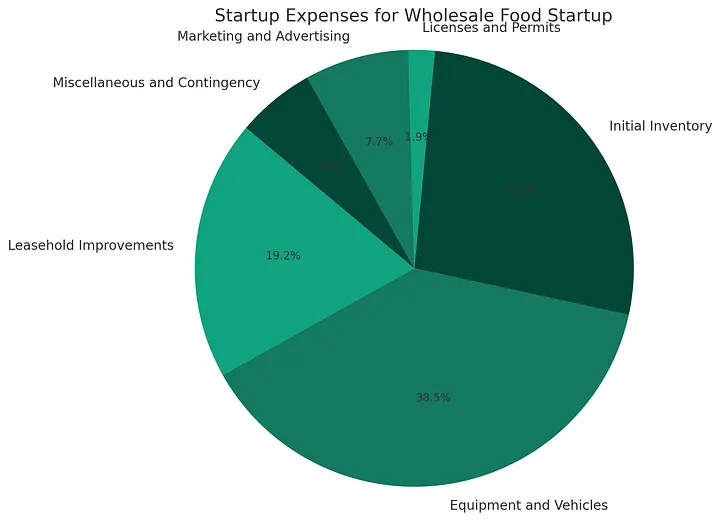
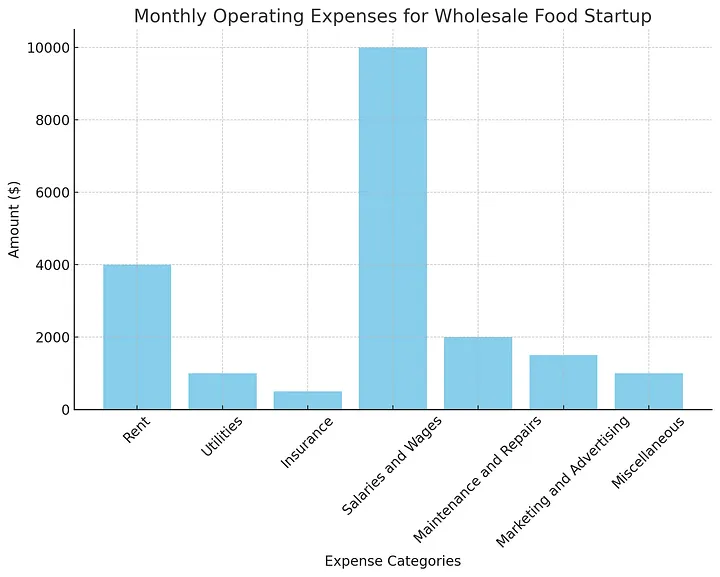
– Costs: an estimate of start-up and ongoing expenses
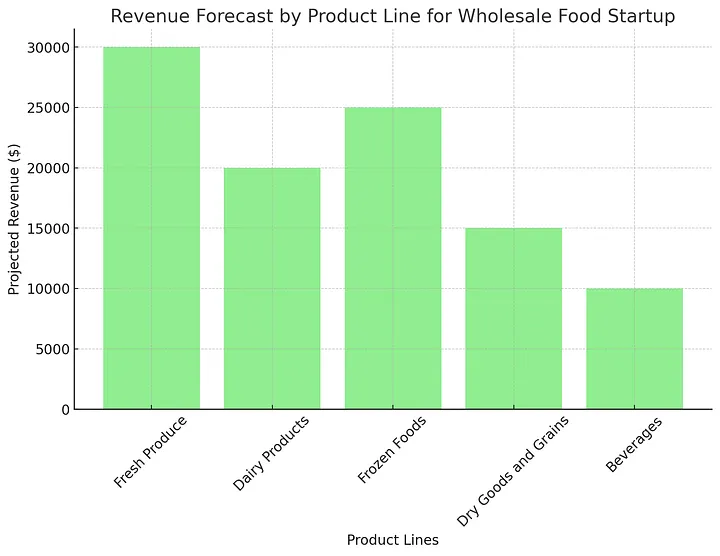
– Return on investment: projected sales and profits
– Market analysis: current wholesale food industry trends
– Competitive landscape: analysis of other wholesale food companies
– Unique selling points: what makes your business stand out
The executive summary provides a quick overview for investors instead of reading the entire plan.
This section fully introduces your company. Include your business name, location, contact information, owner details, and experience. Also include your business’s legal structure, short and long-term goals. Provide a brief market study showing you understand regional food industry trends and why your business will succeed. Discuss your products, how they’ll be distributed, competitive advantages, and anything else that makes your business unique.
Market Size and Trends: Analyze the wholesale food market size and trends. What is the current demand? What food types are popular? Are any trends suggesting market growth?
Market Segmentation: Understand your target market and how they differ to best reach them. What characteristics define your target market segments?
Target Market: Identify your most likely customers. What are their needs and how will you meet them?
Detail the products and services you’ll offer. For a wholesale food company, this includes the types of food, how you’ll source them, and any additional services like delivery, recipes, or discounts. Provide all details to give investors a clear understanding of how you’ll operate and generate revenue.
Strong employees are essential to a successful wholesale food company. Describe how you’ll recruit, hire, train, and compensate employees. Include roles, responsibilities, qualifications, salaries, benefits, timelines for hiring, and any development programs.
Your warehouse design should suit your specific food items, storage needs, and equipment. Consider traffic flow, product handling, food safety, efficient storage/retrieval, minimizing waste, and customer needs. Plan for trucks, cold storage, packing/shipping areas, or whatever your business requires. Design your warehouse for optimization and include details in your business plan.
Determine how you’ll source, store, transport and distribute your products cost-effectively and efficiently. Consider using third-party logistics or your own fleet. Factor in the costs of transportation, storage, refrigeration (if needed), physical vs e-commerce distribution, and delivery fees. Research options for your business model and include the details in your plan.
Your location should provide easy access for customers and suppliers. Consider rent costs, accessibility, customer base, necessary infrastructure, growth potential, competition, and zoning/licensing requirements. Researching the area ensures you find a suitable place for your business.
Analyze your industry’s competitive landscape and how your business fits in. Discuss the current/projected market size, target customers (how you’ll reach them), pricing/promotions strategies, risks, and opportunities.
Research your target market and brainstorm ways to market your products like direct mail, trade shows, print/digital ads, email, social media, and search engine optimization. Create content/visuals to support your marketing like product descriptions, videos, and promotional materials. Set a budget, determine how you’ll measure success, and track metrics such as web traffic, conversions, and sales to ensure your marketing efforts are effective.
Starting a wholesale food company is challenging, but external resources can help. Consider hiring business consultants, accountants, lawyers, and tapping into small business organizations for financing, guidance, and local resources. Online resources and templates also help in crafting a comprehensive business plan. Taking advantage of available resources will increase your chance of success.
Financial analysis is the backbone of your business plan. Create a detailed budget accounting for costs and revenues, both start-up and ongoing. Project your sales and profits over time to show investors potential returns. Research the market and competitors to determine appropriate pricing. Include financial statements showing your current assets, liabilities, equity, and overall business health to provide investors with a clear financial picture.
Need a Wholesale Food Business Plan?
Create a custom business plan with financial projections and market research in minutes with ProAI’s business plan generator.
Q: What exactly is a business plan?
A: A business plan is a written document describing your business goals and the steps required to achieve them. It covers your business concept, marketing, financial projections, and operational details.
Q: Do I need a business plan to start a wholesale food company?
A: Yes, a business plan is essential for starting a wholesale food company. It helps determine if your business idea is viable, set goals, secure funding, and guide your company’s growth.
Q: How long should a business plan be?
A: A good business plan is typically 15 to 30 pages long. The content and level of detail depends on your needs and audience. Keep it concise while conveying key information about your company, products, market, operations, and financials.
Q: What resources can I use to help develop my wholesale food business plan?
A: Some useful resources include:
● Online business plan templates for wholesale or food companies
● Digital business planning tools like LivePlan or Enloop
● Sample business plans for wholesale or food businesses
● Government resources with guidelines for business plans (SBA, etc.)
● Books on how to write business plans
● Consulting a lawyer, accountant or business plan writer for guidance
● Local small business development centers for advice and resources
Q: How often should I update my wholesale food business plan?
A: You should review and revise your business plan regularly, ideally once a quarter or at a minimum once a year. Updates reflect your progress and new goals, ensure it aligns with market changes, and incorporate feedback from existing or potential new investors and advisors. Major events like launching a new product line, expanding into new markets or making a big investment also warrant a business plan update. Keep your plan current and relevant to support your wholesale food company’s growth.